

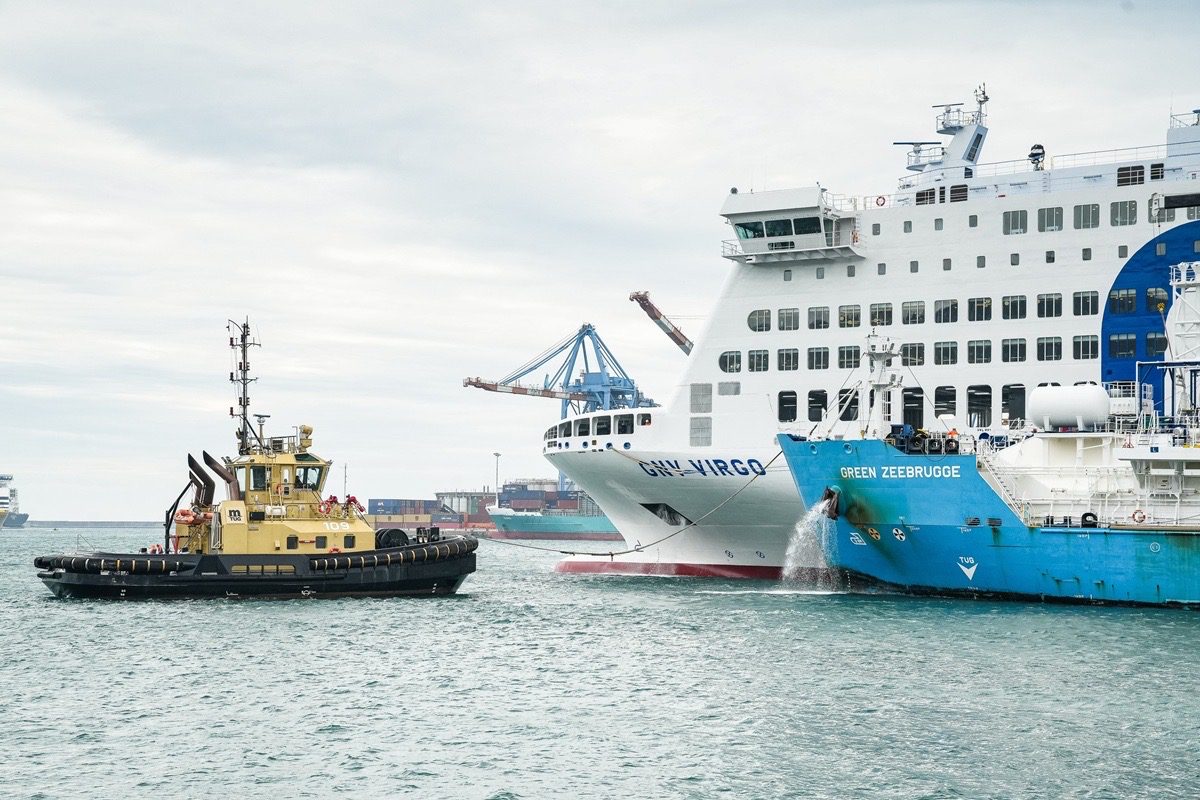
Italy’s first ship-to-ship bio-LNG bunkering operation has been carried out at the Port of Genoa by Swiss energy solutions firm Axpo and Italian ferry operator GNV (MSC Group), supported by the Maritime Authority of Genoa.
The ship-to-ship bunkering operation involved the refuelling of new ferry GNV Virgo (pictured, above), the first Italian long-distance ro-pax vessel powered by liquefied natural gas to be used on a regular route.
Produced from organic waste materials, bio-LNG is a renewable version of liquefied natural gas. With its lower overall environmental impact than traditional fuels, it is emerging as a key transitional fuel in the maritime energy transition, although availability is currently small and production is costly. Long-term decarbonisation of sectors such as shipping likely requires hydrogen, ammonia, or fully electric propulsion for many vessels.
When powered by bio-LNG, the dual-fuel GNV Virgo will accord with European decarbonisation targets, anticipating the EU’s long-term aim to be carbon-neutral by 2050.
GNV Chief Executive Officer Matteo Catani said: “This moment represents a true turning point for GNV in reducing the environmental impact of our fleet. The introduction of LNG into our daily operations not only significantly lowers emissions, but also allows us to gain hands-on experience with the technologies that will shape the future of European maritime transport, confirming our commitment to increasingly sustainable and competitive shipping.”
“We are working to make the use of bio-LNG a structural solution for our operations. We are aware that, at present, the availability of this fuel remains limited and requires significant investments, as well as the development of a supply chain capable of ensuring stable, large-scale provision. Costs are still high, and the quantity available on the market is not sufficient to meet growing demand. It is a complex journey that requires the commitment and collaboration of all stakeholders in the sector,” Catani added.
The six-hour bunkering operation, conducted according to current safety regulations and international guidelines, saw 500m3 of bio-LNG successfully transferred to the GNV Virgo, enough to fuel the vessel’s return voyage to Palermo.
The introduction of GNV Virgo to the Genoa-Palermo route will reduce the environmental impact of ferry operations in both ports. The 52,300-ton vessel is 218 metres long, 29.60 metres wide, and has a maximum speed of 25 knots. With more than 420 cabins, it can accommodate up to 1,785 passengers and has a cargo capacity of 2,770 linear metres.
Axpo’s Head of Small-Scale LNG Daniele Corti said: “This operation demonstrates our determination to pioneer sustainable LNG solutions across the Mediterranean market. Bio-LNG is essential to achieving global emissions targets while advancing a cleaner, more sustainable future for marine logistics.”
This latest development follows Axpo’s successful bio-LNG bunkering operation in the Iberian Peninsula and bunkering activities in the ports of Málaga, Algeciras and Sines.