


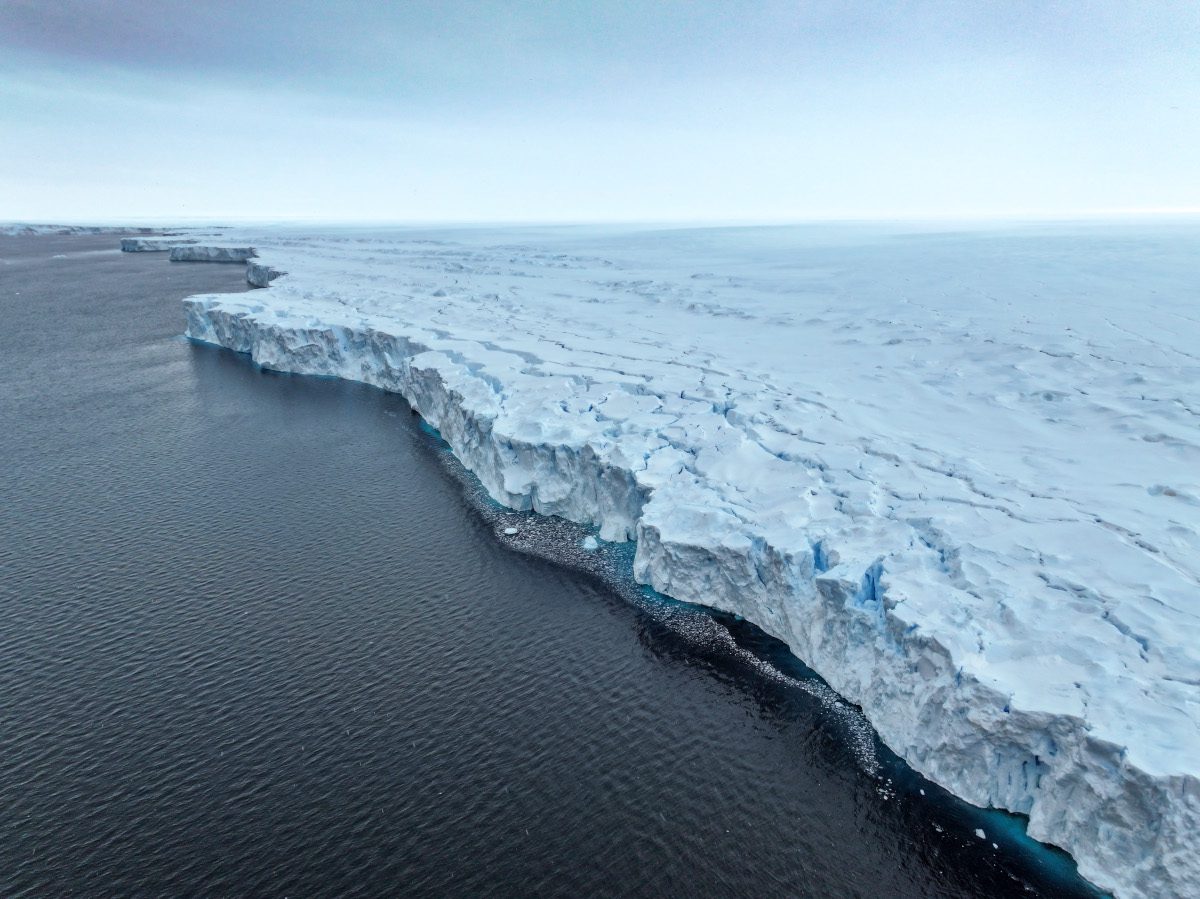
A robotic float has been used to measure the temperature and salinity within a hitherto mysterious realm of the ocean, underneath massive floating ice shelves in East Antarctica.
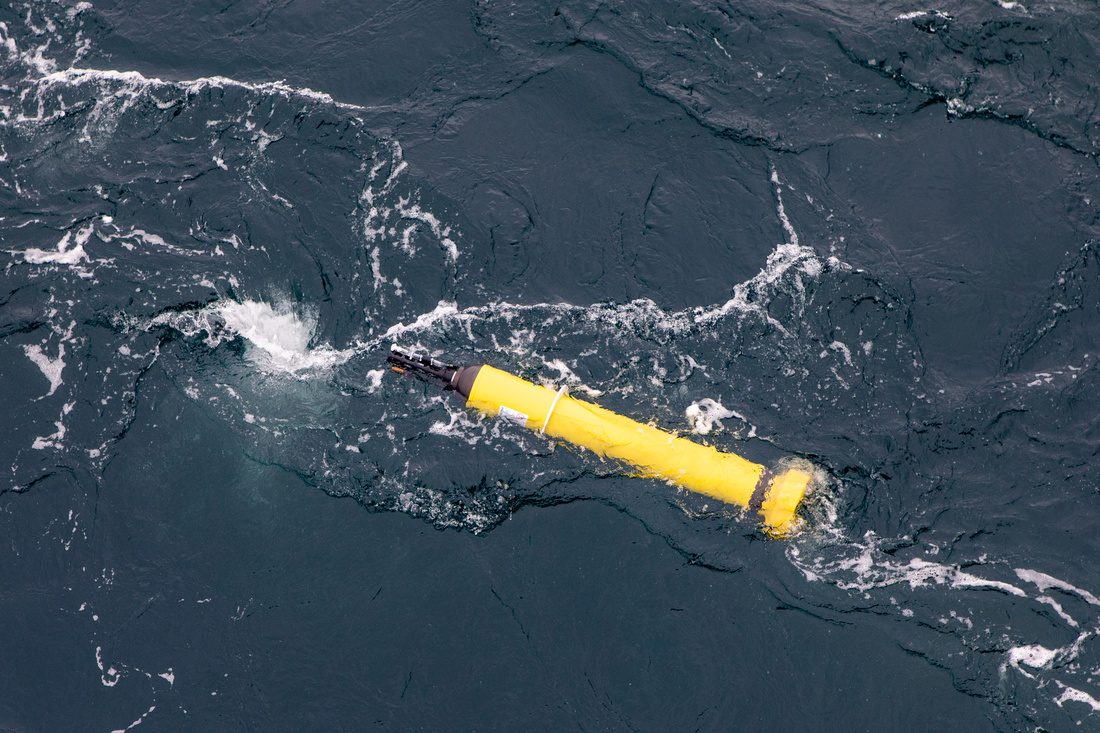
This kind of Argo float – a free-drifting, torpedo-shaped autonomous robot – is normally used in the open ocean, where it is able to surface regularly and transmit data. These vehicles are also not equipped to steer, instead drifting passively except for vertical movement. In this case, a special ice-capable Argo float was used.
It has drifted under the ice for two-and-a-half years, equipped with oceanographic sensors and has collected nearly 200 profiles of the ocean on a 300-kilometre journey under the Denman and Shackleton ice shelves. The data haul includes the first-ever ocean transect beneath an East Antarctic ice shelf.
“We got lucky,” said oceanographer Dr Steve Rintoul from CSIRO, Australia’s national science agency, and one of the authors of the study.1 CSIRO partnered with the Australian Antarctic Program Partnership at the University of Tasmania.
“Our intrepid float drifted beneath the ice and spent eight months under the Denman and Shackleton ice shelves, collecting profiles from the seafloor to the base of the ice every five days.
“These unprecedented observations provide new insights into the vulnerability of the ice shelves.”
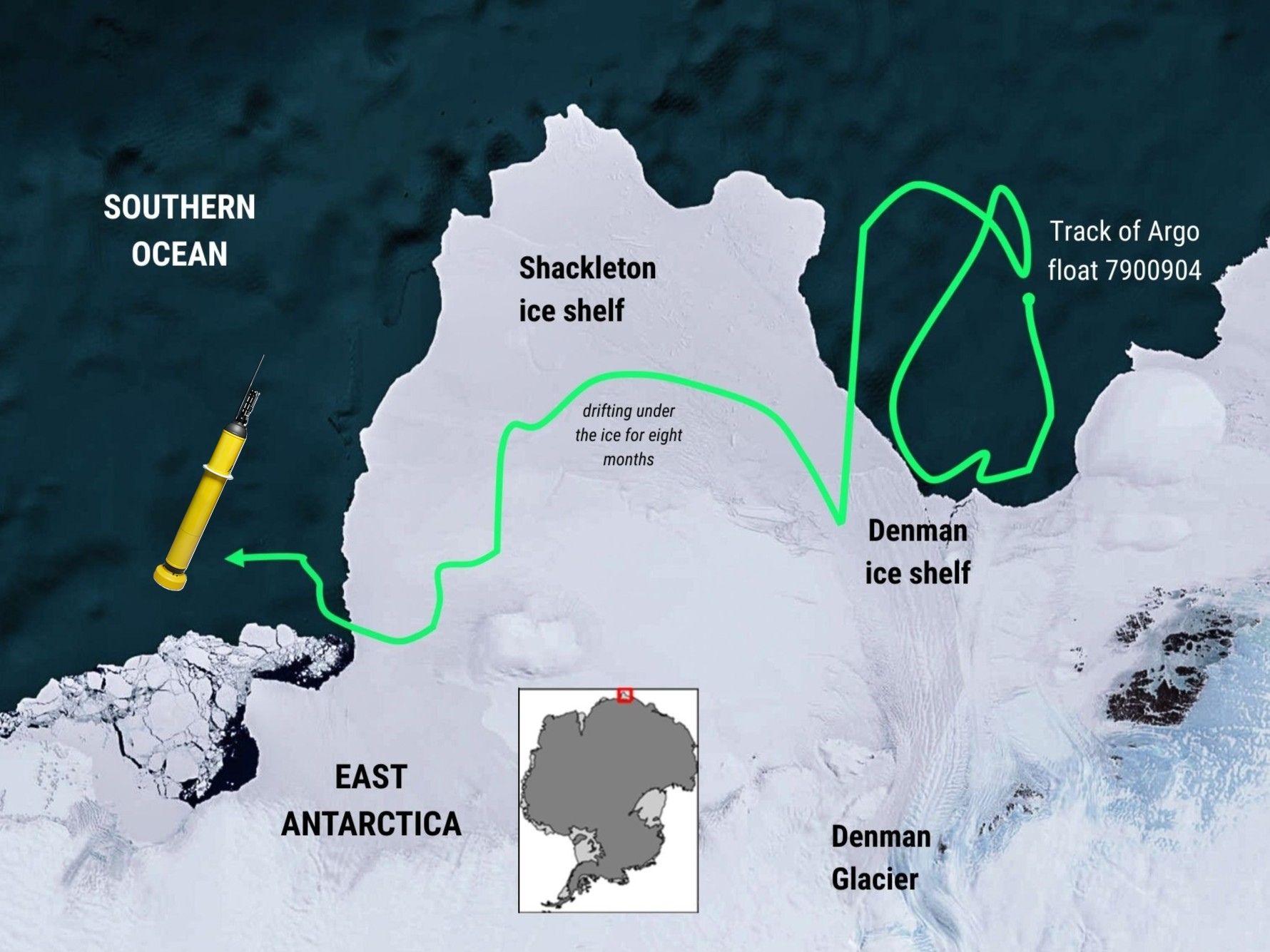
The measurements reveal the Shackleton ice shelf (the most northerly in East Antarctica) is, for now, not exposed to warm water capable of melting it from below, and therefore less vulnerable.2
However, the Denman Glacier, with its potential 1.5-metre contribution to global sea level rise, is delicately poised: warm water is reaching underneath and small changes in the thickness of the warm water layer could drive much higher melt rates that lead to unstable retreat.
The transfer of heat from the ocean to the ice depends on the ocean conditions in the 10-metre thick ‘boundary layer’ immediately below the ice shelf.
“A great advantage of floats is that they can measure the properties of the boundary layer that control the melt rate,” said Dr Rintoul.
“The float measurements will be used to improve how these processes are represented in computer models, reducing the uncertainty in projections of future sea level rise.
“Deploying more floats along the Antarctic continental shelf would transform our understanding of the vulnerability of ice shelves to changes in the ocean.
“This, in turn, would help reduce the largest uncertainty in estimates of future sea level rise,” he said.
Leader of the Australian Antarctic Program Partnership, Prof Delphine Lannuzel, sampled the ocean near the ice shelves during the Denman Marine Voyage earlier this year.
“Against the enormity of such a wild region, this is an amazing story of the little float that could,” she said.
“Under incredibly testing conditions, a relatively tiny instrument has delivered us a wealth of invaluable information.”
Notes
[1] The authors are from CSIRO, the Australian Antarctic Program Partnership and the Institute for Marine and Antarctic Studies at the University of Tasmania. They acknowledge support from Australia’s Integrated Marine Observing System (IMOS) — IMOS is enabled by the National Collaborative Research Infrastructure Strategy (NCRIS).
[2] Published in Science Advances: Rintoul S.R., van Wijk E.M., Herraiz-Borreguero, L. and Rosevear, M.G. (2025) ‘Circulation and ocean–ice shelf interaction beneath the Denman and Shackleton Ice Shelves’, Sci. Adv. 11, 10.1126/sciadv.adx1024