

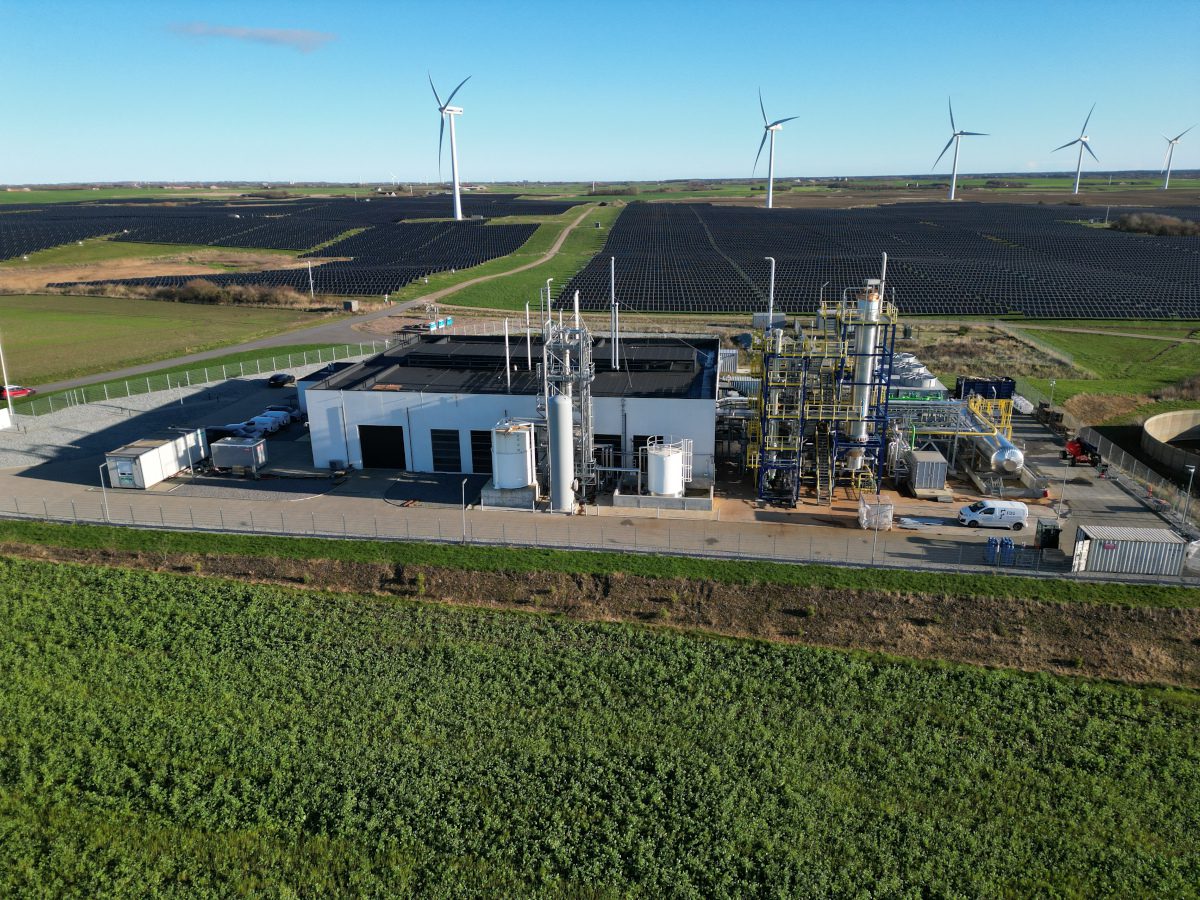
What’s described as the world’s first dynamic green ammonia plant is now in operation, in a collaboration between emissions-reduction expert Topsoe and partners Skovgaard Energy, a Danish developer of green energy assets, and Vestas, a specialist in wind energy solutions.
The first-of-its-kind demonstration appears to address one of the most stubborn bottlenecks restricting the production of green ammonia, namely the problems that arise because traditional ammonia plants are designed for steady-state baseload operation, while the green energy that might fuel them is often intermittent.
The plant demonstrates a dynamic approach, adapting to the inherent fluctuations in power output from the renewable power sources, and modifying the plant’s electrolysis and ammonia synthesis loop appropriately.
This dynamic approach improves the production efficiency and cost-effectiveness of green ammonia. It is important as it optimizes operations and ensures less need for costly storage solutions of green hydrogen or renewable power.
Kim Hedegaard, CEO Power-to-X at Topsoe, said: “This is a significant achievement. By working across the value chain, we’re accelerating green ammonia as a pathway to diversify our energy supply and decarbonize energy-intensive industries and long-distance transportation like shipping and agriculture.”
Niels Erik Madsen, CEO at Skovgaard Energy, said: “We are extremely proud of this groundbreaking project in Northwest Jutland driving innovation, growth and job creation locally. It demonstrates the energy systems of tomorrow – scalable worldwide to accelerate the green transition.”
Topsoe is delivering the ammonia technology, and Vestas is delivering the renewable wind power adding to the power provided from Skovgaard Energy’s solar panels and wind turbines.
Ammonia – either in the form of low-carbon ammonia or as an e-fuel – is expected to play a critical role in the world’s fuel mix. It can be transported using existing infrastructure; and it has multiple end-uses, not only as a fuel or hydrogen carrier but also to help decarbonize industrial processes like agriculture, shipping and steel production.
The Haber-Bosch process has been the standard method of ammonia production for over a century, although a number of approaches hope to replace this traditionally energy hungry and emissions-heavy process.
Located in Ramme near Lemvig, Northwest Jutland, the plant will output 5,000 tons of green ammonia annually from renewable power. This production will prevent approximately 9,600 tons of CO2 from being emitted into the atmosphere every year.
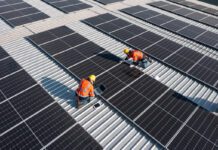
Its renewable power inputs comprise 50 MW new solar panels and 12 MW existing V80-2.0 MW Vestas wind turbines.
A demonstration project, the plant has received funding from the Danish Energy Technology Development and Demonstration Program (EUDP).