


Despite continued low-carbon technology investment and progress, shortfalls in project realization ahead of 2030 threaten to impact interim goals set by countries and companies in the path to reaching net zero by 2050, according to analysis from consulting firm McKinsey released on 14 January
The article – “Tracking the energy transition: where are we now?” – addresses nine key decarbonization technologies. Building on previous research conducted in 2023, which focused on Europe and the US, this latest analysis includes China as well as battery energy storage systems (BESS) and nuclear energy.
With intermediate 2030 decarbonization mandates fast approaching, understanding progress is critical, say the authors. The analysis shows that the world continues to make strong progress in clean energy deployment ─ with renewable capacity rising by 585 GW, or 15 percent; a 25 percent increase in EV sales to around 17 million units sold worldwide; and accelerated build out of solar photovoltaic enabled by low costs.
However, despite this progress, noticeable gaps in projects reaching final investment decision (FID) remain in each region in relation to both many established low-carbon technologies like solar PV and wind, as well as emerging technologies like green hydrogen and sustainable fuels. While investment in low-carbon technologies have been considerable, when combining the operational, FID, and under-construction capacity for each technology in China, Europe, and the US, the analysis suggests that 2030 milestones may not be met.
Even when planned capacity is factored in, the projects still fall short of 2030 goals, with the analysis highlighting notable discrepancies between announced projects and those with committed funding. This comes as less than only 15 percent of low-emissions technologies required to meet Paris-aligned goals have been deployed, while global emissions rose 9 percent between 2015 and 2024.
“The progress landscape is nuanced by region and technology and while achieving energy transition commitments remain paramount for countries and companies alike, recent announcements indicate that shifting priorities and slowing momentum have led to project pauses and cancellations across technologies,” said Diego Hernandez Diaz, McKinsey Partner and co-author of the report. “By understanding which technologies are reaching 2030 deployment benchmarks and which aren’t, and why, stakeholders can better understand where rapid course correction is required to accelerate decarbonization.”
The article, which provides an overview of how each of the nine technologies are progressing in China, Europe and the US, also provides snapshots of three technologies that have significantly evolved since 2023 – offshore wind, solar, and BESS. Among the key insights:
- China has made significant progress in deploying low-carbon technologies and continues to expand its pipeline of under-construction capacity.
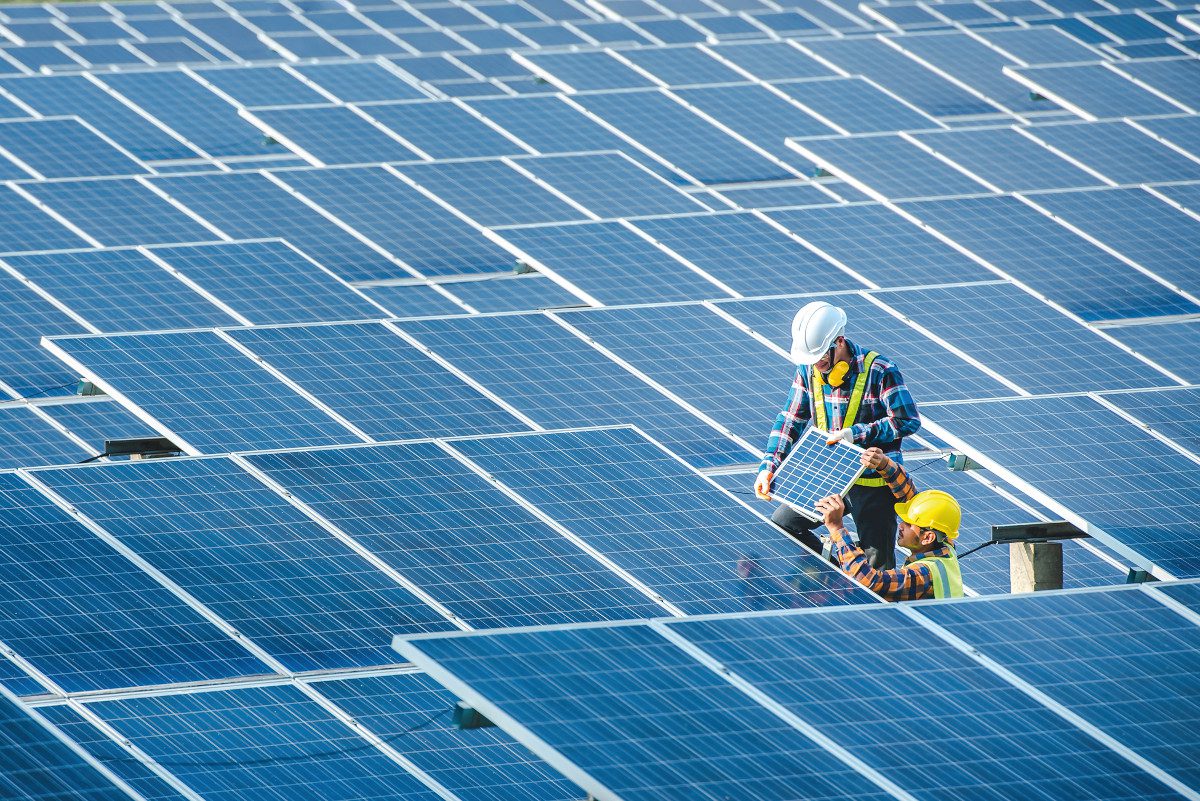
- Solar PV continues to be the success story of the energy transition: Although Europe and the United States currently lack enough announced capacity to meet the 2030 targets, the ease of buildout suggests that these targets will likely still be met
- China has already more than doubled its 2030 PV target, with approximately 300 GW of additions added since 2023: This is due to the continued decline in costs and relative ease of buildout
- All three regions are likely to miss their 2030 offshore wind targets. China requires ~89 GW from further projects, Europe requires ~81 GW, and the US requires ~24 GW.
- The pipeline for BESS is growing rapidly, but remains behind what is needed to reach 2030 targets (~221 GW required from further projects in Europe, ~154 GW in US, and ~123 GW in China).
“BESS remains the dominant question mark as the current pipeline is not sufficient to meet targets,” added Hernandez Diaz. “But because BESS can be sited, permitted, constructed, and interconnected far faster than technologies like nuclear or gas with CCUS, it has accelerated sharply in the past five years. Our analysis suggests that the business case is proven for both large operators and households pairing it with rooftop solar.”
While reaching net zero will require more than just nine technologies scaled across three regions, the current status serves as a key indicator of whether the world is on track to reach net zero by 2050. With less than five years to 2030, the urgency for stakeholders is clear.