


Emerging technologies could revolutionise the UK’s Extended Producer Responsibility (EPR) policy, ensuring businesses that invest in genuine recycling are rewarded while driving better environmental outcomes, according to a new white paper released at The RECOUP Summit on 4 March.
The report, titled “EPR That Works: Incentivising Real Recycling with Data and Innovation,” is presented by recycling technology platform Polytag and supported by major compliance agencies, Ecosurety and Valpak, as well as leading UK retailers including Waitrose, M&S, and Ocado Retail.
The challenge
Launched in 2025, EPR requires producers to pay fees based on the packaging they place on the market. However, the current system has a critical flaw: two companies producing the same volume of packaging pay similar fees—even if one achieves significantly higher recycling rates than the other.
Alice Rackley, CEO of Polytag, said: “The system doesn’t currently reward businesses that actively drive recycling performance. Emerging innovations are changing the way we see, report and act across the packaging value chain. Beyond recyclability, these innovations form the foundation for circular economy intelligence.”
Catherine David, CEO of WRAP the global environmental action NGO, continued: “Digital technologies can play a transformative role advancing the circularity of packaging and informing eco-modulation under EPR.
“The UK Packaging Pact launches in April uniting businesses, governments and sector partners in the drive towards a circular packaging system. Innovation in data and tracking will play an important role delivering this, and we welcome the innovative thinking this white paper shows towards this goal, and hope it inspires more work in data capture.”
The solution: data-driven accountability
The white paper demonstrates how new technologies can link producer responsibility to measurable recycling outcomes:
- Data-powered insights to predict and optimise recycling flows
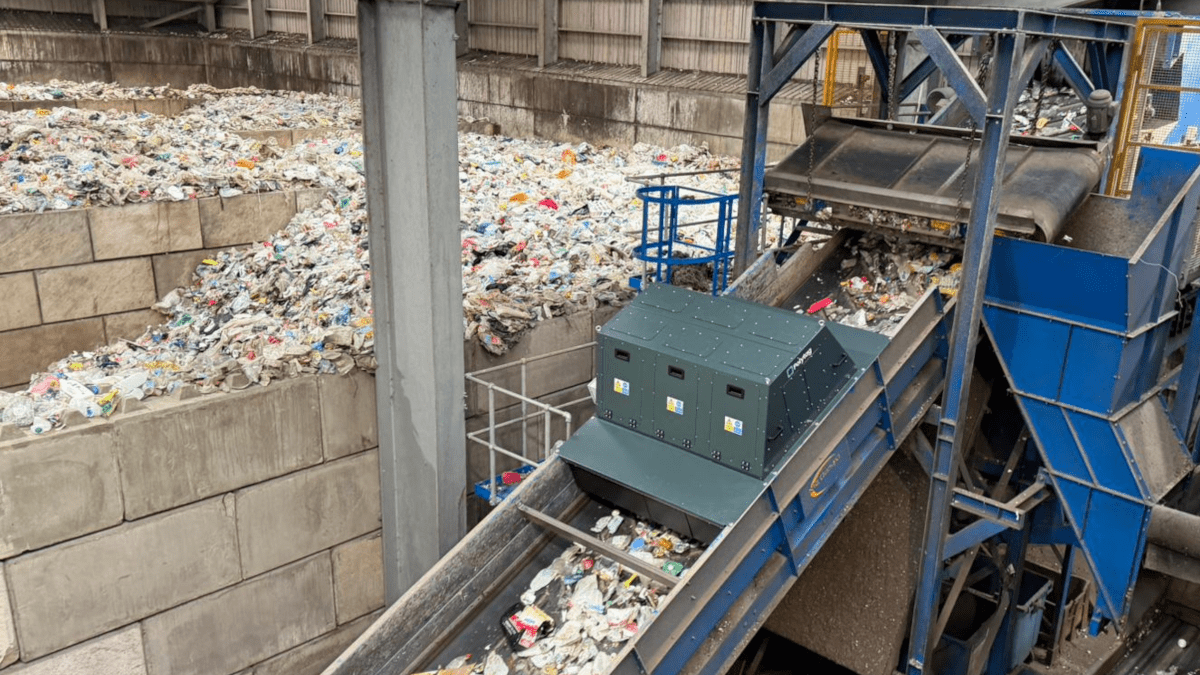
- Advanced plastic sorting that identifies materials by polymer type, food-grade status, and brand ownership to extend plastic life
- End-to-end tracking using invisible UV tags to provide real-time, barcode-level data on packaging recycling rates
- Lifecycle impact reporting linking verified recycling data to carbon accounting and ESG disclosures
Industry support
The proposal has garnered strong backing from across the sector.
Will Ghali, CEO of Ecosurety, said: “We are at a pivotal moment for EPR. Innovation and data give us the chance to connect design, behaviour and real recycling outcomes in a way that simply wasn’t possible before.”
Laura Fernandez, Senior Packaging and Sustainability Manager at Ocado Retail, said: “Access to reliable, real-world data helps retailers understand which packaging models deliver genuine environmental benefit.
“That evidence supports confident decision-making, whether improving recycling performance or exploring reuse and return models at scale.”
Steve Gough, CEO of compliance agency Valpak, added: “As EPR evolves, there is an opportunity to go beyond minimum compliance and actively recognise brands that invest in measurable circular solutions.
“A ‘Green Plus’ framework ensures that innovation, transparency and real-world recycling outcomes are recognised and incentivised, creating a system where doing the right thing also makes business sense.”
The “Green Plus” proposal
The report introduces a “Green Plus” option to sit alongside the existing EPR modulation framework, rewarding producers who demonstrate proven improvements in recyclability, recovery, transparency, and circular design through verified data.
With fee modulation being introduced from 2026 onwards, the report positions this as a timely opportunity for the government to shape how future fees reflect real-world environmental performance.
The news comes as the Welsh Government is consulting on proposals that could require packaging producers to fund litter and public bin waste management from 2027-28, as Wales diverges from England on EPR scope.