


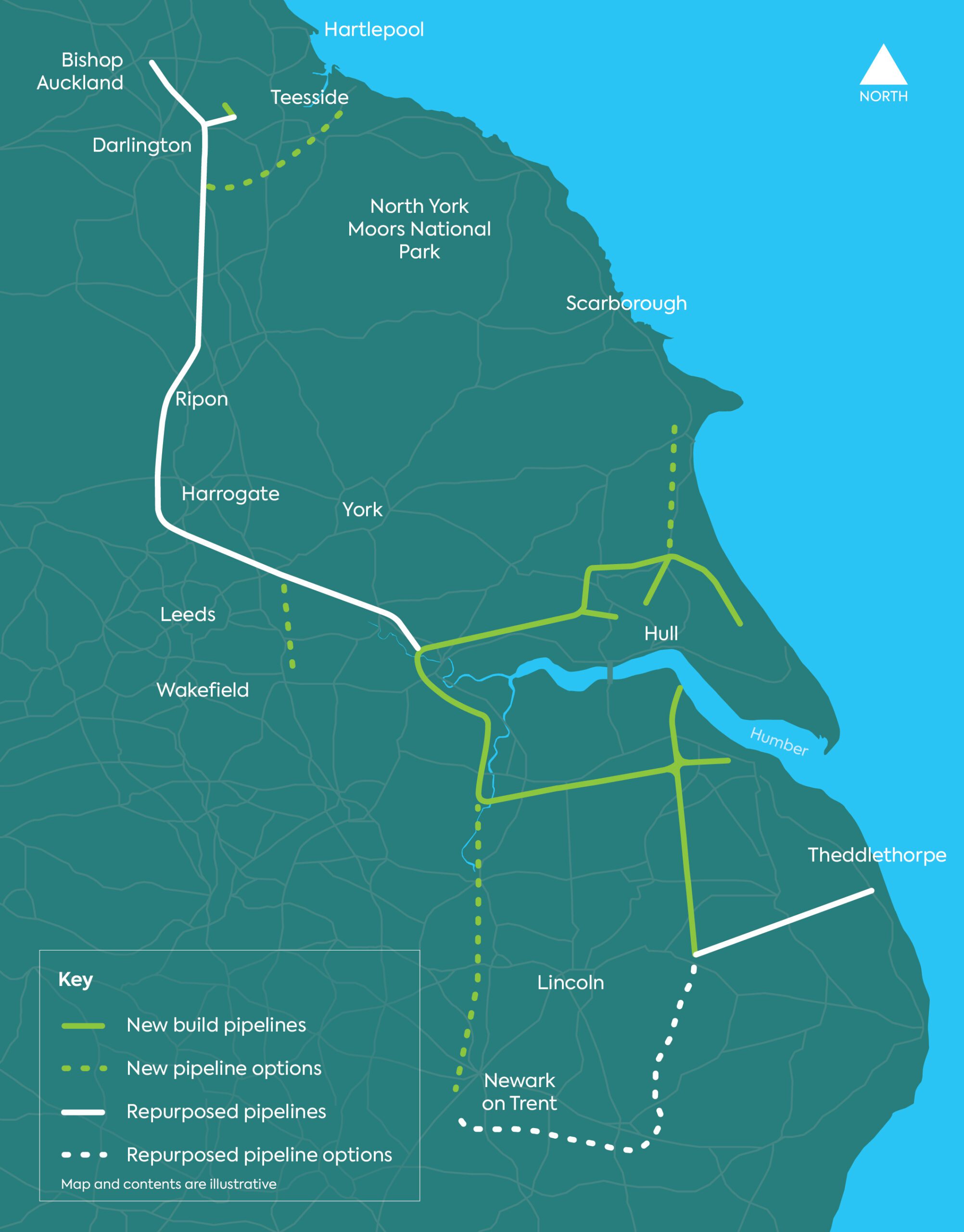
National Gas has outlined early-stage plans for a 300-mile hydrogen pipeline along England’s east coast, marking what seems a significant step towards a national hydrogen network.
The operator of the UK’s national gas transmission system unveiled plans for the first phase of the proposed national hydrogen network – Project Union: East Coast – on 18 March.
The underground hydrogen transmission pipeline is intended to connect some of Britain’s most important industrial regions and anchor the country’s emerging hydrogen economy.
“Running from Teesside, through Yorkshire and the Humber, and south into the East Midlands, the pipeline will form the backbone of a clean-energy corridor designed to boost regional economies, protect and create jobs, and enhance energy security by enabling a shift towards low-carbon energy,” said the group.
National Gas Chief Commercial Officer, Ian Radley, said:
“This is a hugely significant moment in Britain’s energy transition and a clear signal of the real momentum behind the UK’s hydrogen ambitions. By setting out concrete plans for the first phase of the national hydrogen network, we’re delivering the infrastructure that will secure Britain’s place as a world leader in hydrogen.
“The East Coast is the natural place to start. It’s one of Britain’s most important industrial heartlands with enormous hydrogen potential, making it the ideal region to begin developing a network that can then scale across the country.
“Building Britain’s national hydrogen network will unlock major investment, create a critical pathway for hard‑to‑electrify industries to decarbonise, and safeguard thousands of jobs – all while supporting the Government’s clean power ambitions and strengthening the nation’s long‑term energy security.”
Project Union is intended to take shape as Britain’s national hydrogen network. The aim is to repurpose existing natural gas pipelines — and build new ones where needed. The proposed outcome is up to 1,500 miles of a 100% hydrogen network to power British industry, driving economic growth, protecting and creating jobs, and strengthening the UK’s energy security.
The project would also assist with efforts to meet UK Government targets of net zero emissions by 2050 by enabling a transition to more home-grown, low-carbon energy for hard-to-decarbonise industries.
Early analysis commissioned by National Gas appears to indicate that Project Union could support around 3,100 jobs at peak construction and deliver £300 million in annual direct gross value added to the economy, while the nationwide hydrogen sector has the potential to deliver tens of thousands of jobs and billions in annual economic value.
The need for a national hydrogen network has been identified by the Climate Change Committee, the Second National Infrastructure Assessment and in the Government’s Hydrogen Transport and Storage Networks Pathway.
Hydrogen UK CEO, Clare Jackson, said:
“Hydrogen UK welcomes the next phase of National Gas’s Project Union. Developing a hydrogen backbone is essential to unlocking investment, driving economic growth and supporting the reindustrialisation of the UK’s energy-intensive regions. By connecting hydrogen production with the industries that need it, infrastructure like this will help ensure British industry remains competitive in the global energy transition while strengthening the UK’s energy security.”
The announcement follows the recent partnership between National Gas, Centrica, Equinor and SSE Thermal to secure government funding for Britain’s first hydrogen cluster – Humber Hydrogen.
The Project Union East Coast underground pipeline will link into the Humber Hydrogen cluster, connecting major production, storage and industrial demand centres across the region.
England’s East Coast is expected to play a major role in the UK’s emerging hydrogen sector. The local supply chain includes industrial demand, production projects and existing energy infrastructure. The region has skilled workers and specialist businesses that can bring their skills to deliver this critical national infrastructure.
Project Union: East Coast is part of East Coast Hydrogen, a collaboration between National Gas, Northern Gas Networks and Cadent to connect planned hydrogen production and storage with industrial users.
Project Union will be rolled out in stages regionally. In November 2025, Ofgem confirmed a total of £164 million for three National Gas projects, including Project Union: East Coast, to unlock the development of more than 50% of National Gas’ proposed national hydrogen network.
The project is currently in a two-year development phase, known as the Front-End Engineering Design (FEED) phase, focusing on design, environmental assessment, consents and public consultation.
Later this year, National Gas will take plans for Project Union: East Coast out for public consultation, sharing further information on the proposals, and giving the public an opportunity to have their say.