

The Welsh Green Party’s opposition to nuclear power has come under renewed criticism from trade unions and industry voices, following the publication of its Senedd manifesto and ongoing debate over the future of energy in Wales. But as the politics of nuclear power appears to be shifting globally (driven by advances in reactor technology and growing recognition of its role in a low-carbon energy mix), there are some signs that a review of traditionally entrenched positions might be underway.
The latest critics of the Welsh Greens’ stance include the GMB, which represents workers in the energy and industrial sectors. GMB senior organiser Tom Hoyles said: “This manifesto shows how unserious the Green Party is.
“There is no path to net-zero without new nuclear. And in these turbulent times: it is essential to secure Wales and the UK’s energy security.
“Thousands of Welsh workers are in the nuclear industry in Wales. This pledge would cost them their jobs.
“And Welsh families’ energy bills would skyrocket without investment into clean nuclear energy.”
The comments reflect wider union support for nuclear power as a source of long-term employment and industrial investment, particularly in regions such as north Wales.
The party has long opposed new nuclear development, including plans for small modular reactors (SMRs) at Wylfa on Anglesey. Responding to earlier proposals for nuclear expansion, in November 2025, Wales Green Party leader Anthony Slaughter said: “New nuclear power at Wylfa would be nothing but an expensive distraction from the clean, fast and cheap renewables already available to us… even the most optimistic backers admit it’ll take a decade for new nuclear to be up and running.”1
He added: “And there is still no answer to the safe disposal of nuclear waste.”
The party instead advocates for “a fast, ambitious roll-out of solar, wind and wave energy that will create jobs and cut energy bills.”
Strategic importance of Wylfa
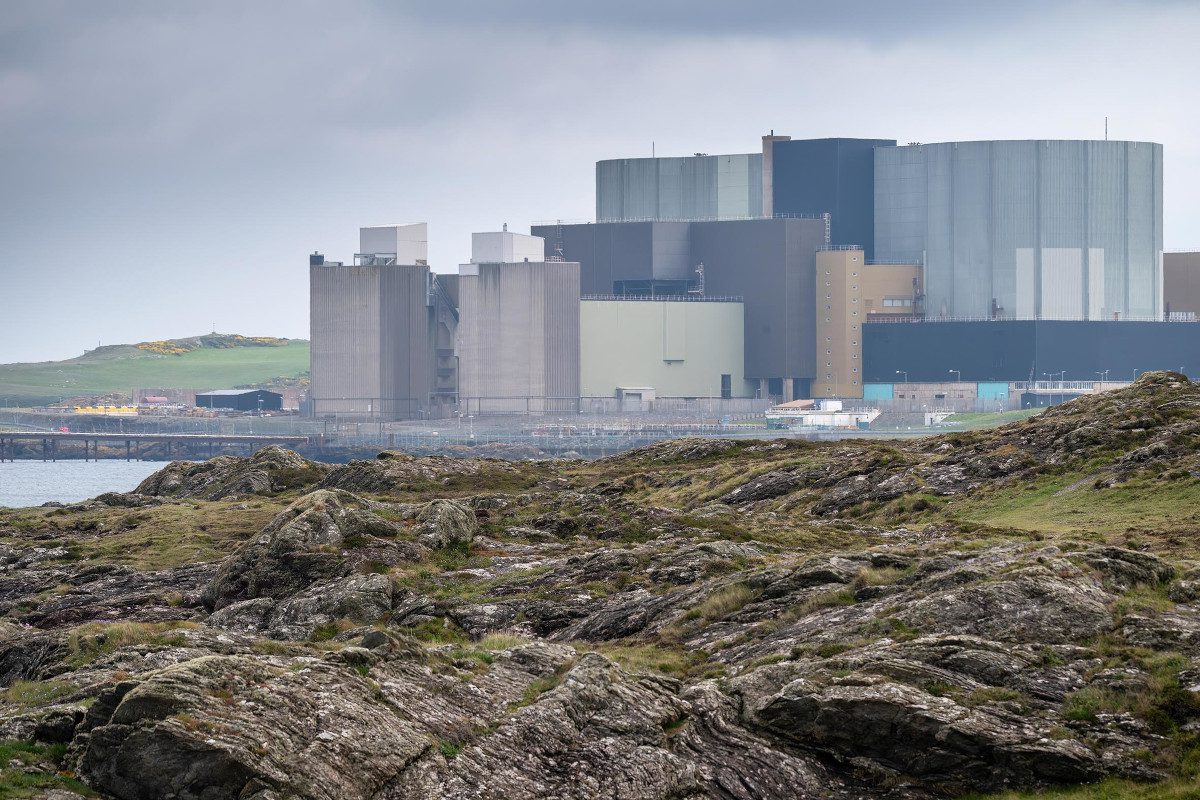
Such certainties seem to contend uneasily with an apparent opening of the nuclear discussion in the wider world. In Wales the debate centres on the future of Wylfa, a site selected by UK Government as the location for the country’s first SMR programme, with initial plans for three reactors and potential for expansion.
Welsh ministers have also backed nuclear as part of the future energy mix. First Minister Eluned Morgan said nuclear power is “a clean energy generator and an important component of the future energy mix.”
Supporters argue the project could deliver thousands of jobs and significant investment in the region, while contributing to decarbonisation and energy security.
Local leaders have echoed this position. Anglesey council leader Gary Pritchard said the project could bring “economic certainty and prosperity for decades to come.”

Broader policy divide
The disparity in these positions is a nod to a wider divide in UK energy policy. Proponents of nuclear power argue it provides reliable, low-carbon baseload electricity and reduces dependence on imported fossil fuels. The Welsh Government has described modern nuclear as a “major low-carbon infrastructure project and… long-term industrial opportunity.”
Critics, including the Greens, argue nuclear projects are too slow and costly to address the climate crisis effectively, and raise concerns over waste and long-term environmental impacts.
The Welsh Greens’ complete opposition to nuclear aligns with their UK and Scottish Greens counterparts, and it also comes close to the position of the SNP. However, while the latter’s opposition to nuclear is described by some commentators as “almost totemic” in internal policy discussion, and its own Scottish government has used its planning powers to impose an effective ban on new nuclear construction, some say there are also signs of a debate emerging.
A draft energy strategy published by the Scottish government in 2023 suggests a softening or more pragmatic stance is a possibility, with its wording that: “The draft reiterates our firm position on traditional nuclear energy, that we do not support the building of new nuclear power plants under current technologies.”2
So, while the SNP continues to oppose new nuclear under current technologies, emerging options such as SMRs have not been definitively ruled out.
This would seem to reflect a desire to keep options open as the energy transition evolves, particularly amid ongoing debate over how best to ensure reliable supply during periods when renewable generation is low — and what combination of storage, interconnection, or firm capacity will be needed to maintain system resilience.
There are also concerns that Wales could miss out on investment opportunity being grasped in other parts of the UK, amid growing international investment in nuclear technologies.
Notes
[1] Wales Green Party responds to new nuclear power plans, press release, 13 November 2025. Link: https://greenparty.org.uk/2025/11/13/wales-green-party-responds-to-new-nuclear-power-plans/?utm_source=chatgpt.com
[2] “Is it time for the SNP to drop their opposition to nuclear power? The Herald 7 Feb 2025”, Energy Transition Institute, 10 Feb 2025. Link: https://www.rgueti.com/uncategorized/is-it-time-for-the-snp-to-drop-their-opposition-to-nuclear-power-the-herald-7-feb-2025/?utm_source=chatgpt.com