


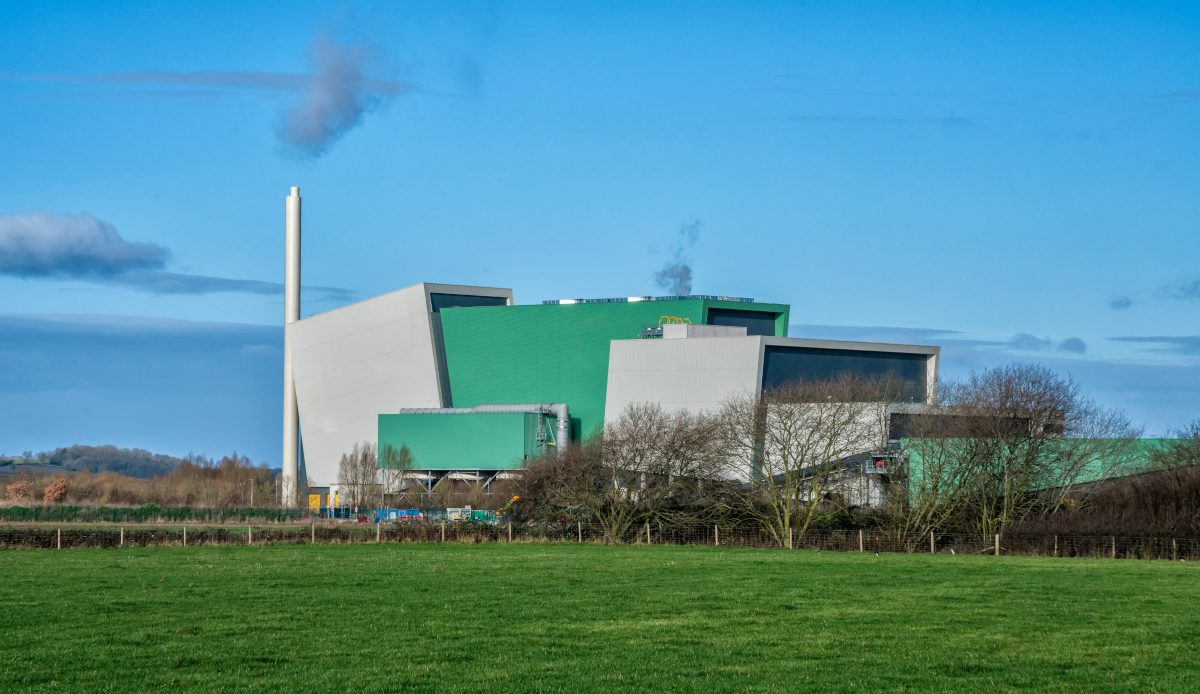
An alliance of European Waste-to-Energy1 operators has welcomed the growing international focus on methane mitigation but warned that current global guidance risks overlooking a key part of the waste management chain.
In a newly published position paper, the The WtE+X Knowledge Alliance — which brings together the Confederation of European Waste-to-Energy Plants (CEWEP), European Suppliers of Waste-to-Energy Technology (ESWET) and the Waste-to-Energy Research and Technology Council (WtERT) — argues that the Global Methane Status Report 2025 does not provide a sufficiently complete framework for addressing emissions from the waste sector.
Gap in treatment of residual waste
While the report prioritises waste prevention, recycling, composting and anaerobic digestion, the alliance says it lacks a clear definition of “energy recovery” and does not explicitly recognise Waste-to-Energy (WtE)* as a distinct treatment pathway.
According to the group, this omission is significant because even advanced waste systems generate a residual fraction that cannot be recycled or biologically treated. In many parts of the world, this waste is still disposed of in landfills or open dumps — major sources of methane emissions.
Dr Siegfried Scholz, president of the European Suppliers of Waste-to-Energy Technology (ESWET), said the role of Waste-to-Energy in treating non-recyclable waste should be formally acknowledged in global methane strategies.
“We ask to recognise the role of Waste-to-Energy for treating non-recyclable waste while avoiding methane emissions from landfills.”
Policy and financing implications
The alliance argues that the lack of explicit definitions in the global report could have practical consequences. As a widely referenced document, it is used to inform national climate plans, development finance decisions and sustainable investment frameworks.
Where technologies are not clearly defined, the group warns, they may be excluded from funding or policy support — particularly in regions where alternatives to landfill remain limited.
Globally, around 500 million tonnes of municipal waste are treated annually in Waste-to-Energy facilities, compared with more than one billion tonnes that continue to be landfilled.
Scientific perspective
From an academic standpoint, the omission also raises concerns about the completeness of methane mitigation strategies, according to Prof Huang Qunxing of the Waste-to-Energy Research and Technology Council (WtERT) and Zhejiang University.
“From a scientific standpoint, any comprehensive methane mitigation strategy in the waste sector must address the full waste management chain, including the residual fraction that cannot be recycled or biologically treated,” he said. “Decades of peer-reviewed research and operational data demonstrate that controlled thermal treatment of residual waste plays a critical role in avoiding methane formation from landfills, while ensuring energy recovery and material stabilisation. The omission of this pathway risks creating a gap between scientific evidence and policy implementation.”
Debate over role of EfW
Within the UK and EU, Energy-from-Waste (EfW) — often used interchangeably with Waste-to-Energy — is tightly regulated and typically positioned as a last-resort option within the waste hierarchy, after prevention, reuse and recycling.
Supporters argue that it complements high recycling rates and has contributed to significant reductions in landfilling and associated methane emissions.
However, critics — including some environmental NGOs — caution that expanding EfW capacity risks undermining recycling efforts and locking in long-term infrastructure with associated carbon emissions. Concerns have also been raised about air pollution and the compatibility of incineration with net-zero targets.
Call for clearer framework
The WtE+X Knowledge Alliance is calling for the Global Methane Status Report to be strengthened through:
- explicit recognition of Waste-to-Energy as a distinct technology category;
- clarification of its role alongside recycling and biological treatment;
and the introduction of eligibility criteria aligned with best available techniques and monitoring standards.
With urbanisation and waste generation continuing to grow — particularly in the Global South — the group warns that failing to address the residual waste stream could limit the effectiveness of global methane mitigation efforts.
Notes
[1] “Waste-to-Energy” (WtE) and “Energy-from-Waste” (EfW) are broadly synonymous terms for energy recovery from waste. In UK policy and industry, “EfW” typically refers to the thermal treatment of residual waste, while “WtE” is often used more broadly in international contexts and may encompass a wider range of energy recovery processes.