


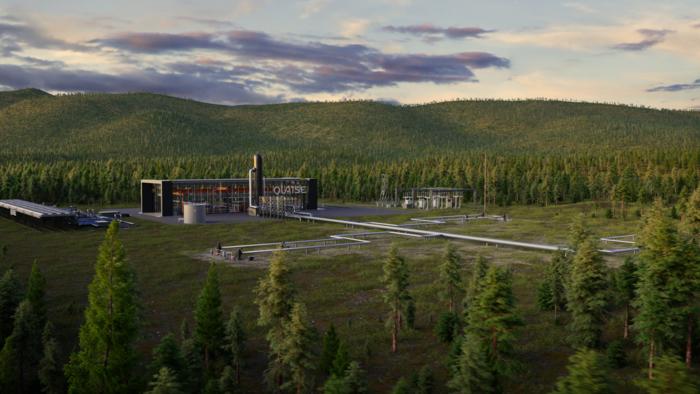
US geothermal technology startup Quaise Energy says its Project Obsidian in Oregon could deliver 50MW of always-on renewable power from superhot geothermal wells by 2030, in what the company describes as the world’s first power plant built around superhot geothermal energy.
The Houston-based startup said the first phase of the project is already under construction and could begin operations by 2030. An internal analysis, presented at the 2026 Stanford Geothermal Workshop, supports output of at least 50MW from a small number of wells, according to the company.
Superhot geothermal involves tapping rock hotter than 300°C. At these temperatures, geothermal wells can potentially produce far more energy than conventional geothermal systems while requiring significantly less land.
Quaise said later expansions at the same site could increase output to 250MW, with longer-term plans targeting 1GW.
“Our goal is to build out to a gigawatt in the area,” said Carlos Araque, CEO and co-founder of Quaise.
Deep heat gamble
Quaise is developing a drilling system that uses millimeter-wave energy to melt and vaporize rock at extreme depths, where conventional drill bits struggle with high heat and pressure.
At present, superhot rock is accessible only in limited regions, such as Iceland, where it lies closer to the surface. Wider deployment has been restricted by the difficulty and cost of drilling several miles underground.
According to Quaise, Project Obsidian is a Tier I site where superhot temperatures can be reached at around five kilometres, or about three miles, below ground. Early wells at the site will be drilled using conventional methods before millimeter-wave systems are introduced on hotter wells.
The first phase will include two geothermal well systems targeting different temperature zones. One system will reach rock averaging 315°C, while the other will target rock averaging 365°C.
The lower-temperature system carries less technical risk and could help the company refine its methods before moving into hotter zones.
First wells crucial
A separate confirmation well is expected to begin operating later this year. Quaise said it will provide data on rock strength, underground conditions, fluid behaviour, and how fractures should be created to allow water flow.
“This analysis validates our long-held hypothesis that higher subsurface temperatures entail substantial improvements in power production,” said Daniel W. Dichter, senior mechanical engineer at Quaise.
He added, “If these first wells work the way we think they will, they will be on par with exceptionally productive oil and gas wells in terms of equivalent power output.”
The startup said the two initial well systems would occupy about 20 acres at the surface, a footprint it says is far smaller than comparable wind or solar installations.
However, significant technical questions remain. Quaise said it still needs to determine what impurities may rise with produced water, whether the resource returns steam or liquid water, and what final plant design will be most suitable.