



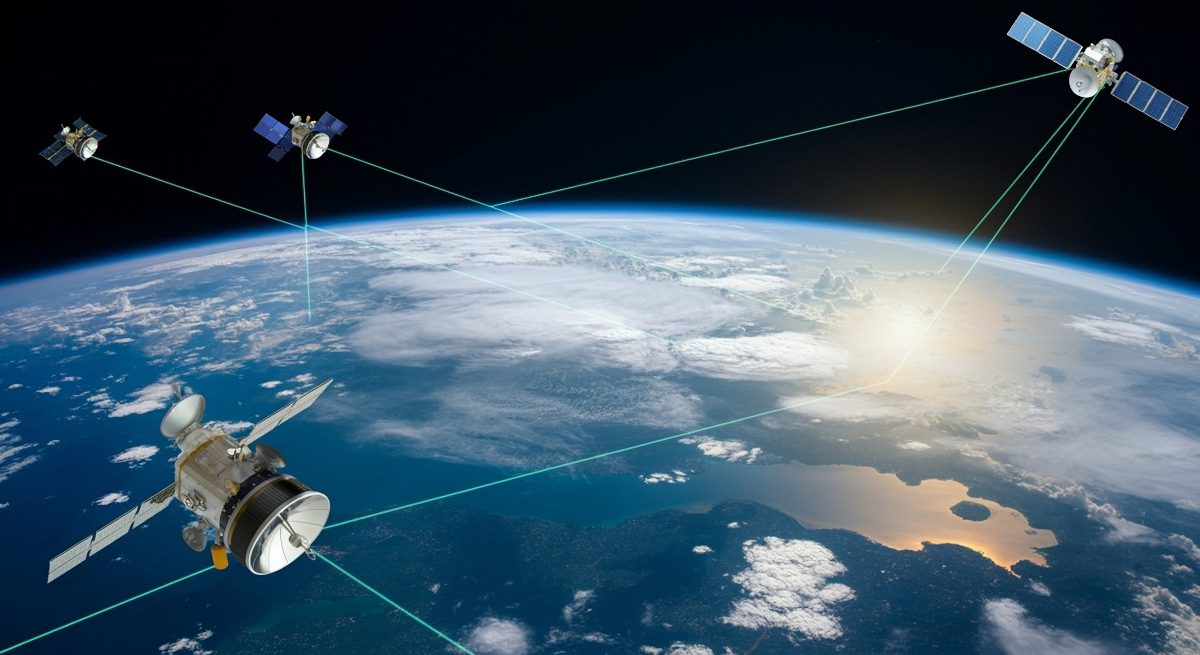
Jacksonville-based aerospace startup Star Catcher Industries has raised $65 million in an oversubscribed Series A funding round to accelerate development of what it describes as the world’s first orbital power grid.
The investment round was led by B Capital and co-led by Shield Capital and Cerberus Capital Management through its Cerberus Ventures arm, bringing the company’s total funding to $88 million.
Star Catcher is developing an orbital energy transmission system designed to beam power wirelessly to satellites and spacecraft using optical power beaming technology. The company says the system could help address growing power limitations affecting communications, Earth observation, defence and computing systems operating in space.
The funding announcement was accompanied by news that General John W. “Jay” Raymond (Ret.), the first Chief of Space Operations of the US Space Force, will join the company’s board of directors.
Star Catcher says it plans to launch its first space-based optical power beaming demonstration later this year, describing the mission as a step toward building scalable in-orbit energy infrastructure capable of supplying spacecraft with additional power without requiring major hardware modifications.
“This investment underscores the conviction that orbital infrastructure is now as fundamental as terrestrial infrastructure,” said Andrew Rush, co-founder and chief executive of Star Catcher. “Every major application driving the space economy — connectivity, computing, security, sensing — is power-limited today. Star Catcher is lifting that ceiling — making it possible to build in orbit at the scale the next century of life on Earth will demand.”
Founded less than two years ago, the company says it has already completed an on-orbit subsystem demonstration and established what it describes as a world record for optical power beaming. The Series A funding will support additional flight missions and expansion of engineering and operational capabilities.
Investors involved in the round said demand for orbital infrastructure is likely to increase as commercial and government activity in space expands.
“At B Capital, we focus on scaling technologies to enhance energy infrastructure, and the same dynamics we’re seeing on Earth are now playing out in orbit,” said Jeff Johnson, General Partner and Head of Energy at B Capital. “There is exploding demand, limited shared infrastructure, and a generational opportunity for the company capable of building the first in-orbit grid. We strongly believe Star Catcher is that company.”
Beaming power
Optical power beaming systems use focused light energy to transmit electricity wirelessly between spacecraft. Advocates argue the technology could eventually reduce the need for larger onboard solar arrays and batteries, extend mission lifetimes and enable more energy-intensive applications in orbit.
Wireless power transmission in space is currently being pursued via two main technological avenues: microwave transmission and optical, or laser-based, beaming. Microwave systems have traditionally been favoured for concepts involving large-scale transmission of solar-generated power from orbit to Earth, partly because microwave signals travel more effectively through atmosphere and cloud cover, although they require very large transmitting and receiving infrastructure. Optical or laser-based systems can provide narrower, more precise beams and smaller receivers, making them potentially better suited for powering satellites, spacecraft, lunar installations or high-altitude platforms.
The concept has attracted increasing attention from defence agencies and private investors amid growing interest in resilient space infrastructure and autonomous orbital operations.
“Star Catcher is solving the constraint that plagues every space-based mission: power,” said John Serafini, Partner at SHIELD. “They’ve moved from concept to world-record performance to flight hardware on a timeline almost no frontier-tech company achieves, and they’re building infrastructure with direct relevance to both commercial operators and the national security community.”
Interested bodies
According to the company, its customer pipeline includes commercial satellite operators and US government stakeholders. Star Catcher says it has signed seven power purchase agreements and secured multiple government contracts, although financial terms and customer identities were not disclosed.
General Raymond said space-based energy infrastructure could become strategically important for both commercial and defence operations.
“Energy and infrastructure resilience are core national and economic priorities on Earth, as in orbit,” he said. “Persistent surveillance, resilient communications, and unhindered maneuverability are all constrained today by power. An on-demand power grid can change that, expanding critical capabilities across commercial and national security missions.”
The company says the new funding will support a second orbital mission already under development as it moves toward commercial deployment of on-demand power services in space.