



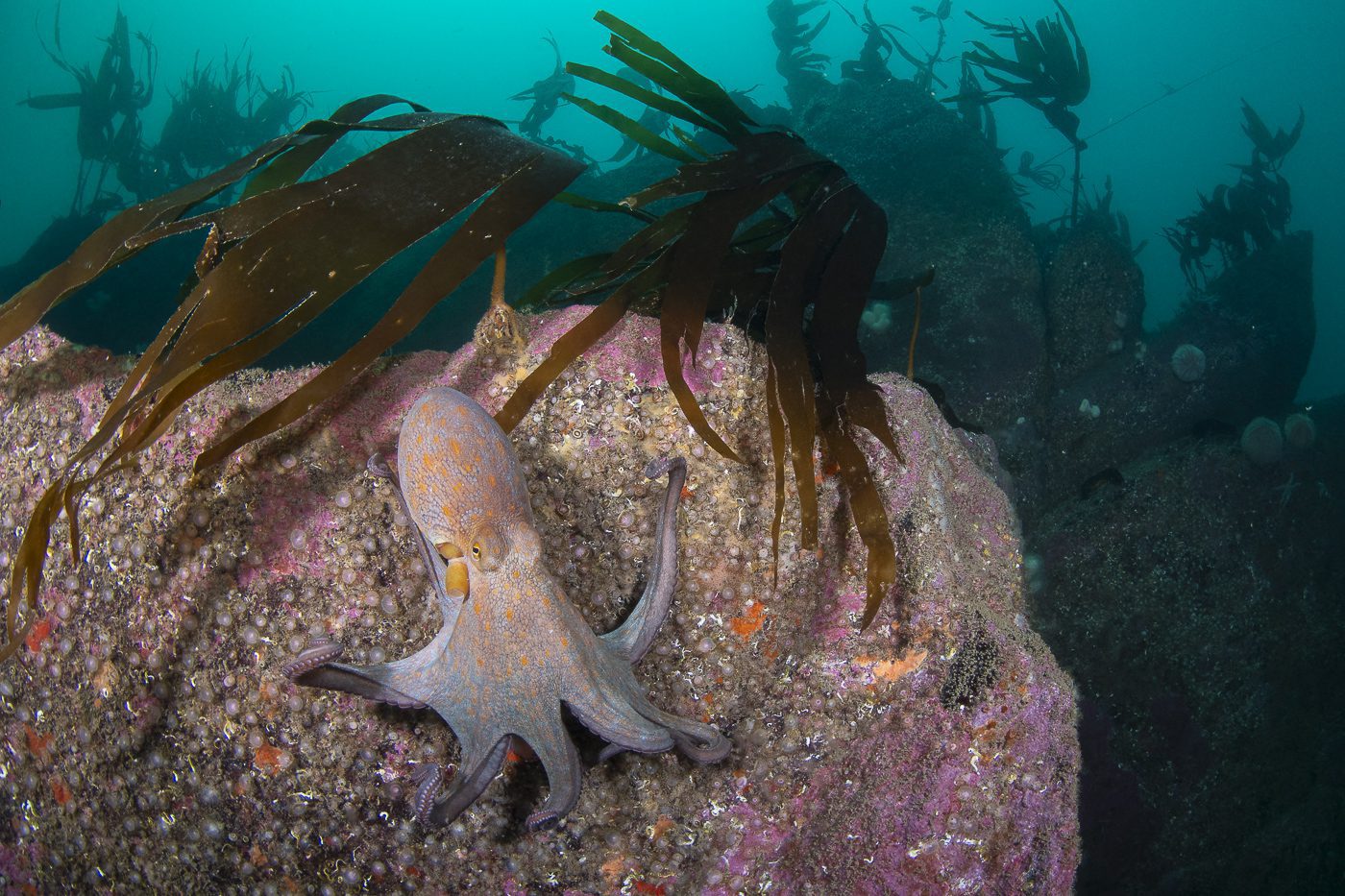
Scientists have reported a second year of an unprecedented boom in common octopus populations off southwest England, with new research from the Marine Biological Association (MBA) describing the phenomenon as the largest recorded in at least 75 years. The study, released this week, suggests the surge in common octopus (Octopus vulgaris) numbers since 2025 is likely linked to rising sea temperatures and broader changes in the marine environment.
Eyes underwater
The new report brings together scientific surveys, innovative underwater monitoring, and observations from recreational divers and snorkellers to better understand how, where and why this dramatic population increase occurred, and what it could mean for the future of UK coastal waters. It was funded by Defra and conducted in collaboration with the University of Plymouth.
What the new study reveals about octopus abundance and behaviour
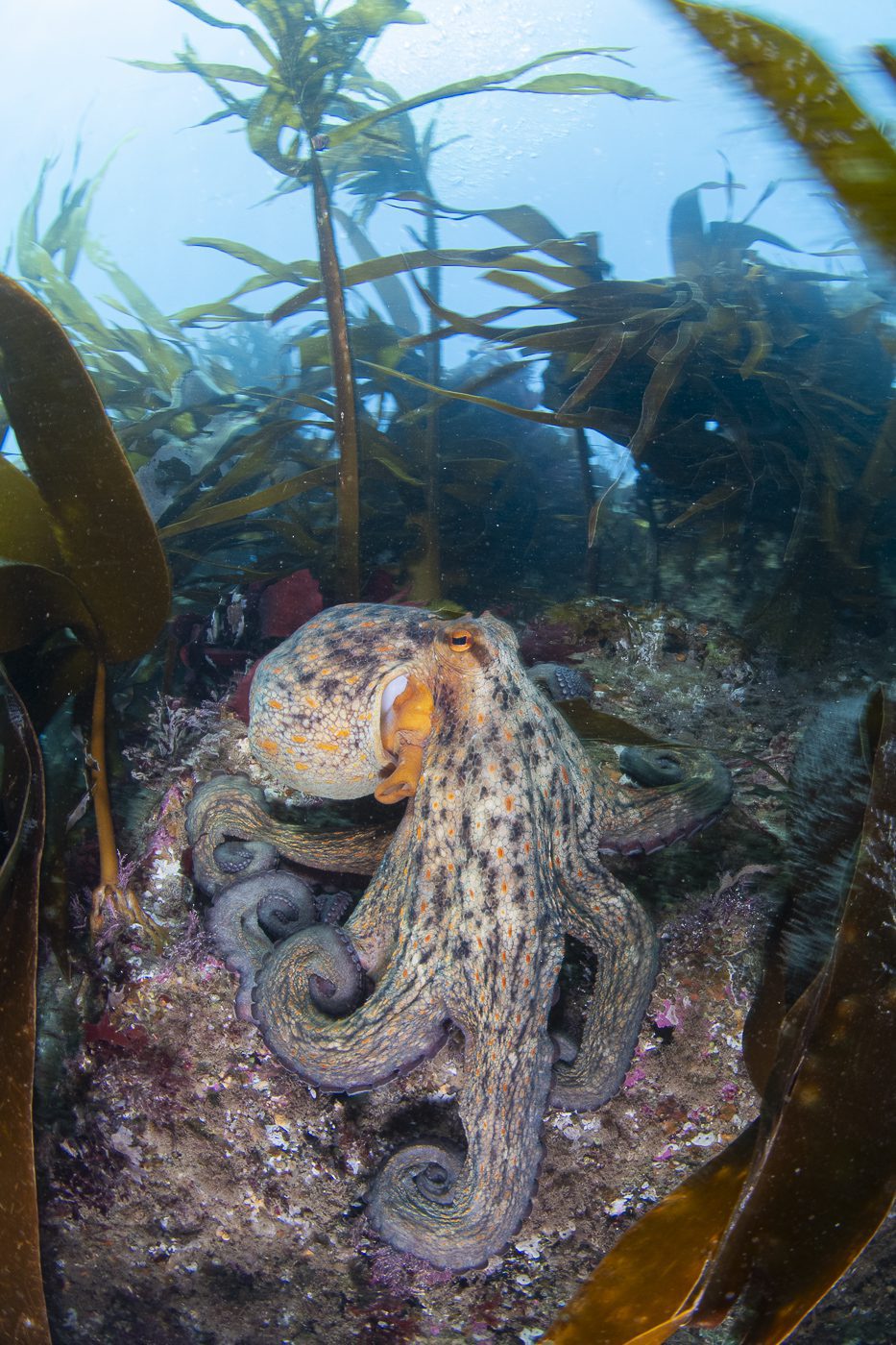
A standout feature from the new report was the value of the survey of SCUBA divers and snorkellers. There were 120 responses in a relatively short period of time last year, and they provided an absolute wealth of information – along with some stunning photos.
Particularly interesting was that quite a few of the divers who responded lived outside of the southwest, for example around London and the Midlands and as far afield as Ireland, but almost all of the octopus were seen in the southwest. People were not only travelling to the southwest to go diving and snorkelling; 30.1% of people actually said they had travelled to certain dive sites specifically to see octopus. Many divers also emphasised just how rare the event was.
A selection of their responses to the survey is below, all reported along the Devon and Cornwall coast:
“I had never seen a common octopus in the UK before and have been snorkelling all my life around Cornwall.”
“One in a den, another was found in a lobster pot with several spider crab carcasses.”
“On one dive in an area with octopus, I saw a lot of broken lobster claws lying on the seabed. I also saw octopus being harassed by cuckoo wrasse.”
“Their nests are very distinctive with decorations of shellfish, but I am suprised at how far outside of their ‘houses’ we have seen them, for example, they’ve been full on hunting on the reef.”
“I had stumbled across lots of octopus near a headland close to Towan beach by complete chance, as this is a spot I’ve snorkelled before but had never seen any. I went back multiple times in the coming weeks to hopefully encounter and observe this incredible creature. I saw about 10 without even having to search. I found many in lobster pots – I even witnessed one go in!”
Dr Bryce Stewart, Senior Research Fellow at the MBA said: “I can’t thank the divers and snorkellers who took part in our survey enough. Their responses provided new information about octopus distribution and behaviour at a scale that would be almost impossible to replicate scientifically.
“Particularly significant were observations confirming widespread breeding of the common octopus in UK waters, and reports of octopus predation on a wide range of species, including commercially important crabs and lobsters.”
Sightings and observations from divers and snorkellers were backed up by footage from Baited Underwater Remote Videos (BRUVs) deployed from the MBA Research Vessel Sepia. Measurements taken from BRUVs and notes from divers confirmed the abundance of octopus on rocky reef habitats, often the same areas targeted by shellfish fisheries.
Professor of Marine Ecology at the University of Plymouth, Professor Emma Sheehan, said: “Our University of Plymouth long-term, underwater video monitoring data helped to evidence that this species of octopus was not typically observed along the southwest coast, and provided an excellent non-destructive means of recording octopus abundance and behaviour.”
Octopus were seen actively hunting, guarding food, interacting with other marine species and displaying strong territorial behaviour. At the time of the study many observations were of large, mature octopus, some showing signs of senescence (the final stage of life), alongside observations of eggs and juvenile octopus. This provides strong evidence that successful breeding took place in UK waters during 2025, particularly in late spring and early summer.
An exceptional rise in octopus numbers
This latest report, Fisheries independent estimates of octopus abundance and behaviour, follows on from the first, Common octopus (Octopus vulgaris) blooms off the Southwest of the UK: History, trends, causes and consequences. Published in January 2026, the report analysed the effect of the latest bloom by drawing on data from scientists and fishermen.
Researchers found that the 2025 octopus bloom was exceptional in both size and geographical spread. Evidence suggests the population likely originated from breeding grounds near the Channel Islands and northern France, with currents carrying young octopus into UK waters. Warmer sea temperatures appear to have played a key role, raising concerns that similar events could become more common as the climate changes.
Recent reports indicate that octopus have spread from where they were last year and are now being caught on both the south and north coasts of Devon and Cornwall, with additional sightings as far afield as Wales, Dorset, East Sussex and Scotland – indicating a much wider geographic spread than ever seen before.
Impacts on fisheries and fishermen
The bloom coincided with sharp declines in landings of commercially important shellfish species, including crabs, lobsters and scallops. Octopus are highly intelligent and effective predators, and evidence from fishermen and divers indicates they were feeding both on the seabed and inside fishing gear, consuming trapped shellfish.
For many small‑scale fishermen, particularly those operating pots and static gear, this resulted in damaged catches, lost income and increased uncertainty. The findings highlight how sudden ecological changes can ripple through fishing‑dependent communities and carry real economic consequences.
If you can’t see them, it doesn’t mean they’re not there
Traditional trawl surveys, commonly used to monitor fish and shellfish populations, failed to detect octopus during this bloom. Researchers believe this was due to differences in timing, survey locations and gear design, rather than an absence of octopus.
However, the diver and snorkeller surveys and BRUV deployments all showed that octopus were abundant at the same time.
Likewise, the first report on the octopus bloom showed the value of data from fishermen. Overall, the study shows that combining scientific research with data from fishermen and public participation can provide a far clearer picture of rapid environmental change.
What this means for coastal communities and the public
While the octopus bloom has created challenges for fisheries, it has also sparked significant public interest. Many divers travelled specifically to the southwest to observe octopus, bringing short‑term economic benefits through recreational tourism and highlighting the public’s strong interest in and connection to marine life.
At the same time, the bloom raises important questions about how climate change is reshaping UK seas; from altered predator‑prey relationships to new pressures on fisheries and ecosystems upon which coastal communities rely.
Looking to the future
In this final report on the octopus bloom, the MBA recommends:
- expanding underwater video surveys
- improving monitoring of fishing catches and fishing gear
- developing a dedicated reporting app for divers and snorkellers.
Further research into octopus diet, movement, population dynamics and socio‑economic impacts will be essential to prepare for future blooms and to support evidence‑based fisheries management.
“This event is a striking example of how quickly our seas can change,” said lead author, Dr Bryce Stewart. “By working together with fishermen, divers and coastal communities, we can better understand what’s happening and plan for a future where these changes may become more frequent.”
Key findings
- 96.5% of divers and snorkellers surveyed saw common octopus (Octopus vulgaris) while diving or snorkelling of the southwest coast of England in 2025.
- 43.8% saw 2-4 octopus on a single dive or snorkel.
- 21.4% saw 5-10 on a single dive or snorkel.
- 7.1% saw 11-20.
- 62.7% reported seeing an average number of 1-2 octopus on their dives or snorkels off the southwest coast in 2025.
- The majority (55.4%) saw common octopus in shallow depths of 0-10m.
- 34.8% saw them at a depth of 11-20m.
- The vast majority (74.1%) saw the octopus in a rocky reef habitat.
Porthkerris, Cornwall was reported as the location that most divers and snorkellers travelled to specifically to see common octopus.