


Researchers at Australia’s RMIT University say they have demonstrated a way to remove more than 90% of microplastics from wastewater by combining microscopic and nanoscopic air bubbles within a widely used treatment process.
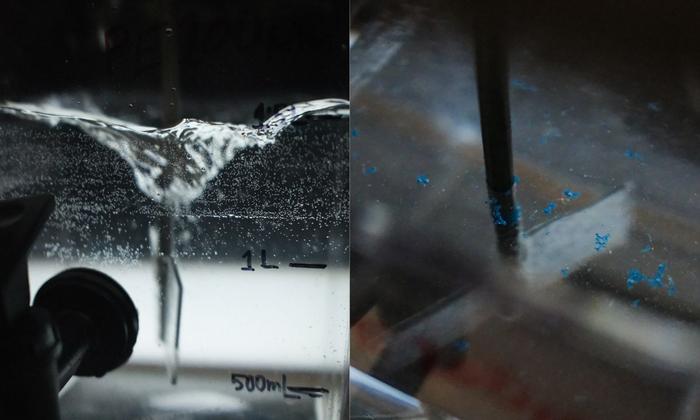
The work centres on an enhanced version of dissolved air flotation (DAF), a technology already employed in many water and wastewater treatment plants to separate oils, grease and suspended solids from water by attaching them to bubbles and carrying them to the surface for removal.
According to the researchers, combining microbubbles and nanobubbles within the process significantly improved the capture of plastic particles compared with systems relying on either bubble type alone.
The team believes the approach could potentially be adopted by wastewater treatment facilities without major infrastructure changes, through optimisation of operating conditions such as air pressure, saturation time and bubble size.
Lead author Associate Professor Biplob Pramanik, director of RMIT’s Water Effective Technology and Tools Research Centre, said the findings point towards a practical means of reducing one of the most persistent forms of emerging pollution.
“Wastewater treatment plants are a major pathway for microplastics as they slip through filtration processes, posing risks to ecosystems and human health,” said Pramanik.
“Our approach is simple to implement and significantly increases the removal of microplastics during the primary stage of treatment.”
The findings are reported in the journal ACS ES&T Water in a paper entitled Micro-Nanobubble Integrated Dissolved Air Flotation: A High-Efficiency Strategy for Microplastic Mitigation in Wastewater.
Microbubbles are typically tens of micrometres in diameter — around the width of a human hair — while nanobubbles are hundreds or thousands of times smaller, generally measuring less than one micrometre across. Their extremely large surface area relative to their volume allows them to interact efficiently with contaminants suspended in water.
In the RMIT system, the larger microbubbles provide the buoyancy needed to lift particles to the surface, while the much smaller nanobubbles appear to increase adhesion between bubbles and plastic particles and promote the formation of larger agglomerates that can be removed more easily.
The researchers also found that substances normally regarded as treatment obstacles, including organic matter and fats, oils and grease, did not reduce performance under test conditions.
Dr Sirajum Monira, who carried out the work during her PhD studies at RMIT, said some wastewater constituents could even assist removal.
“Organic matter and fats, oils and grease, which are typically considered barriers to treatment, did not reduce performance,” she said.
“In some cases, they improved it by helping microplastics clump into larger, more easily removed particles when combined with standard coagulants.
“By capturing the microplastics before they become concentrated in sewage sludge, we can reduce the amount entering biosolids and ultimately minimise their release back into the environment.”
Interest in flotation-based microplastic removal has grown rapidly in recent years as regulators and utilities increasingly focus on the role of wastewater treatment plants as a pathway through which plastics enter rivers, coastal waters and agricultural land via biosolids applications.
Conventional wastewater treatment processes already remove a substantial proportion of larger microplastics, but the smallest particles can evade capture and pass into receiving waters or become concentrated within sewage sludge streams. Researchers worldwide are investigating a range of additional treatment options, including membranes, electrochemical techniques, advanced coagulation methods and modified flotation processes.
This new study details an incremental advance in the optimisation of one attractive avenue of research, and is seemingly novel in its combination of both bubble sizes to exploit their complementary properties.
Dissolved air flotation has been used in water treatment applications since the 1960s, while the use of microbubble and nanobubble technologies for pollutant removal has attracted increasing attention over the past decade.
The results have so far been demonstrated at laboratory scale, and the researchers acknowledge that pilot and full-scale trials will be required to determine whether similar removal rates can be achieved under the highly variable conditions encountered in operational wastewater treatment plants.
Other details that would be expected to have a bearing on the method’s commercial suitability include energy consumption, operational costs, the effectiveness of the technique against the smallest nanoplastics, and how performance varies between different wastewater streams and plastic types.
The team is now seeking industrial partners to validate the approach under real operating conditions and across a broader range of wastewater applications.
Organisations interested in participating in trials are being invited to contact RMIT’s research partnerships team.