


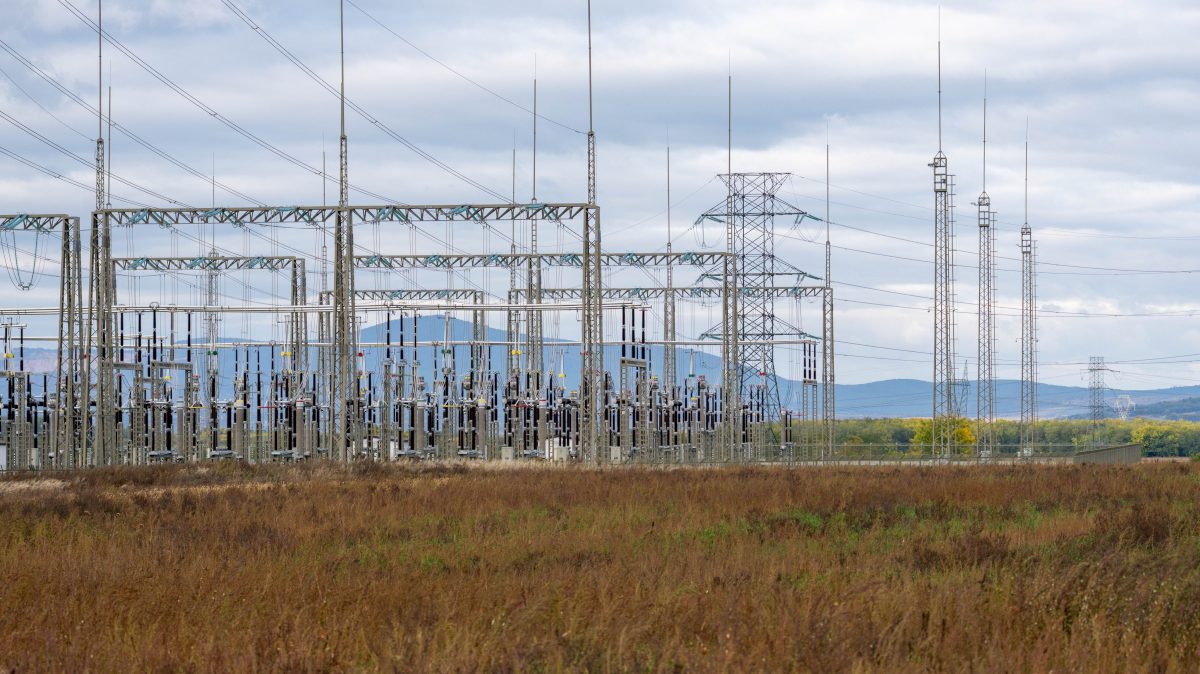
The Netherlands’ worsening grid congestion is providing one glimpse of how renewable operators across Europe may be forced to manage increasingly complex portfolios of distributed assets.
Businesses and energy projects in several regions of the country face lengthy waits for new or expanded grid connections as transmission and distribution infrastructure struggles to keep pace with electrification and renewable deployment.
Dutch independent power producer DSG has completed the rollout of software designed to operate its 350 MW portfolio of solar and battery energy storage assets as a single coordinated fleet, allowing the company to centralise asset monitoring, market participation and operational management.
The deployment, supplied by Belgian software company Powernaut, covers hundreds of solar installations across the Netherlands and is intended to help DSG respond more effectively to changing electricity prices, network constraints and balancing requirements.
The issue extends well beyond the Netherlands. The European Commission estimates that Europe will require around €1.2 trillion of investment in electricity transmission and distribution infrastructure by 2040 to accommodate growing electricity demand and renewable generation. Meanwhile, modelling by the Commission’s Joint Research Centre suggests that as much as 310 TWh of renewable electricity could be curtailed by 2040 under a business-as-usual grid expansion scenario.
As a result, attention is increasingly shifting from simply building renewable generation capacity towards ensuring that distributed assets can be coordinated, controlled and traded more intelligently.
Many renewable portfolios continue to rely on separate systems for operational monitoring, electricity trading and business reporting, creating challenges for operators attempting to manage large numbers of geographically dispersed assets in real time.
Powernaut said its platform combines asset operations, market operations and business reporting within a single operational environment while allowing operators to retain control of their operational data and trading activities rather than relying on third-party aggregation services.
Martijn Vermeer, chief operating officer at DSG, said:
“Managing a distributed portfolio at this scale requires confidence that every site is operating as expected and that every activation is actually being followed. That is something we did not have before.
“Powernaut has given us much stronger oversight across the fleet and the flexibility to add new sites and participate in more electricity markets.”
The emergence of battery storage alongside solar generation is one factor adding complexity to renewable operations, with operators increasingly seeking revenues from balancing markets, congestion management services and other flexibility mechanisms in addition to electricity sales.
Industry analysts increasingly view such flexibility services as essential to maintaining system stability as renewable penetration rises and conventional thermal generation retires.
Florentijn Degroote, chief executive and co-founder of Powernaut, said:
“DSG shows how an independent power producer can operate a large, distributed portfolio across increasingly complex electricity markets without relying on a patchwork of separate systems or giving up control of its data and trading.
“For Powernaut, this is an important commercial milestone. It validates our Energy Operations Workspace™ across a large, live portfolio and gives us a strong reference point as we support other European operators moving towards more flexible operating models.”
The deployment is now live across DSG’s portfolio and is expected to support further expansion, including additional solar projects and battery co-location schemes, as flexibility becomes an increasingly important feature of Europe’s evolving electricity system.