


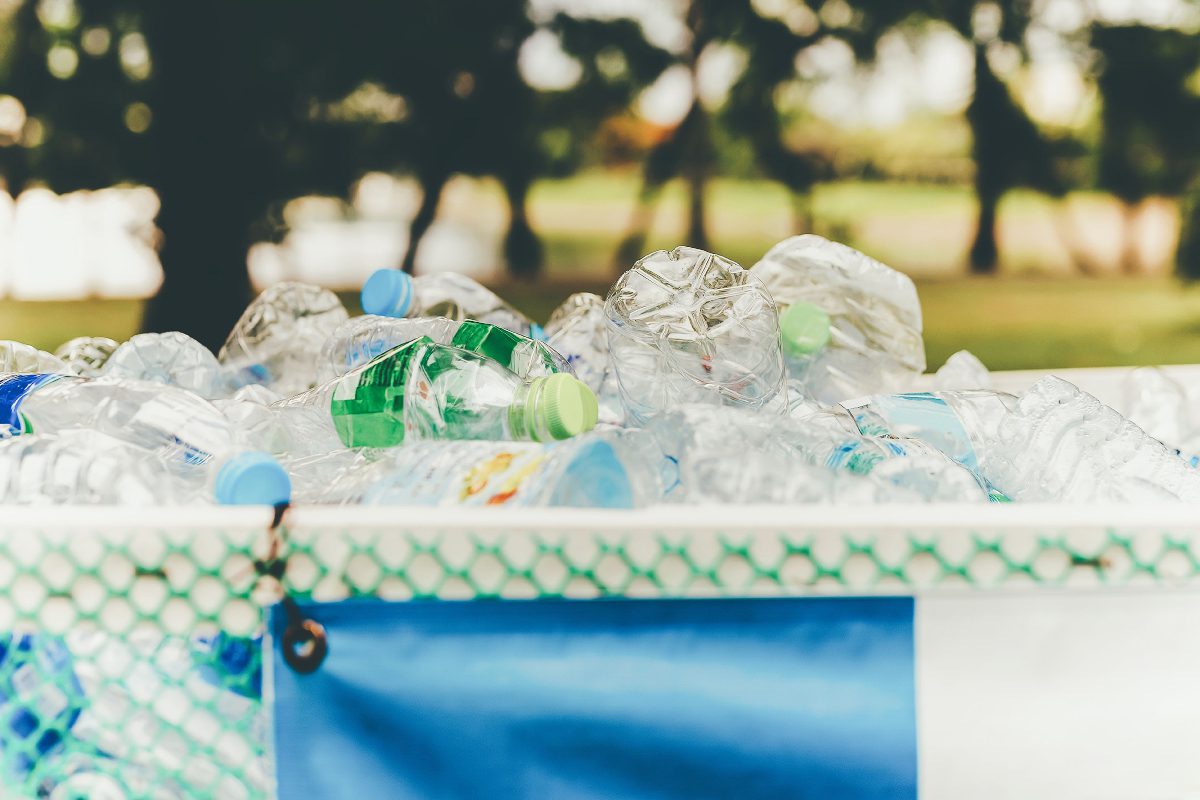
Mechanical recycling of plastics can be significantly undermined by even small amounts of cross-contamination between common packaging polymers, according to researchers at the University of Manchester, who say improved quality-control tools are needed to support a circular plastics economy
When it is done well, in other words when your yogurt pots (polypropylene, PP) are sorted from your milk jugs (high density polyethylene), mechanical recycling is the most environmentally positive way to turn plastic waste into new products in a circular plastics economy, turning pots into pots and jugs into jugs.
However, poor sorting can lead to mixing polyolefins together, changing the way that the plastic degrades during the recycling process.
The researchers explain that HDPE and PP are inherently immiscible, so when they become mixed they separate into distinct phases within the recycled plastic. This poor adhesion between the polymer phases makes recycled products more susceptible to structural failure. The study identifies contamination thresholds that define practical limits for mechanically recycled polyolefins.
While well understood for polyethylene, the study, published in ChemCircularity, focuses on what happens when PP is mixed with HDPE. Researchers found that contaminants act as stress aggregators, and that the phase separation caused by contamination weakens the material. While HDPE can tolerate a few percent contamination, even 1% of HDPE in PP alters the degradation mechanism.
The result of this contamination, even at this small scale, is a recyclate with radically altered physical properties, a change which impacts structure-property relationships and reduces the overall performance of the material, especially important in the context of their industrial reuse.
To understand why PP is especially sensitive, the team used scanning electron microscopy (SEM) to examine the internal structure of contaminated blends. They found that HDPE dispersed throughout the PP matrix as immiscible droplets, disrupting the polymer network and creating additional sites for radical propagation during recycling.
Researchers argue that while efforts have been made to normalise polymers based on processing history and end-use application, approaches like these only consider a limited number of material grades and do not represent the broad range of polyolefin grades and blends.
They suggest that cross-contamination needs better analytical tools that can serve as quality control in industrial processes, evidencing the need for better sortation in household and industrial recycling.
The researchers also evaluated methods for measuring contamination in recycled feedstocks. They report that conventional differential scanning calorimetry (DSC), commonly used to estimate polyolefin composition, can produce errors of up to around ±8% in materials with high HDPE content—potentially significant where contamination levels of less than 3% can influence performance.
One of the authors, Professor Michael Shaver, commented: “A circular plastics economy is essential to developing a sustainable relationship with plastic waste. Developing the quality controls necessary to assess contamination in recycled products is an essential step towards that future.”
“Measuring the impact of cross-contamination on quality in polyolefin blends” was published in August in the journal ChemCircularity.