

UK launches major effort to tackle aviation’s overlooked climate impacts
Aviation’s contribution to climate change has traditionally been measured in tonnes of carbon dioxide emitted from aircraft engines. But growing scientific evidence suggests that a substantial share of the sector’s climate impact may come from non-CO₂ effects, including contrails, nitrogen oxide emissions and other atmospheric changes caused by aircraft in flight.
Against that backdrop, Cranfield University has been selected to coordinate a major new £30 million UK research programme aimed at improving understanding of aviation’s non-CO₂ climate impacts and identifying practical ways to reduce them.1
The Aviation Non-CO₂ Research Programme brings together climate scientists, aerospace specialists and aviation experts to investigate how contrails, nitrogen oxides (NOx) and other atmospheric effects contribute to aviation’s overall climate footprint.
The initiative is notable because it shifts attention towards climate impacts that could potentially be reduced much sooner than carbon emissions from aviation. While the industry continues to develop sustainable aviation fuels, hydrogen propulsion and other long-term decarbonisation technologies, many experts believe that operational measures could help reduce some non-CO₂ warming effects within years rather than decades.
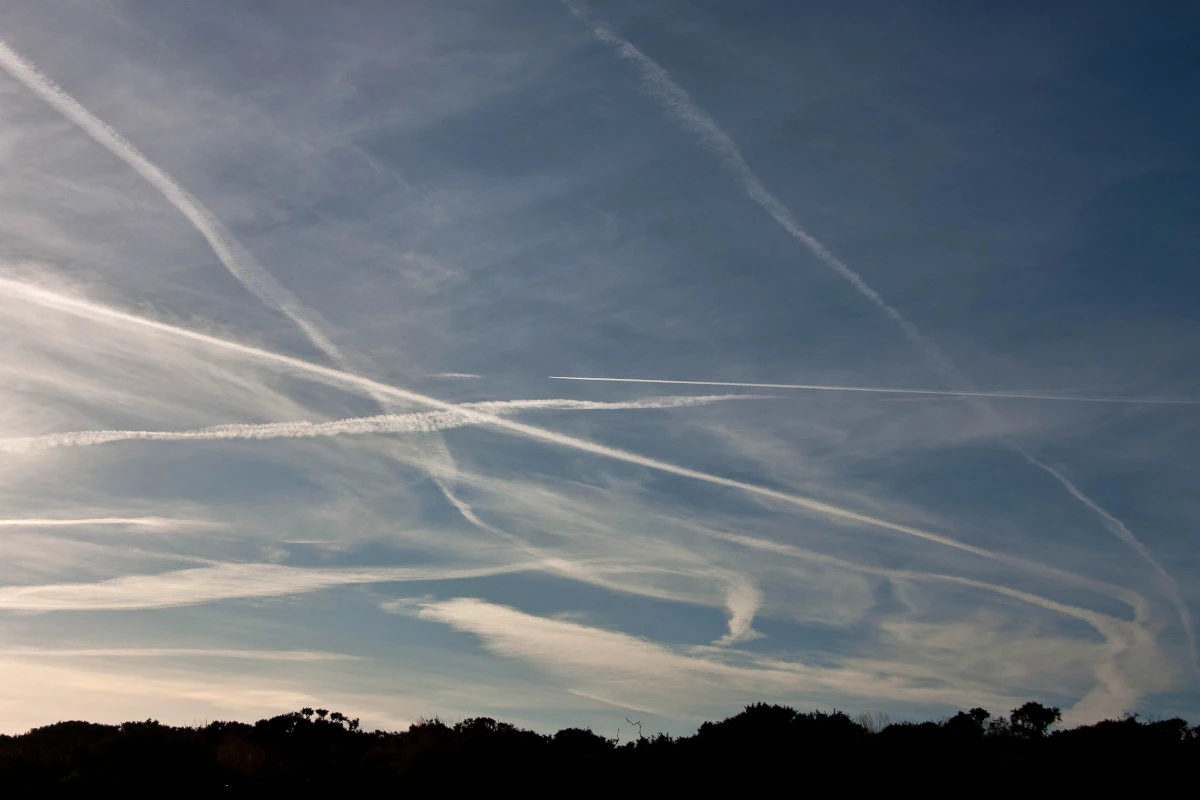
Particular interest has focused on contrails – the streaks of ice crystals that form behind aircraft at high altitude. Although many contrails dissipate quickly, some persist and spread into thin cloud layers known as contrail cirrus. These clouds can trap heat in the atmosphere and are increasingly recognised as a significant contributor to aviation’s climate impact.
Researchers appear to have found that only a relatively small proportion of flights may be responsible for a large share of contrail-related warming. This has led to growing interest in whether aircraft could avoid certain atmospheric conditions through modest route or altitude adjustments, reducing climate impacts without waiting for new aircraft technologies to enter service.
The new programme will also investigate the role of nitrogen oxides emitted by aircraft engines. These gases affect atmospheric chemistry in complex ways, influencing concentrations of ozone and methane, both of which affect the Earth’s climate.
The research effort is being delivered through the Aerospace Technology Institute programme and Natural Environment Research Council-led competitions. It is jointly funded by the Department for Transport, the Department for Business and Trade and the Natural Environment Research Council (NERC), part of UK Research and Innovation.1
Cranfield’s role will be to oversee and coordinate the various strands of research, helping to connect findings across projects and ensure that results can be translated into evidence that supports decision-making by policymakers and industry.
Neil Harris, Professor of Atmospheric Informatics at Cranfield University, will lead the university’s contribution and chair the programme’s advisory group.
Announcing the initiative in April, he said: “As global attention increasingly focuses on aviation’s climate impacts, this programme will help to position the UK at the forefront of understanding and mitigating non-CO₂ factors. By co-ordinating this ambitious multi-year programme, Cranfield will help to accelerate evidence-based approaches that can reduce aviation’s climate footprint in the near term.”
The programme’s emphasis on near-term mitigation reflects a growing recognition that aviation’s climate challenge extends beyond carbon dioxide emissions alone.
If successful, the research could help establish new operational practices and policy approaches that allow airlines to reduce warming impacts using technologies and aircraft already in service, potentially offering one of the fastest routes currently available to lowering aviation’s contribution to climate change.
Endnotes
[1] Cranfield University, “Cranfield leads co-ordination of major UK research programme into aviation’s non-CO₂ climate impacts”, announcement provided by the user.