



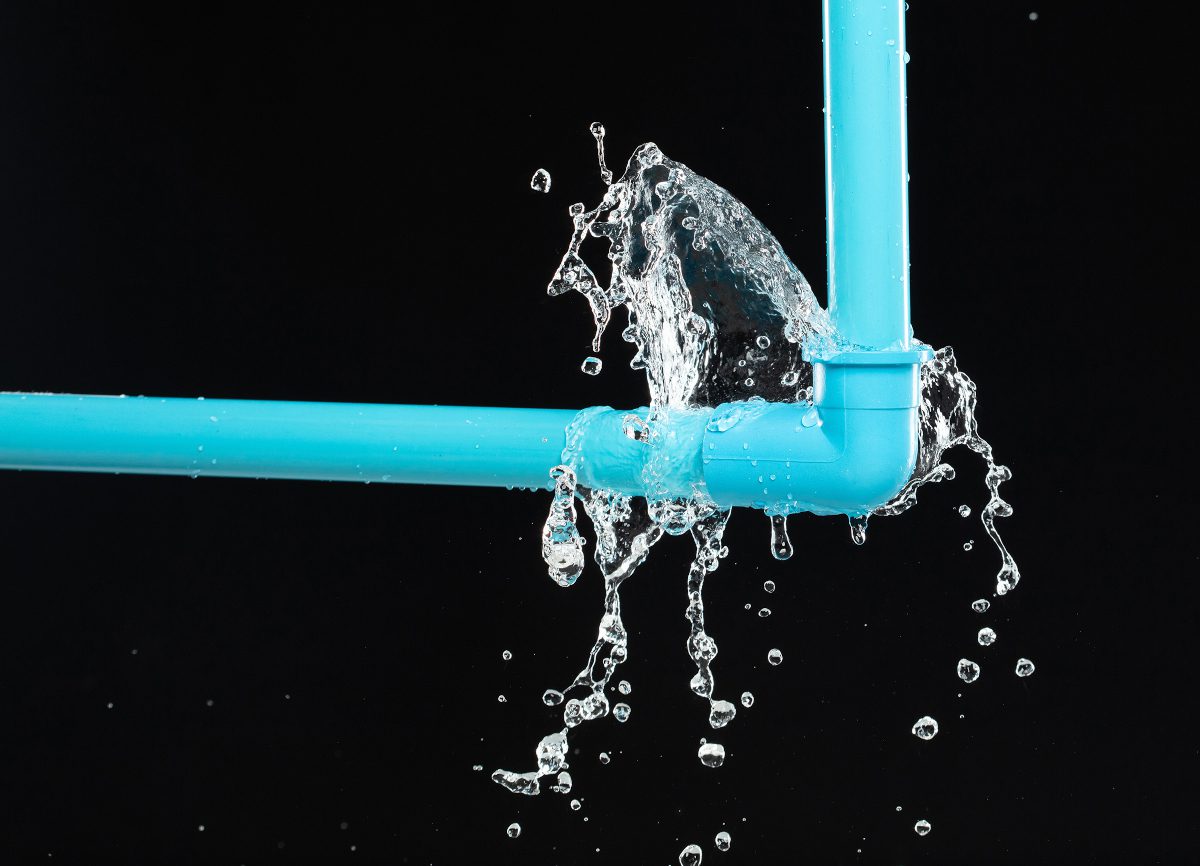
Ofwat has opened the second round of its Water Efficiency Lab, offering up to £5 million in funding to support technologies that can prevent, predict, pinpoint or fix leaks in homes and businesses.
The competition, WEL2, which opened on 3 August, will award up to £1.5 million per successful project and forms part of Ofwat’s £100 million Water Efficiency Fund. Applications close on 20 October.
According to the regulator, leaks within property boundaries account for between 1 and 1.5 billion litres of water lost every day1 – equivalent to as much as 547 billion litres annually – and cost households and businesses an estimated £1 billion to £1.6 billion a year.2 The figures relate to customer-side plumbing and supply pipes rather than the public water network, which loses a further almost 3 billion litres a day.
The initiative comes as England faces a projected public water supply shortfall of around 5 billion litres per day by 2055, while Wales is also expected to experience growing pressure on water resources as climate change and rising demand increase the need for improved water efficiency.
Successful projects will focus on one or more of four areas:3
- PREVENT: Prevent leaks through better materials, accessible fixtures, or retrofit of durable components
- PREDICT: Use data or models to predict where and when a leak is likely to occur before failure happens
- PINPOINT: Identify the exact location of a suspected or confirmed leak – such as ‘second floor bathroom toilet’ rather than ‘somewhere in this property’
- FIX: Enable low-intervention, low-disruption or low-cost repairs, or simplify the repair journey from detection to completion
Emma Hardy, Minister of State for Defra, said: “This summer’s drought is a stark reminder of the pressure on water supplies, with parts of the country seeing some of the driest conditions in decades and water companies introducing restrictions to protect supplies for millions of customers.
“Every day, up to 1.5 billion litres of water is lost to leaks in homes and businesses which is water we simply cannot afford to waste. That is why this government is backing British innovation through the Water Efficiency Lab, to help people find and fix leaks quickly and affordably.”
Welsh Government Cabinet Minister for Rural Resilience and Sustainability Llyr Gruffydd said:
“Water is one of Wales’ most precious resources, and building long term resilience means using it wisely and reducing waste wherever we can.
“As demand increases and climate change places increasing pressure on water resources, improving water efficiency will play an important role in safeguarding supplies for people, communities, businesses, and the environment.
“The Water Efficiency Lab is exactly the kind of practical, innovation-led approach we need, backing new tools that help people and businesses prevent, predict, pinpoint and fix leaks more quickly.
“I look forward to seeing what this next round of innovators can deliver for Wales.”
Paul Hickey, Managing Director of RAPID at Ofwat, said climate change was increasing pressure on water supplies and highlighted the importance of addressing leaks beyond the water companies’ own networks.
“A quarter of all the water lost to leaks happens in our homes and businesses, but cutting them will save water, energy and customer money. However, water users cannot be expected to reduce their water consumption on their own – that’s why they need new tools, technologies and insights funded by the Water Efficiency Lab to reduce their water consumption in a way that supports, or actually improves, quality of life or business operations.”
The competition builds on WEL1, whose winners were announced in June, which Ofwat said is funding innovations that provide water users with data-led insights to help them make water efficient choices. The winners included a programme from the Royal Horticultural Society (RHS) to help homeowners make water efficient choices in their garden, a pilot fitting homes with water efficient household appliances to reduce their water use to 50L per day, and a partnership with supermarkets, pubs and retailers to understand how to use water smartly across their premises.
A further WEL winner, the WIN Initiative, led by Quensus, has been awarded £495,000 to install more than 1,000 sensors across 30 commercial buildings to tackle the 10 to 30 per cent of water lost in commercial settings to leaks and continuous flow. The project will also test whether linking water efficiency to insurance premiums could turn water saving from a voluntary commitment into a financially motivated one, with insurer Aviva exploring how a new Water Management Plan standard might unlock benefits for building owners.
The Water Efficiency Lab is delivered by innovation prize experts Challenge Works (part of Nesta), in partnership with Arup and Isle, and funded by Ofwat’s Water Efficiency Fund.
Applications opened at 1pm on 3 August 2026 and close on 20 October 2026. For full details and to apply, visit waterinnovation.challenges.org.
The UK Environment Act sets a target to reduce average personal water consumption supplied from the public network by 20% to 122 litres per person per day by 2038, with a longer-term ambition of reaching 110 litres by 2050. Average daily consumption currently stands at 144 litres per person.
Notes
[1] Ofwat’s press release notes: “Around 750-800 million litres a day for customer supply pipe leakage (the pipe under your driveway/between your meter and your home). In addition to that, 300-700 million litres a day for plumbing losses which are very hard to evaluate, especially since they drop significantly as soon as you have a smart meter, so we can’t measure them without affecting them. SOURCE: Customer Supply Pipe Leakage and Plumbing losses reporting definitions, Artesia and HR Wallingford, April 2026 (for Ofwat)”.
[2] Ofwat notes: “The typical cost of a litre of tap water is 0.3p/litre (or £0.003/litre), equating to between £3,000,000 and £4,500,000 a day for 1-1.5 billion litres of water lost to customer side leakage, or £1,095,000,000 to £1,642,500,000 a year.”
[3] “Water Efficiency Lab 2 launches to prevent, predict, pinpoint and fix customer side leakage – a 1.5 billion litre a day challenge”, press release, 3 August 2026.