


A UK process for converting waste biomass into feedstock for sustainable aviation fuel (SAF) has completed continuous production runs lasting up to 72 hours, as its developer prepares to raise funding for a first commercial-scale plant.
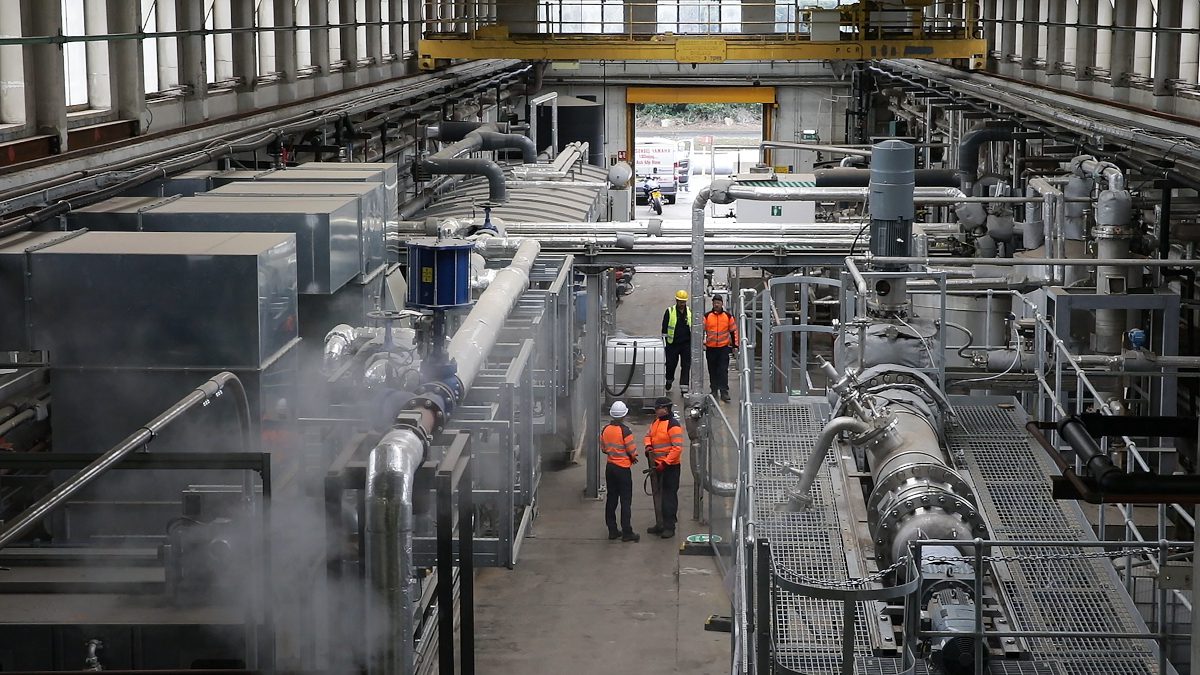
Nova Pangaea Technologies carried out the endurance trials at its demonstration facility on Teesside, where its REFNOVA process operated continuously for periods of up to three days.
The company said the trials achieved above-target yields while demonstrating stable continuous operation. Multiple runs were completed using softwood residues from timber processing, with the plant handling up to three tonnes of feedstock per day.
The results follow smaller-scale trials conducted in early 2025 and represent another step in moving the technology from demonstration towards commercial deployment. Further trials are planned for 2027 to refine the design of Nova Pangaea’s first commercial plant.
From residues to fuel
REFNOVA converts lignocellulosic biomass and residues, including wood chips, sawdust and wheat straw, into ethanol. This can subsequently be upgraded into SAF using an alcohol-to-jet process, as well as being used to produce renewable diesel.
The process also produces biochar as a co-product. Nova Pangaea says the carbon stored in the biochar enables its overall process to achieve net-negative emissions, removing more carbon dioxide from the atmosphere than it releases.
The technology is being developed at a time when policymakers are seeking to increase SAF production while reducing the industry’s dependence on fuels derived from waste oils and fats.
The UK’s SAF Mandate requires 3.6% of jet fuel supplied in 2026 to come from sustainable sources, increasing to 10% in 2030 and 22% in 2040.1 The mandate also progressively restricts the amount that can be met using hydroprocessed esters and fatty acids (HEFA), currently the principal commercial SAF production route, in an effort to encourage more advanced fuels using alternative feedstocks.2
Nova Pangaea is working with British Airways and LanzaJet on Project Speedbird, which aims to establish a UK supply chain converting locally sourced waste biomass into ethanol before upgrading it to SAF.
Under the project, Nova Pangaea plans to construct four UK facilities producing bioethanol from waste biomass.
Commercial scale
The latest trials come as Nova Pangaea prepares to seek further investment to progress its first commercial-scale plant. The company has raised more than £21 million to date from investors including International Airlines Group, PXN Ventures and Mercia Ventures, alongside UK government funding through the Advanced Fuels Fund.
Stewart Stewart, CEO of Nova Pangaea, said: “The latest trials have validated our technology and should further underpin the confidence of investors on our journey towards building our first commercial plant.
“The SAF industry is currently at a critical point. Demand is increasing and supply chain shocks such as in the Middle East show the need to find an alternative to fossil fuels, yet aviation is currently reliant on SAF from a single feedstock, which will not be enough to meet growing SAF demand.
“Nova Pangaea’s tried and tested technology offers a genuine alternative. By tapping into the plentiful supplies of waste biomass, we can boost SAF production – enhancing our energy security and building a new domestic industry that generates jobs and revenues while reducing fossil fuel emissions.”
The UK government has acknowledged the limitations of relying heavily on HEFA fuels, which depend on constrained supplies of oils and fats. Its SAF policy is intended to encourage diversification into advanced production pathways and feedstocks capable of contributing a greater share as mandated SAF volumes increase.3
Notes
[1] Department for Transport, Sustainable Aviation Fuel (SAF) Mandate. The UK mandate began at 2% of total jet fuel demand in 2025 and rises annually to 10% in 2030 and 22% in 2040. From 2040, the obligation remains at 22% pending greater certainty over SAF supply.
[2] Department for Transport, The SAF Mandate: an essential guide. The government says the HEFA cap is intended to leave space for more advanced fuels to develop. HEFA can meet all SAF demand under the mandate in 2025 and 2026, with its permitted contribution subsequently declining.
[3] Ibid