


Increasing pollution from wildfires and heatwaves threatens to undermine improvements achieved by controlling industrial and transport emissions, according to the World Meteorological Organization (WMO).
The UN agency’s latest Air Quality and Climate Bulletin warns that climate change is making it progressively more difficult to meet international air-quality targets, as hotter and more fire-prone conditions increase exposure to fine particulate matter and ground-level ozone.1
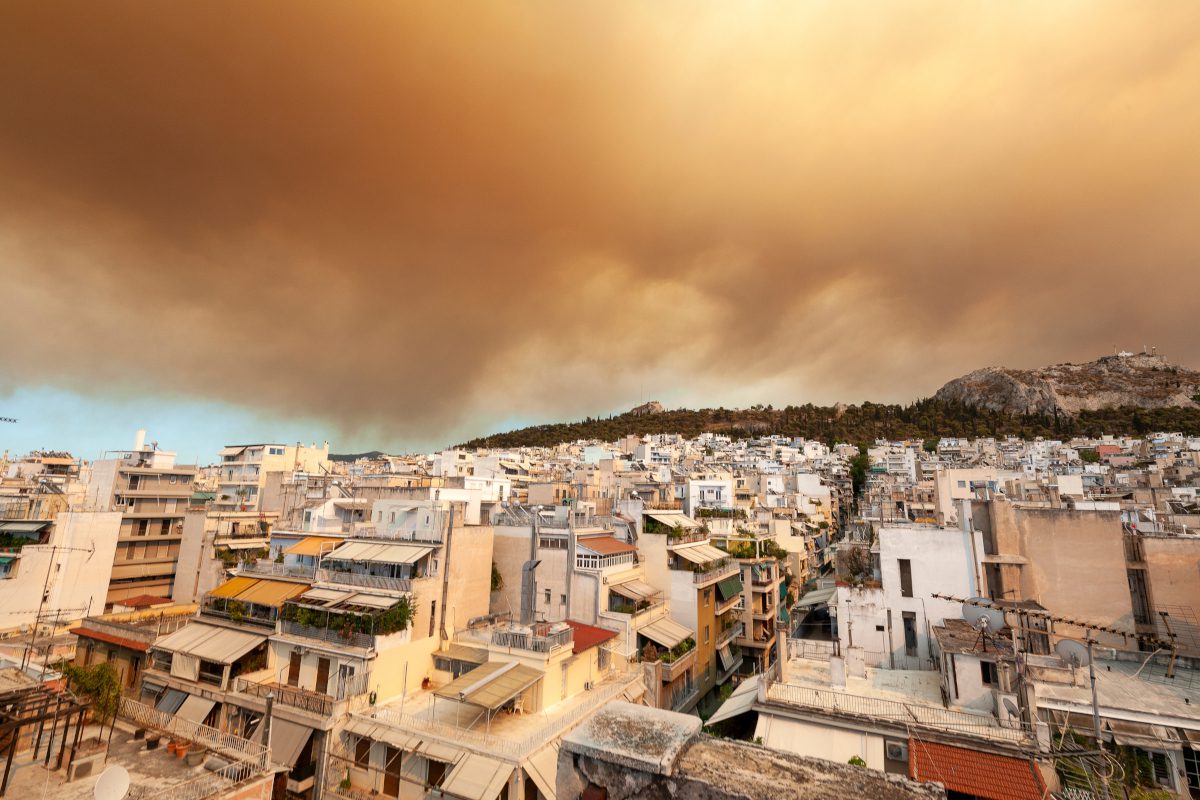
Although regulation has reduced emissions of particulate matter from industry and transport in Europe and North America, exposure to particles originating from wildfires has increased. Smoke can also travel across national borders and affect areas far from the original fires, limiting the protection provided by local emission controls.
WMO scientific officer Lorenzo Labrador said even cities and regions with comparatively clean local air could experience harmful pollution transported from wildfires elsewhere.2
The sixth annual bulletin examines air-quality conditions during 2025 using satellite observations, atmospheric models and measurements from the WMO Global Atmosphere Watch network.
Concentrations of PM2.5 (particles and liquid droplets measuring less than 2.5 µm diameter) were above the long-term average in northern Canada, parts of Russia and western-central Africa because of increased fire activity. Northwestern Spain was another pollution hotspot following exceptional fires during late summer.
China, by contrast, continued to record below-average PM2.5 concentrations, reflecting reductions in emissions from human activity. India remained above the long-term average because of biomass burning and other sources of pollution.
Smoke risks underestimated
The small size of PM2.5 allows the particles to penetrate deep into the lungs and enter the bloodstream. Wildfire smoke contains a complex mixture of particles and chemicals and has been associated with asthma attacks, hospital admissions for chronic obstructive pulmonary disease, increased use of respiratory medication and adverse birth and mental-health outcomes.
One study cited by the WMO indicates that extreme fire-smoke events have tripled globally since the 1990s, contributing to nearly 100,000 additional deaths annually between 2010 and 2018. The organisation said this may be an underestimate.
Existing air-quality risk assessments may also understate the danger where they treat all PM2.5 as equally harmful. An epidemiological study discussed in the bulletin found that conventional models based on total particle concentrations could underestimate mortality attributable to wildfire smoke by as much as 93%, because they fail to account adequately for the toxicity of fire-derived particles.3
Monitoring by the EU’s Copernicus Atmosphere Monitoring Service illustrates the geographical reach of the problem. Smoke from Canadian fires in 2026 degraded air quality across the Great Lakes region and the eastern United States before extending over the North Atlantic. Millions of people were exposed to hazardous conditions, with pollution in some locations reaching twice the level considered dangerous.4
Ozone intensified by heat
Heatwaves create an additional air-quality challenge by encouraging the formation of ground-level ozone. Unlike the protective ozone layer higher in the atmosphere, surface ozone is an air pollutant formed through chemical reactions involving nitrogen oxides, volatile organic compounds and sunlight.
High temperatures, intense solar radiation and stagnant atmospheric conditions can accelerate these reactions and allow ozone to accumulate. Recent studies of heatwaves in Europe, China and the southeastern United States indicate that increased exposure could result in tens of thousands of additional premature deaths.
Long-term ozone exposure is associated principally with increased mortality from respiratory disease, while the pollutant can also damage crops and natural ecosystems. The WMO expects the associated health risks to intensify as heatwaves become more frequent.
The bulletin also calls for improved observation of black carbon, atmospheric microplastics and other aerosols. Black carbon deposited on snow and ice reduces the amount of sunlight reflected from the surface and can accelerate melting, while other airborne particles can alter clouds, redistribute pollutants and affect the climate.
For air-quality authorities, the changing sources and geographical reach of pollution increase the importance of satellite data, atmospheric modelling, dense monitoring networks and early-warning services. Local emissions inventories alone may provide an incomplete picture when smoke can be carried across continents and ozone episodes develop over large areas.
The WMO said climate policy and air-quality management should therefore be developed together. Reducing fossil-fuel combustion can deliver benefits for both, but adaptation will also require better forecasting and public-health responses to pollution episodes that cannot be controlled solely at their point of exposure.
Notes
[1] World Meteorological Organization, WMO Air Quality and Climate Bulletin No. 6, 7 September 2026.
[2] Reuters, “Wildfires, heat waves threaten to undermine air quality, UN weather agency says”, 7 September 2026.
[3] World Meteorological Organization, “WMO bulletin shows air quality and climate interlinkages”, 7 September 2026.
[4] Copernicus Atmosphere Monitoring Service, “Extreme wildfires in Canada lead to severe air pollution in the United States”, 17 July 2026.