


An industry-backed initiative tackling plastic pollution says its projects reduced 138,000 tonnes of unmanaged plastic waste in 2025 – more than a third of the total it has recorded since 2019 – as it shifts from individual projects towards larger-scale programmes intended to transform waste management systems.
The Alliance to End Plastic Waste, an international non-profit backed by around 70 companies across the plastics value chain, said in its latest progress report, Strategy in Action, that 138,162 tonnes of unmanaged plastic waste were reduced during the year and 165,317 tonnes “valorised” through recovery and recycling. Since its establishment in 2019, the corresponding totals have reached 378,147 tonnes and 418,529 tonnes.
The figures come in the first year of the Alliance’s Strategy 2030, which represents a change in emphasis from smaller standalone projects towards integrated programmes operating across countries or tackling difficult waste streams such as flexible plastics. In Indonesia, for example, it is coupling pilot projects with a wider waste-management programme backed by around US$150 million in Asian Infrastructure Investment Bank loans.
Country programmes have been established in Brazil, India, Indonesia and South Africa, as well as the Gulf Cooperation Council region, initially focusing on Saudi Arabia. The Alliance says these are being developed with governments and development finance institutions, with at least US$100 million of co-financing envisaged for each territory.
One of the most developed examples is in Indonesia, where an integrated waste-management pilot launched in Malang Regency, East Java, combines source segregation with upgraded collection and sorting and stronger links to recyclers.
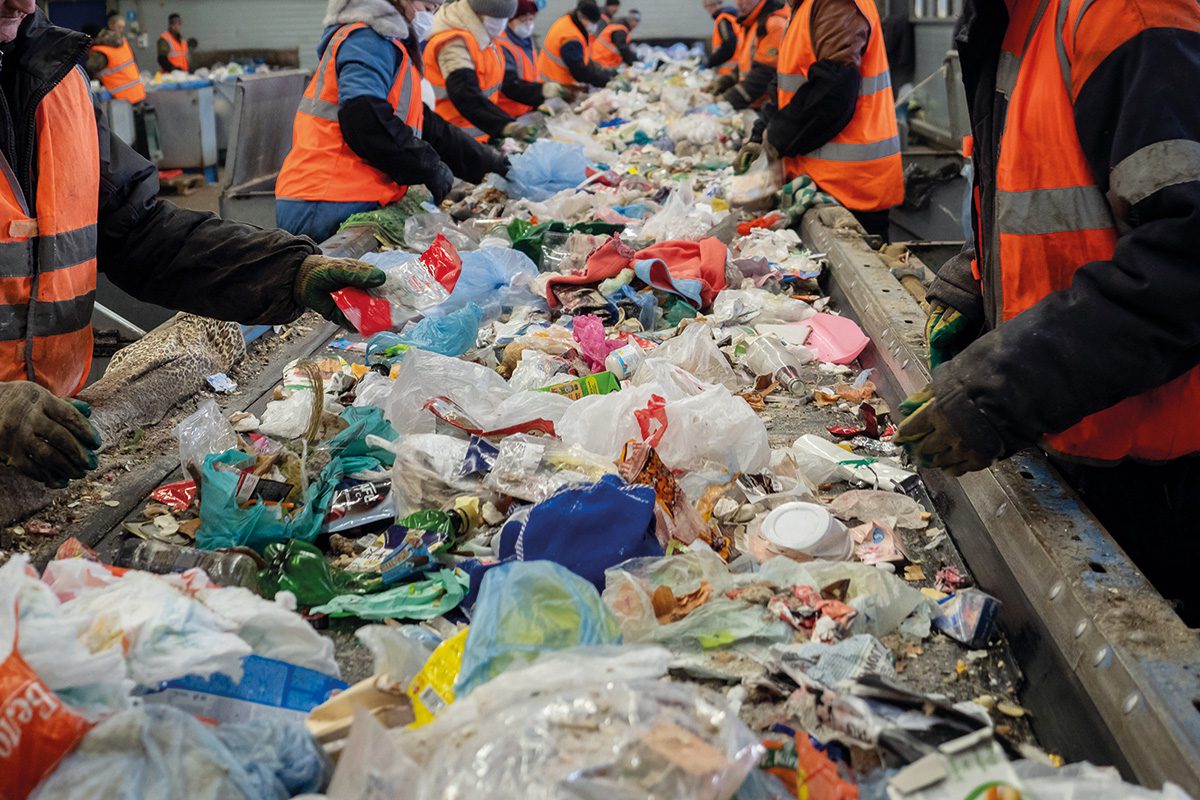
A mini materials recovery facility (MRF) was subsequently commissioned in March 2026 as part of a 12-village pilot, with waste from thousands of households now being collected, sorted and directed towards recycling and recovery. The Alliance has committed up to US$40 million to applying principles developed in Malang across other locations participating in the Solid Waste Management for Sustainable Urban Development programme, backed by around US$150 million of Asian Infrastructure Investment Bank lending.
In India, the Alliance-backed Project ParikraM has established a municipal waste-processing system in Mathura-Vrindavan. The facility is operating at 75% capacity and is expected to process up to 300 tonnes of waste per day, with the stated aim of diverting 80% of the city’s waste.
The new strategy also places greater emphasis on creating markets for recycled material. Its first cross-market “Thematic Program” addresses flexible plastics, whose varied compositions and multilayer structures make them difficult and relatively costly to collect, sort and recycle.
Rather than beginning with recycling infrastructure, the programme seeks first to identify viable applications and specifications for recycled flexible plastics, with investment then directed towards collection, sorting and processing systems capable of supplying those markets. Europe and North America are its initial focus.
In Phoenix, Arizona, for example, a project with RME Defeats Waste is testing on-site baling and on-demand collection of flexible plastic waste from smaller commercial and industrial generators, including manufacturers and hospitals for which conventional collection is uneconomic. A separate study is mapping US supply and demand for recycled flexible plastics and potential end markets.
The report also puts considerable emphasis on finance. Since 2019, the Alliance says it has collected US$509 million in member revenue and allocated US$314 million to mission-related activities. It reports a further US$641 million in funding commitments from third parties and impact investors, of which US$583 million has been allocated to mission-related activities.
Total funding commitments from members and other parties reached US$1.15 billion cumulatively, according to the report’s underlying metrics, with US$100 million committed during 2025. Total funding allocated since 2019 stood at US$898 million, including US$58 million during 2025.
The Alliance is increasingly using its own funding and technical expertise to reduce the perceived risk of projects and attract public and private capital. This includes participation in blended-finance initiatives intended to overcome barriers such as uncertain revenues, limited track records and fragmented recycling value chains.
Jacob Duer, president and CEO of the Alliance, said 2025 had been “an important first year for Strategy 2030”, adding that the organisation was seeing early results but that achieving lasting systems change required sustained effort and partnerships.
The scale of the figures nevertheless remains modest relative to the wider plastics challenge. The report notes that around 360 million tonnes of plastic waste are generated worldwide each year, compared with the 378,147 tonnes of unmanaged plastic waste that Alliance-funded projects report having reduced since 2019.
The Alliance says it has supported 129 projects since 2019 and is now concentrating resources on fewer, larger interventions that it believes can be replicated or scaled.