


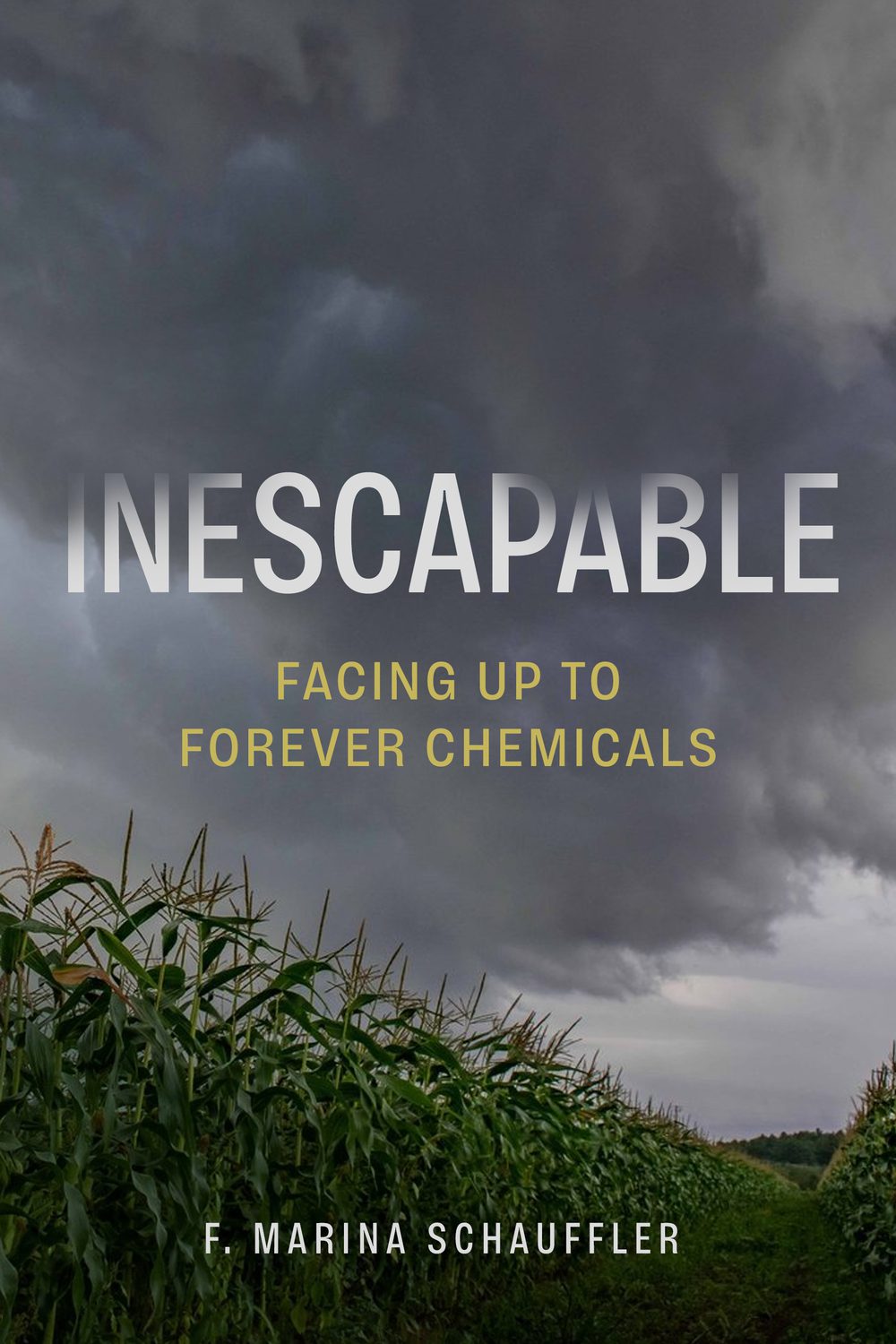
The title of F. Marina Schauffler’s Inescapable offers a nod to both the physical characteristics of PFAS and the predicament into which their widespread use appears to have led us. The thousands of per- and polyfluoroalkyl substances collectively known as PFAS have been used for decades to make materials resistant to water, oil, stains and heat. Their carbon-fluorine bonds also make many of them extraordinarily persistent. Once released, they can move between water, soil, wildlife, food, waste and human bodies, creating a contamination problem for which there is no straightforward end point.
Schauffler approaches this sprawling subject through an unusually concentrated geographical lens. Much of Inescapable takes place in Maine, a US region that appears to have been a relative hot spot for the spreading of sewage sludge on agricultural land. It has also been something of a trailblazer in the formation of environmental policy.
In decades past, before the harms were widely appreciated, the state made extensive use of sludge as a soil amendment, and its role in transferring PFAS from wastewater onto farmland is revealed as one of the principal pathways of contamination. The book provides a series of overlapping human stories, involving farmers, landfill operators, water utilities and many others, which vividly convey the connectedness of the problem, and the mix of folly, expediency, oversight and other factors that brought it into existence.
Schauffler’s account begins with the discovery of PFOA and PFOS in a drinking-water well serving communities in southern Maine, in 2012. Investigators eventually traced the contamination – in 2016 – to a dairy operation, Stoneridge Farm, where sludge from both municipal sewage and a paper mill had been applied to fields over preceding decades. The owners, having been notified by the local water utility of the problem, then discovered high PFAS concentrations in their milk. Attempts to reduce contamination by filtering the cows’ water, changing feed and removing them from pasture all proved insufficient, and 120 animals had to be killed, and eventually, the farm was shut down.
As an opening it serves to highlight the disturbing inversion of culpability that has characterised attempts to deal with the problem to date: farmers, householders and water utilities inherit both the contamination and much of the cost of dealing with chemicals they neither manufactured nor knowingly released. Meanwhile, manufacturers like 3M and DuPont appear to have recognised the potential for harm decades earlier, and internal documents point towards this fact. These firms had conducted their own toxicity studies, without sharing the results.
It was only in the late 1990s that evidence of harms came to wider attention, when a legal case was being brought against DuPont for poisoning a group of farmers and their animals, in Parkersburg, West Virginia.
In the case of Stoneridge Farm, the farmers had accepted sludge as fertiliser under a regulatory system that encouraged its agricultural use. The prevailing science had downplayed the potential for harm, and those tasked with finding a home for sludge had few options and limited budgets. Meanwhile, the chemicals industry, which had been marketing an ever wider variety of PFAS formulations since the 50s.
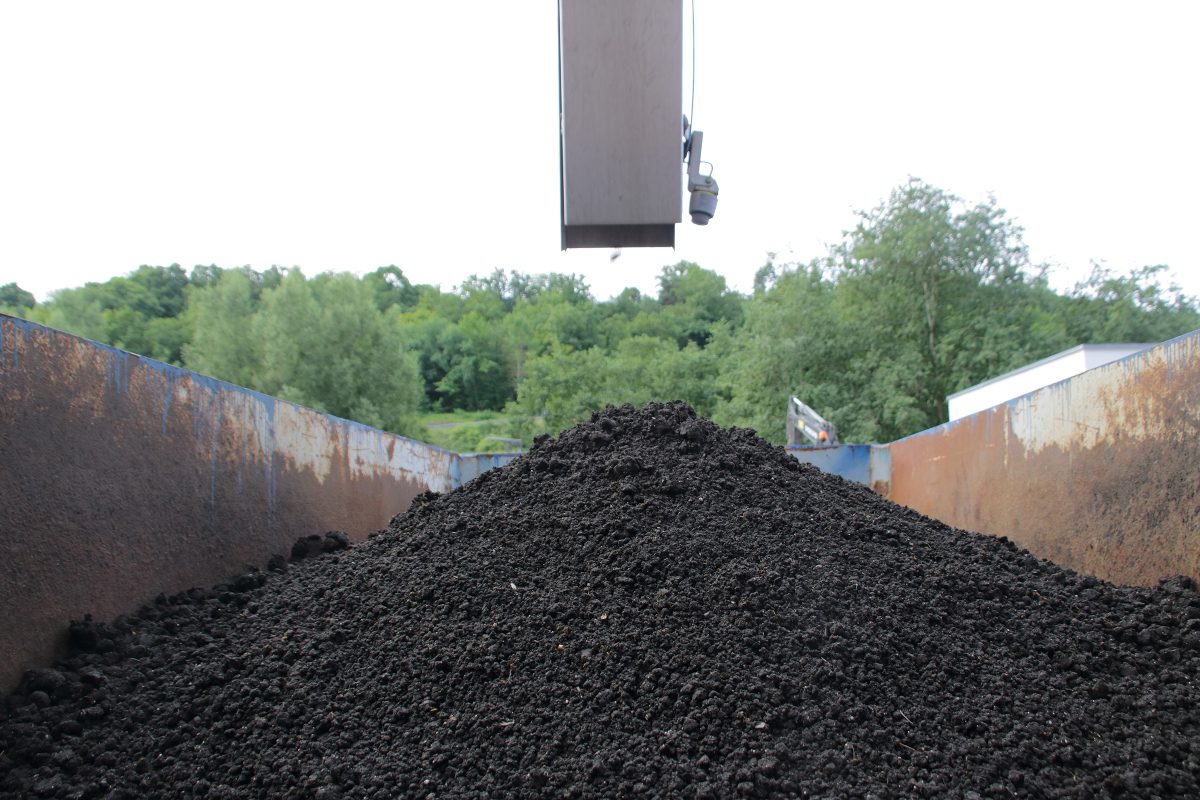
Here Inescapable seems to be particularly good at revealing the unintended consequences of environmental management. Wastewater treatment tends to transfer PFAS from the liquid phase into sewage sludge rather than destroy them. Some PFAS bind to solids during treatment and are therefore concentrated in the sludge removed from the wastewater, while others remain in the treated effluent. Composting offers no simple solution: because PFAS resist microbial degradation, their concentration can increase as the organic material around them breaks down and the overall volume of compost falls.
Sludge spreading is one of the key vectors of environmental contamination explored by the book. Following the Clean Water Act, wastewater treatment improved US rivers dramatically, while simultaneously generating large quantities of residual sludge. Agricultural application appeared to solve two problems at once: wastewater operators avoided expensive disposal while farmers received nutrient-rich fertiliser. In Maine, 61% of sludge was being directly land-applied by 1995 and another 36% converted to compost. What looked like recycling could, however, redistribute persistent contaminants across soils, becoming ”a monumentally costly public health threat, with repercussions that will last for centuries”.
Schauffler reconstructs the history of warnings that were ignored. As early as 1981, Cornell toxicologist Donald Lisk was cautioning that sludge could contain a bewildering mixture of industrial chemicals and that persistent contaminants entering soil might subsequently reach plants or groundwater. Yet regulators continued promoting land application.
How harmful are PFAS?
Assessing the health implications of PFAS presents a difficulty that runs throughout the book. Schauffler refers frequently to the toxicity of PFAS, yet the term encompasses roughly 15,000 compounds, of which, as she acknowledges, fewer than 100 have received substantive scientific study. Knowledge is therefore heavily weighted towards a relatively small number of substances, particularly the long-used compounds PFOA and PFOS.
For these better-studied PFAS, the evidence for adverse effects has become substantial. The International Agency for Research on Cancer classifies PFOA as carcinogenic to humans (Group 1), based on sufficient animal evidence and strong mechanistic evidence, although evidence for cancer in humans itself was judged “limited”, principally concerning renal-cell and testicular cancer. PFOS is classified as possibly carcinogenic (Group 2B), with inadequate evidence for cancer in humans.
The US National Academies has meanwhile found sufficient evidence of an association between PFAS exposure and increased risk of kidney cancer, dyslipidaemia, reduced birthweight and decreased antibody response, with limited or suggestive evidence for several other outcomes, including testicular cancer, thyroid dysfunction and pregnancy-induced hypertension.
Schauffler also describes research showing that PFAS can cross the placenta and enter human milk, while some compounds have sufficiently long half-lives to remain in the body for years.
There are nevertheless important gradations in the evidence. The National Academies cautions that the probability of a particular exposed person developing a particular adverse outcome cannot presently be predicted with much specificity, while risks vary with factors including the nature and extent of exposure and stage of life. Nor is the toxicity of the thousands of lesser-studied PFAS necessarily established by what is known about PFOA and PFOS.
The book generally approaches those uncertainties from a precautionary direction. Its concern is not only what has already been demonstrated about particular PFAS, but what their extraordinary persistence means when knowledge remains incomplete. Schauffler describes compounds that have moved into human blood, wildlife, water, soils and food chains and that can continue circulating between environmental systems long after their original use. In Maine, this is made particularly tangible by contamination discovered decades after sewage sludge was spread on agricultural land.
From frying pans to firefighters
Inescapable explores a wide range of exposure pathways. PFAS emerge in food packaging, pesticides, cosmetics, carpets, clothing, firefighting foams and numerous industrial processes. The chapter on occupational exposure begins unexpectedly with ski waxing. Professional waxers historically heated fluorinated waxes and worked amid fumes and airborne particles, often in poorly ventilated cabins.
Schauffler then broadens the occupational picture considerably. Potentially exposed groups include workers in oil and gas production, mining, printing, dry cleaning, pesticide application, textiles, cosmetics, metal plating and paper manufacture. Yet this chapter also contains one of the book’s more nuanced acknowledgements of uncertainty. Occupational-health researcher Leena Nylander-French warns that exposure varies enormously between individuals and workplaces and that even precaution can become a “double-edged sword” if workers are given protective advice unsupported by sufficient evidence.
Firefighters present a particularly complicated case. PFAS have occurred both in aqueous film-forming firefighting foams and in protective turnout gear. Firefighters have elevated rates of certain cancers, but attributing these specifically to PFAS is difficult because their occupation exposes them to a complex mixture of combustion products and other carcinogens. IARC classifies occupational exposure as a firefighter as carcinogenic to humans, but explicitly identifies that exposure as a mixture encompassing particulates, combustion products, diesel exhaust, flame retardants, building materials, firefighting chemicals and other hazards.4 It is a useful reminder of how difficult causal attribution can become in real-world environmental health.
Mobility muddle
One troubling element of the problem is the way PFAS can circulate between separate environmental systems, with efforts to remove them from one simply transferring them to another.
PFAS-containing products become waste; landfill produces PFAS-bearing leachate; leachate can be sent to wastewater treatment works; PFAS can then pass into treated effluent or concentrate in sludge; sludge may return to landfill or, historically, be applied to land. Schauffler describes the cycle as movement from wastewater to sludge to landfill to leachate and back again.
The implication is important for those tasked with developing technology to tackle the problem. Capturing PFAS is not the same as destroying them. Activated carbon and other separation technologies may protect drinking water while producing a concentrated PFAS waste requiring subsequent management. Treating wastewater and landfill leachate is considerably more difficult and expensive than treating relatively clean drinking water, as Schauffler discusses in relation to a project attempting to remove PFAS from landfill leachate.
The same dilemma applies nationally to biosolids. The US EPA’s January 2025 draft risk assessment found that some scenarios involving PFOA and PFOS in sewage sludge could exceed acceptable risk thresholds. Importantly, however, it is a draft risk assessment of two particular PFAS, not evidence that every biosolid application necessarily creates unacceptable risk.5 That qualification illustrates the tension running through the wider PFAS debate: how should regulators act when evidence of serious harm exists for some compounds while knowledge of a much larger chemical class remains incomplete?
Dealing with the legacy
Schauffler is interested in more than toxicology. Some of the book’s most powerful parts concern what contamination does to people’s relationship with place.
Farmers describe losing not merely businesses but confidence in the elementary things around them: soil, water and food. An early part of the book relates the experience of Songbird Farm, organic farmers whose link in the culpability chain was unusually weak, having traced problems with soil to sewage sludge spreading that predated their own involvement with the land in question.
The owners, Davis and Nordell, eventually concluded that although some crops could be grown with little PFAS uptake, farming contaminated soil would continue exposing their family to contaminated dust and mud: “We could produce safe food,” Nordell says, “but we couldn’t produce it safely.”
Remediation cannot be the primary answer. Once extraordinarily persistent chemicals have dispersed through soils and waters, removing them everywhere is economically and technologically implausible. Schauffler favours eliminating non-essential PFAS uses and preventing contamination at source. The lesson of Maine is that decisions made today may leave others managing their consequences decades from now.
- F. Marina Schauffler, Inescapable: Facing Up to Forever Chemicals. Johns Hopkins University Press, 2026. 272pp. ISBN 978-1-4214-5399-6.