


A new protective sleeve designed to resist attacks with angle grinders and other power tools has been launched for EV charging cables, as operators contend with rising levels of theft and vandalism across charging networks.
Canterbury-based Formula Space has introduced a V4 cut-protection option for its CableGuard system, aimed particularly at charging sites considered at high risk of repeated or more aggressive attacks.
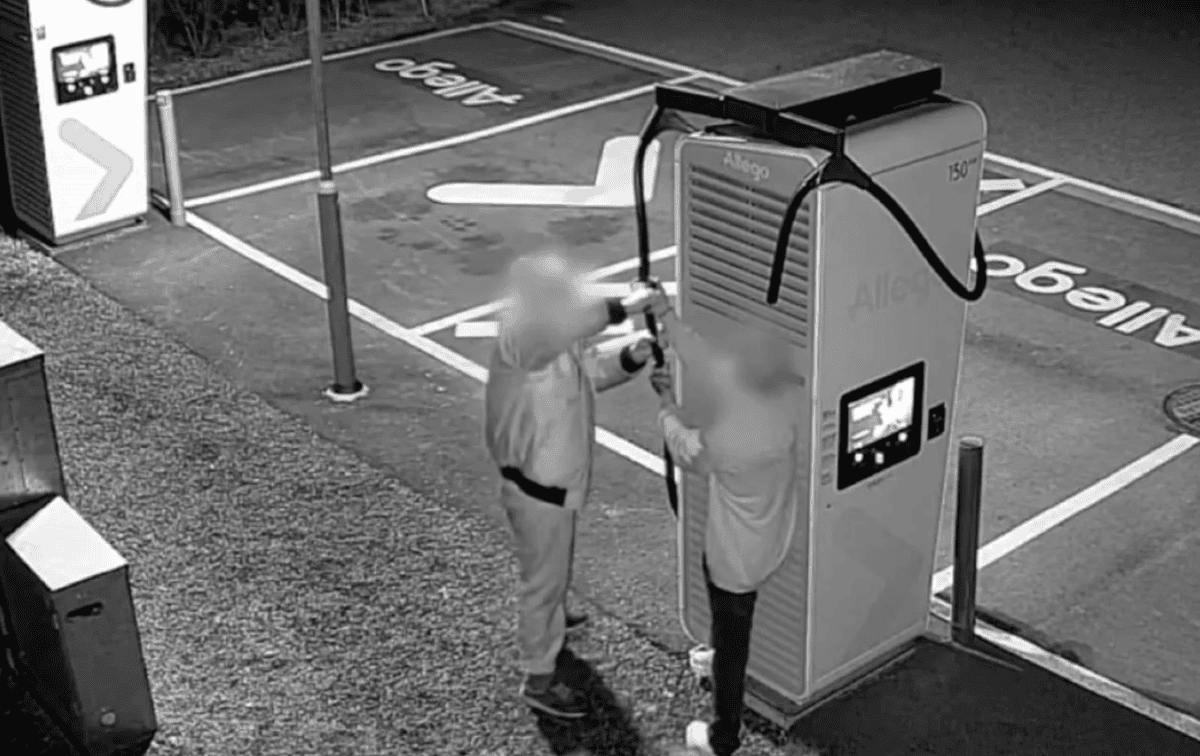
Cable theft has emerged as a growing concern for charge point operators (CPOs), with thieves targeting the copper contained in charging cables. Evidence submitted to Parliament earlier this year described cable theft and vandalism as a “real and growing problem”, with hundreds of incidents recorded since 2022, although comprehensive national data remains limited.1
Research published by the Energy Saving Trust in February also cited National Intelligence Portal data indicating that theft and vandalism targeting EV chargers in England and Wales more than doubled in 2024 compared with 2023.2 Aside from the cost of replacing damaged equipment, these incidents can leave charge points unavailable for extended periods.
In France, at least 650 EV charging stations have reportedly been targeted since the beginning of 2026, resulting in losses of more than €14 million.3 In September, French police arrested three people allegedly involved in an organised cable-theft operation in the Occitanie region.
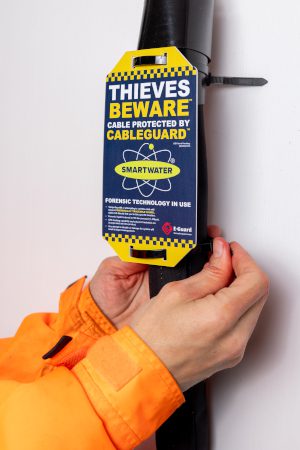
Formula Space says its new V4 protection has been developed in response to thieves increasingly employing angle grinders and other power tools. The system uses additional reinforcement within a protective sleeve around the charging cable, intended to increase the time and effort required to cut through it.
The company says the retrofit system can be installed without removing the charging cable and is designed to retain the cable’s flexibility and usability. CableGuard also incorporates options including forensic marking, tracking and alarms.4
Vern Pollard, director at Formula Space, said operators were reporting not only theft but an escalation in the severity of attacks and associated damage.
“Operators tell us the problem isn’t just the theft, it’s the escalation in the severity of the attack and the extent of the damage,” he said.
“As thieves get more sophisticated, CPOs need us to apply the same thinking to the theft prevention solutions we create.”
Formula Space says the V4 sleeve can be retrofitted in around 20 minutes and is intended to blunt cutting tools, making an attempted theft slower and more conspicuous. The company says CableGuard has been tested in collaboration with charger manufacturers, while its website states that the system is approved for use on Kempower hardware without affecting the charger warranty.
Lee Barnett, solutions and service manager, UK & Ireland at Kempower, said the company had worked as a testing partner for CableGuard, adding that charging-cable crime risked damaging both charging businesses and public confidence in charging infrastructure.
Physical protection has been a somewhat less conspicuous challenge in the expansion of public EV charging to date. But ensuring that installed infrastructure remains available and reliable as the network grows will no doubt require clever solutions.
Notes
[1] House of Commons Transport Committee, oral evidence, 4 March 2026. Evidence on EV charging infrastructure noted “hundreds of incidents of cable theft since 2022” while highlighting limitations in available data.
[2] Energy Saving Trust, Tackling EV Charging Infrastructure Vandalism, 26 February 2026.
[3] TF1 Info, “Vols de cuivre sur les bornes de recharge pour voiture électrique : un gang interpellé en flagrant délit en Occitanie”, 24 September 2026.
[4] Formula Space, CableGuard product information, accessed October 2026.