


The UK Government has pledged £17 million towards repairs to the protective structure enclosing the destroyed reactor at Ukraine’s Chernobyl nuclear power plant, following a Russian drone strike that compromised its containment systems in February 2025.1
Announced on 15 October, the funding will contribute to an international restoration programme coordinated by the European Bank for Reconstruction and Development (EBRD), working with the Ukrainian government and G7 donors.
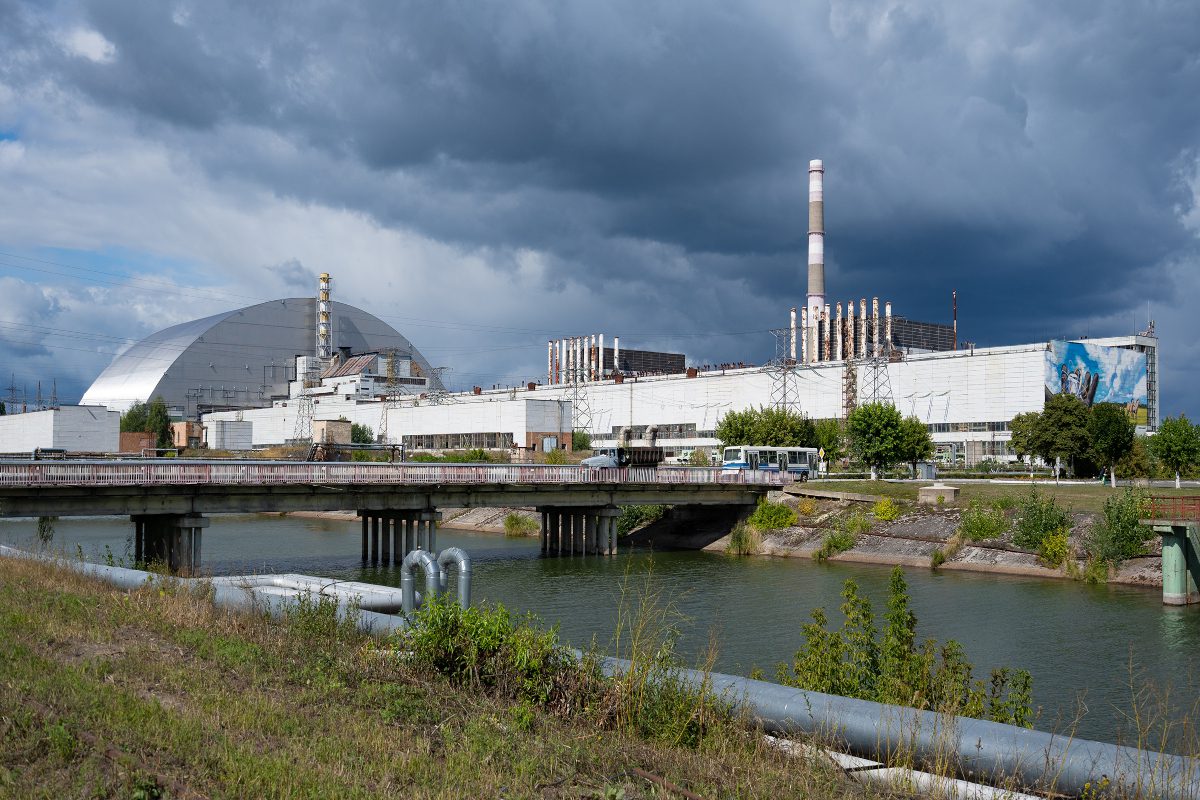
The repairs will focus on restoring the confinement and ventilation functions of the New Safe Confinement (NSC), a vast steel arch installed over the remains of Reactor 4, which was destroyed in the 1986 nuclear disaster.
The structure was designed to prevent the release of radioactive material, protect the deteriorating concrete sarcophagus erected immediately after the accident, and allow the eventual dismantling of unstable structures within it.
The drone strike on 14 February 2025 breached the shelter’s inner and outer cladding, caused a fire and damaged critical systems.
The breach compromised the structure’s airtightness and affected its climate control, ventilation and internal crane systems. Although the shelter remains in place, the damage has undermined its ability to perform its intended protective functions.
A particular concern is the risk of corrosion affecting the steel arch. The NSC was designed for a service life of at least 100 years, but damage to its environmental control systems could accelerate deterioration and threaten the long-term integrity of the structure.
Repair costs estimated at €500m
Preliminary assessments indicate that restoring the NSC to full functionality will cost at least €500 million, with repairs needing to be completed by 2030 to limit further deterioration.2
The UK’s announcement forms part of a wider G7 commitment of €260 million towards the restoration programme, announced on 15 October at meetings of the International Monetary Fund and World Bank in Bangkok.
The EBRD has called for additional international contributions to close the remaining funding gap, with a donor conference scheduled for 9 November in Paris.
Engineering work is already under way. On 16 September, Chernobyl Nuclear Power Plant and the NOVARKA 2 consortium signed a contract for the initial phase of engineering studies and restoration planning.3
The work includes consolidating existing technical assessments, carrying out targeted inspections and developing preliminary repair concepts. This initial stage is expected to last approximately seven and a half months.
It forms part of a broader €30 million engineering and procurement preparation programme, scheduled to run for approximately 17 months. Temporary repairs are also being undertaken to stabilise the shelter and maintain acceptable operating conditions while longer-term solutions are developed.
The EBRD has coordinated international nuclear safety work at Chernobyl since 1995, mobilising more than €2.5 billion in international contributions and providing over €700 million of its own resources.4
The UK was also a founding donor to the International Chernobyl Cooperation Account, which supports nuclear safety, decommissioning and hazard reduction activities at the site.
The latest funding commitment is intended to help protect that earlier investment while addressing the engineering and environmental risks created by the damage to the shelter.
Notes
[1] UK Government, Britain funds critical repairs to Chornobyl nuclear power plant (15 October 2026).
[2] EBRD, G7 commitment to finance urgent repairs to Chornobyl’s protective shield.
[3] Chernobyl Nuclear Power Plant, Contract for initial engineering work (17 September 2026).
[4] EBRD, Making Chornobyl safe.