


The UK Government has approved production at the Jackdaw gas field in the North Sea, potentially increasing UK domestic gas production by around 6% at its peak. The decision follows a lengthy legal dispute over the project’s climate impacts and comes alongside plans for a £2 billion fund to support the transition to cleaner energy.
Announced on 21 October, the decision allows production to begin at the already licensed field, around 250km east of Aberdeen, as early as the end of the month.
The Government estimates that Jackdaw could operate for up to 11 years, protect hundreds of jobs and contribute £2.9 billion to the UK economy.1 It argues that increasing domestic gas production will help strengthen energy security at a time of international instability and volatile fuel prices.
Energy Secretary Miatta Fahnbulleh said the decision followed consideration of the project’s environmental implications and would help reduce reliance on imported fuels while the UK continued its transition towards renewable and nuclear energy.
The North Sea Transition Authority (NSTA) confirmed that it had granted consent for production following the Secretary of State’s agreement.2
A contested development
Jackdaw is operated by Adura, the joint venture formed by Shell and Equinor to combine their UK offshore oil and gas operations.
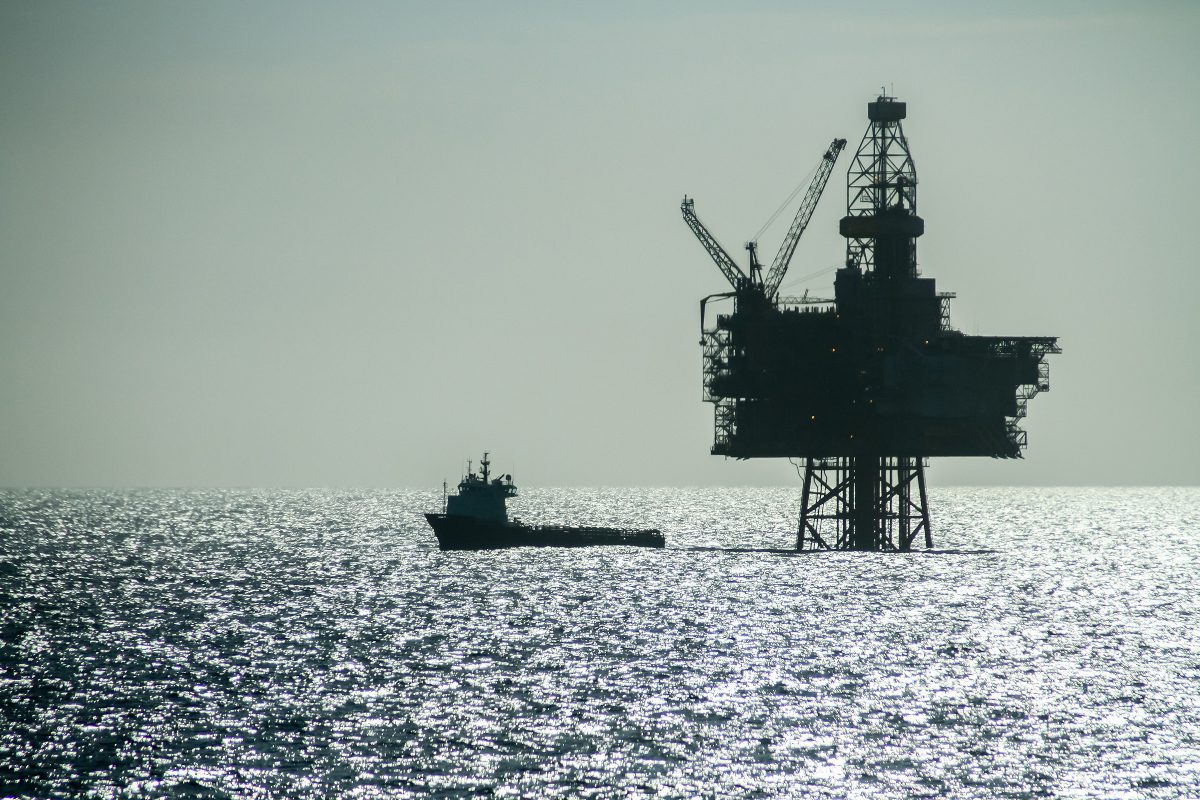
The project involves extracting gas through a new offshore installation connected to the existing Shearwater production infrastructure.
The development also presents significant engineering challenges, according to Tomas Karger, a patent attorney and partner in the Aberdeen energy team at intellectual property law firm Marks & Clerk. He pointed to the need for advanced subsea pipeline systems, digital twin modelling, sensor integration and predictive software to manage the field’s ultra-high-pressure and high-temperature reservoir conditions.
Karger suggested that the technologies developed for Jackdaw, including automated systems for operating and maintaining its unmanned platform, could have applications in other offshore energy projects. He also highlighted opportunities for UK supply chain companies to develop intellectual property and export expertise gained from the project.
Originally approved in 2022, Jackdaw subsequently became the subject of legal proceedings brought by environmental campaigners over the treatment of greenhouse gas emissions.
In January 2025, Scotland’s Court of Session ruled that the previous development consent was unlawful because the environmental assessment had excluded greenhouse gas emissions arising from the eventual combustion of the gas.
The ruling followed the UK Supreme Court’s landmark Finch judgment in 2024, which established that environmental assessments for fossil fuel extraction projects must account for the emissions produced when the extracted fuels are burned.
Although construction was permitted to continue, fresh regulatory consent was required before production could begin.
The Government subsequently considered additional environmental information submitted by the developer, including assessments of downstream emissions. The updated project documentation and ministerial decision were published on 21 October.3
It maintains that its decision is compatible with the UK’s legally binding climate commitments, including achieving net-zero greenhouse gas emissions by 2050.
The approval is consistent with Labour’s commitment not to issue new licences for oil and gas exploration, since Jackdaw was licensed before the current Government took office.
Climate implications
Environmental campaigners have challenged the argument that additional North Sea production is compatible with the UK’s climate commitments.
In November 2025, Greenpeace UK highlighted revised environmental information indicating that Jackdaw’s lifetime greenhouse gas emissions, including those associated with burning the extracted gas, could reach 36 million tonnes of CO₂ equivalent.
The organisation argued that the project’s contribution to climate change would outweigh its claimed benefits and questioned whether domestic production would deliver lower energy bills.4
The distinction between operational emissions and downstream emissions is central to the debate.
Gas produced using existing North Sea infrastructure may have lower emissions associated with extraction and transportation than some imported supplies, particularly liquefied natural gas transported over long distances.
However, burning the gas still releases carbon dioxide, irrespective of where it was extracted.
There are also limits to the influence that increased domestic production can have on energy prices. UK gas prices remain closely connected to international markets, meaning additional North Sea supplies do not necessarily translate into proportionately lower household bills.
New fund for clean energy
Alongside the Jackdaw decision, the Government announced the establishment of an Energy Wealth Fund, intended to direct revenues from North Sea oil and gas production towards renewable and low-carbon energy projects.
The fund will begin with a £2 billion government commitment, with future North Sea oil and gas tax revenues intended to flow into the fund over time.
Chancellor John Healey said the initiative would help turn the UK’s remaining offshore energy resources into longer-term economic benefits, supporting clean energy infrastructure, industrial development and skilled employment.
The Government argues that expanding renewable and low-carbon electricity generation will also reduce the frequency with which gas-fired generation determines wholesale electricity prices, helping to limit exposure to volatile international gas markets.5
Mixed response from energy sector
The decision has been welcomed by trade union GMB, whose general secretary Gary Smith described the approval as “the right thing for our country”.
He argued that delays to decisions on domestic gas production and storage had created unnecessary risks for UK energy security.
GMB also called for further approvals, including the separate Rosebank oil development, whose future remains under consideration.
The Confederation of British Industry (CBI) also welcomed the approval, describing it as recognition of the North Sea’s continuing role in a managed energy transition.
CBI chief executive Rain Newton-Smith said the new Energy Wealth Fund offered an opportunity to turn existing North Sea resources into “long-term investment, skilled jobs and greater energy security for the future”.
The Institute of Economic Affairs’ Andy Mayer welcomed the approval but argued that the lengthy delays surrounding Jackdaw had damaged investor confidence and that the Government had yet to address the wider regulatory uncertainty affecting North Sea developments.
He also welcomed the Energy Wealth Fund in principle, but argued that its resources should support low-carbon innovation rather than subsidise energy production.
Scottish Renewables offered a more qualified response, emphasising the need to ensure that continued North Sea production supports rather than delays investment in clean energy.
Chief executive Angela Hepworth said: “Today’s decision must now be matched by a renewed drive to deliver our long-standing clean energy ambitions.”
She highlighted the opportunities for Scottish businesses to diversify from oil and gas into offshore wind, using existing subsea engineering expertise and skilled labour.
The organisation also called for reform of transmission charges, faster consenting and grid connections, and greater certainty for renewable energy investors.
Hepworth said future revenues from domestic energy production should help accelerate fixed and floating offshore wind development.
The Anaerobic Digestion and Bioresources Association (ADBA) also welcomed the approval, but called for North Sea tax revenues to be used to expand support for domestic biomethane production.
The association said the Green Gas Support Scheme was fully committed, leaving new projects unable to progress. It argued that, with sufficient investment, UK biomethane production could exceed Jackdaw’s projected peak annual output of 25 TWh by the early 2030s.
ADBA chair and former energy secretary Chris Huhne said: “Reinvesting a share of North Sea revenues in the Green Gas Support Scheme would let our industry rapidly increase domestic supply of renewable gas, year after year, long after Jackdaw has run dry.”
Octopus Energy founder and chief executive Greg Jackson also welcomed the decision, suggesting that Jackdaw could displace around 20 shiploads of imported gas annually, while supporting domestic employment and tax revenues.
However, he acknowledged that the project would not substantially reduce energy prices or insulate consumers from geopolitical instability.
Jackson argued that accelerating heat pump adoption would offer a more durable means of reducing household exposure to gas prices.
Green Party leader Zack Polanski, meanwhile, condemned the approval as “climate vandalism”.
The Government has yet to decide whether to approve Rosebank, another major North Sea project affected by the legal requirement to assess downstream emissions.
Notes
[1] Department for Energy Security and Net Zero, HM Treasury and North Sea Transition Authority (21 October 2026). Jackdaw gas field gets green light.
[2] North Sea Transition Authority (21 October 2026). NSTA grants consent for Jackdaw.
[3] Department for Energy Security and Net Zero (updated 21 October 2026). Jackdaw Field Development.
[4] Greenpeace UK (21 November 2025). Shell forced to reveal true scale of Jackdaw’s climate impacts.
[5] Department for Energy Security and Net Zero et al., op. cit. [1].
[6] Reuters (21 October 2026). UK approves long-delayed Jackdaw gas field on energy security grounds.