Sponsored content: This article contains sponsored content.
Measuring airborne chemicals is relatively straightforward when you know what you are looking for. The challenge becomes greater when the composition of the air is uncertain, or when processes can release compounds that were not anticipated in advance.
Industrial hygiene provides a good example. Safety Data Sheets offer important information about chemicals used in a process, but they do not necessarily describe everything that may become airborne. Formulations can contain multiple components, while heating, curing, coating, and other manufacturing processes can introduce additional compounds. When the potential contaminants are unknown, deciding what to measure becomes part of the investigation itself.
Screening an unknown mixture
Conventional sampling is well suited to quantifying compounds that have already been identified as potential hazards. Investigating an unknown mixture may require several sampling methods and media, followed by laboratory analysis. A thorough investigation can therefore become time-consuming, particularly when many potential contaminants must be considered.
Real-time Fourier-transform infrared spectroscopy (FTIR) provides another way to approach this initial uncertainty. FTIR measures how infrared light is absorbed by molecules in a gas sample. Different compounds produce characteristic spectra that can be compared with reference spectra, allowing multiple gases to be identified and measured from the same sample.
The practical advantage is the ability to screen air while a process is operating. Measurements taken at different locations or under changing operating conditions can provide insight into which compounds are present and how their concentrations vary over time. The results can show whether a substance appears during a particular process stage, whether concentrations change with production conditions, or whether the same pattern occurs repeatedly.
This temporal information can be just as valuable as identifying the compounds themselves. A concentration peak can be linked to a specific production step or change in operating conditions, giving investigators additional context when deciding where, when and what to sample next.
From screening to targeted investigation
Real-time FTIR does not replace established sampling methods. Its value lies in providing information that can make subsequent investigation more targeted. A practical workflow is to screen the air, identify compounds of interest and investigate further using appropriate confirmatory sampling methods.
This approach can be particularly useful where chemical compositions are proprietary, evolving or not fully disclosed, including complex manufacturing processes, pharmaceuticals, and semiconductor production. Screening results can focus further investigation on the substances and locations that require closer attention, rather than beginning with a broad range of separate samples.
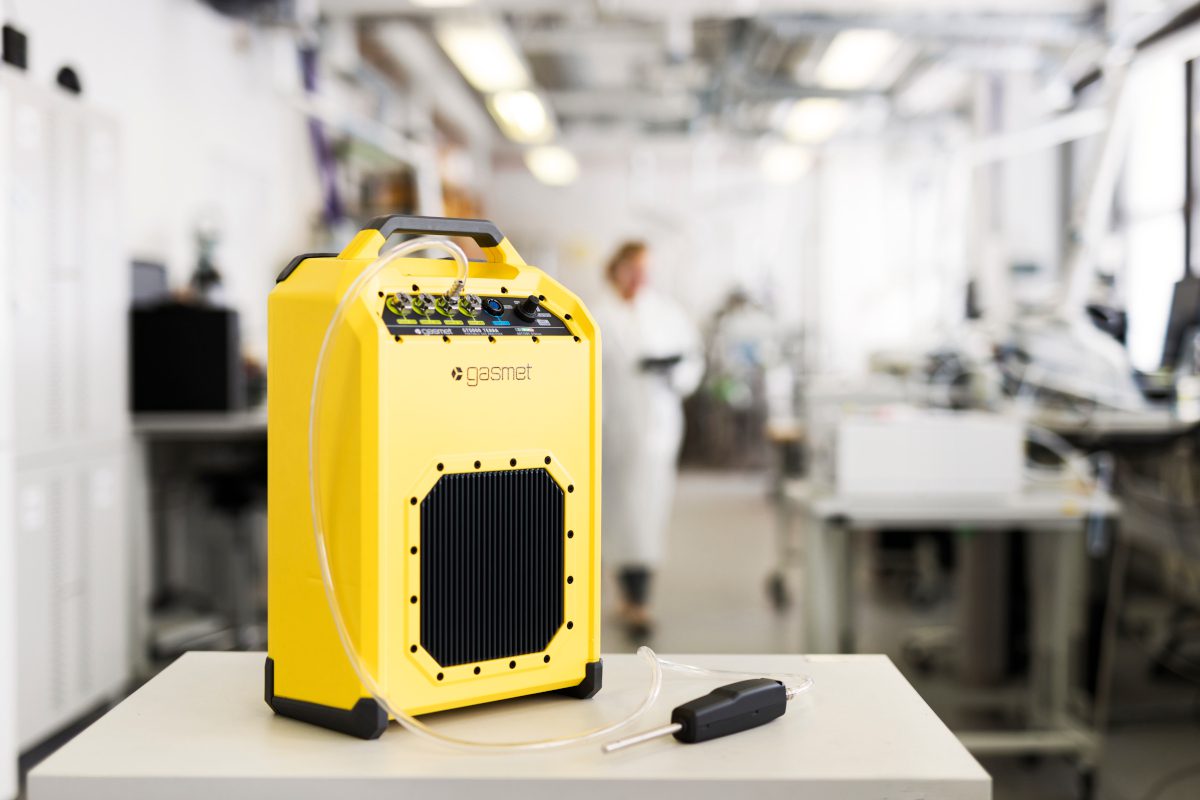
Portable FTIR instruments are making this type of screening possible directly in industrial environments. One example is Gasmet’s GT5000 Terra, which can quantify up to 50 gases simultaneously and identify more than 5,000 gases from recorded sample data.
As industrial processes and the chemicals used within them become more complex, knowing what to measure cannot always be taken for granted. Real-time screening provides a practical starting point by identifying what is present in the air before deciding how best to investigate it further. When the unknown is part of the challenge, a reliable FTIR analyser can be an invaluable tool for industrial hygienists. For more information visit gasmet.com.