

 This article contains sponsored content.
Pumps are an equipment category that can seem mystifying to the outsider. There’s the profusion of different shapes, sizes and specifications, for one thing. And the fact that people often seem to forget they exist until they fail. Celebrating its 100th year, W Robinson & Sons attributes its ongoing growth to being able to supply people with what they need, when they need it. If you need a pump, maybe even tomorrow, the chances are they’ll be able to help, explains the group’s Carl Hatton to Envirotec.
Pumps are the quiet workhorses of the modern world. We often overlook their general omnipresence. “They’re generally shut away in a room somewhere, doing their job quietly,” he explains.
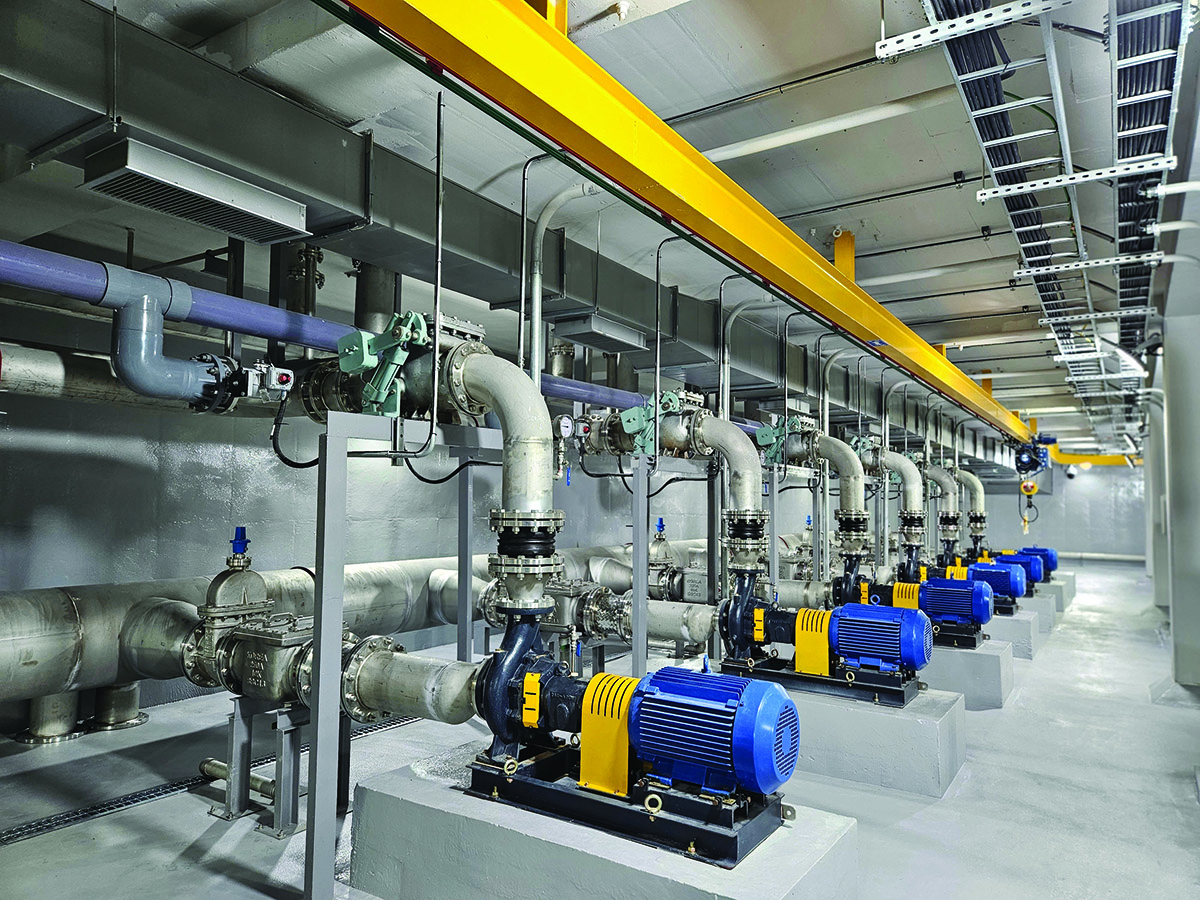
“Go down into the basement of a hospital,” he continues, by way of example, “and you’ll see hundreds of pumps.” This might include pumps for chemical dosing, or cooling. There will be pumps for deionised (DI) water systems, booster sets for clean water and waste water pump systems.
All too often it seems, even technical staff charged with their supervision will only become aware of emerging faults quite late in the day. And then they need someone who can help them replace it quickly and without fuss.
W Robinson operates across the full spectrum of specialist pumping solutions, supplying equipment for both clean and dirty water applications, particularly for the hire contractor and maintenance engineer sides of the market.
The range includes submersible and below-ground pumps (for sewage, wastewater, dirty water and mining environments), clean water pumps (for general transfer, drainage and supply applications), and a section dedicated to engine-driven pumps (petrol or diesel) designed for off-grid use.
Going to the source
Many of their customers are technical people who “know what they want”, in which case a quick conversation will establish the required flow, head and connection size and so on. But they also get lots of people who say: “help, I need a pump – what’ve you got?” Carl runs through some of the typical questions he will ask: How much water do you want to transport? How quickly do you want to do it? How far does it have to go? Frictional losses in 150m of 2in hose pipe have to be factored-in to determine the power rating, for example. Will it be situated indoors or outside? In what kind of weather? What’s your budget?
The range held in stock includes entry-level composite pumps, which might be all a customer needs, but where durable, mission-critical requirements prevail, there are stainless-steel versions, spares and accessories.
With submersible pumps, you might have one installed in a system where a tank is filling with sewage, and if the pump fails, it will overflow.
A common issue is the end user becoming complacent when, say, a twin pump system is installed. More often than not, costs are cut in the maintenance of these systems. If a pump fails then the standby pump will take over, which is fine until there is an issue with this second pump too. Unfortunately, people all too often think: “It’s okay, there’s another one”, with something of a fingers-crossed attitude. It’s a recurring story which often ends with an engineer scrambling to a site to replace it. This is where Robinson excel in finding a replacement quickly, says Carl.
The group also seem to deal with organisations where pump failure isn’t really an option. One recent customer was operating fluid-handling systems supporting large-scale citrus processing, in which fruit is mechanically disintegrated and its constituent elements extracted and refined. Much of the application involved pumps that circulate water for cooling purposes. The maintenance company approached W. Robinson & Sons for professional input into a situation where one of two pumps had failed, and the potential threat of downtime on a multi-million pound operation over the festive season had to be averted.
Robinsons was able to find an exact match to what was needed within their £6.5m stock, even meeting requirements for an unusual seal. A visit to the site on 15 December was followed by supplying the part on the 21st, and it was in place by the 22nd.
What’s in a pump?
The technology in pumps has obviously evolved over the decades of the group’s history, with electronics being the most visible change he has seen in the last 30 years or so. Variable frequency drives (VFDs) have provided leaps in performance and efficiency. It’s also noteworthy that pumps are the place where most motor drives are used today. No other equipment or component category requires more of them.
When it comes to ordering pumps, the typical timescales have changed too, in Carl’s experience. A 3-4-week lead time might have been typical at one point. “’Can I have it tomorrow?’ That’s almost the norm now,” he says.
“That’s where we’ve spotted a gap in the market, and it’s why we hold £6.5 million of pump stock”, he says. “That’s why people come to us.”
It sounds like an Amazon-style operation, and he says there’s a bit of that. A lot of customers know what they want, they just want it quickly. To that end the group has a 50,000-square foot warehouse in Ilford, and an ordering system and IT equipped for the task. This was updated last year, he says, to match the scale of what is now a £12 million+ operation, “all run by just 18 very motivated people”.
The firm also has a workshop for carrying out repairs, and bespoke modifications. Understanding the technical side of the vast and varied universe of pumps and pump systems seems to be important to doing what they do. Carl has 30 years+ experience of pumps, and several of his colleagues have been in pumps for just as long. “It means everyone’s got their own specialty,” he says, and when an enquiry comes in, it can be directed to the person with the most experience of that area.
The firm’s situation as a family-run company is a privileged one, he suggests, with continuity in its management. A big part of their business also seems to be built on long-term relationships. “There are lots of engineers that we’re almost friends with now, we’ve known them for so long.”