



A Defra-commissioned review has found evidence that metal contamination from historic mining persists in parts of England and Wales and is entering wildlife, livestock and human populations. The document highlights significant gaps in understanding any associated health effects.
Researchers led by the University of Nottingham examined 255 documents published over more than 150 years, from 1874 to 2025, covering the risks to animal and human health from land contaminated by former metal mines and smelters.1
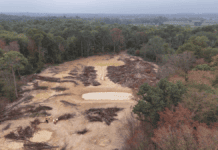
Metal mining and processing has left elevated concentrations of metals in soils, rivers and groundwater, particularly in former mining areas in Wales and southwest and northwest England. Contamination can extend for kilometres beyond the sites where mining and processing originally took place.
Unlike many pollutants, metals do not break down in the environment and can persist in landscapes for centuries.
Previous Environment Agency research has identified extensive contamination of river sediments and floodplain soils associated with historical mining, including by lead, cadmium, copper, zinc and arsenic.2 The government has also estimated that pollution from abandoned metal mines affects around 1,500 km of rivers in England.3
The latest review found consistent evidence that elevated concentrations of metals in the environment are reflected in increased concentrations in local wildlife, livestock and human populations.
However, many of the studies identified by the researchers measured exposure rather than resulting health effects. The review therefore highlights a distinction between evidence that contaminants are entering living organisms and evidence that this exposure is causing illness.
Evidence was nevertheless identified linking chronic exposure to metals associated with former mines and smelters with adverse health effects in terrestrial and aquatic invertebrates, fish, rodents, livestock and humans.
Lead is among the contaminants of particular concern. Acute exposure to sufficiently high concentrations of toxic metals can cause poisoning, while prolonged exposure at lower concentrations can result in less immediately apparent effects.
Evidence gaps
The researchers found relatively few studies directly investigating health risks to animals exposed to historic metal contamination in England and Wales.
In particular, they found no peer-reviewed studies published in the past 70 years investigating health incidents in mammalian livestock associated with historical metal mining or smelting in England or Wales.
Risk assessments undertaken at or near former mining and smelting sites have also identified locations where concentrations of metals in the environment could potentially present risks to human health.
Dr Andrea Sartorius, one of the review’s lead authors, said: “Historical metal mining has left a long-lasting environmental legacy across many parts of England and Wales. By bringing together more than 150 years of published and unpublished evidence, this review provides a clearer understanding of where the evidence is strongest, where important knowledge gaps remain, and how historical contamination may continue to affect both environmental and public health. We hope the findings will help inform future research, monitoring and policy.”4
The findings come as work continues to address pollution from abandoned mines. The Mining Remediation Authority says it is working with Defra and the Environment Agency on metal-mine pollution in England and with the Welsh Government and Natural Resources Wales in Wales.5
In February, the Environment Agency also published research into methods for distinguishing naturally occurring background concentrations of metals from pollution in rivers affected by abandoned mines. The work is intended to inform assessment of the Environment Act target to reduce pollution from abandoned metal mines.6
Dr Lisa Yon, another lead author, said the review had highlighted both potential areas of concern and gaps “where further research is urgently needed”.
She added: “It is only by having a thorough and integrated understanding of the potential risks (to animal, human and ecosystem health), that appropriate methods of mitigation can be developed to effectively reduce the health risks for those living in areas impacted by current or former metal mining activities.”7
Notes
[1] “Review brings together 150 years of evidence on health impacts of historical metal mining”, University of Nottingham, August 2026.
[2] Environment Agency, Assessment of metal mining-contaminated river sediments in England and Wales, 2008.
[3] Coal Authority, Metal mine water treatment: Historical metal mining legacies, GOV.UK.
[4] University of Nottingham, op. cit.
[5] Mining Remediation Authority, Annual report and accounts 2025 to 2026: performance report, July 2026.
[6] Environment Agency, Determining background concentrations of metals in waterbodies impacted by abandoned metal mines, 5 February 2026.
[7] University of Nottingham, op. cit.