



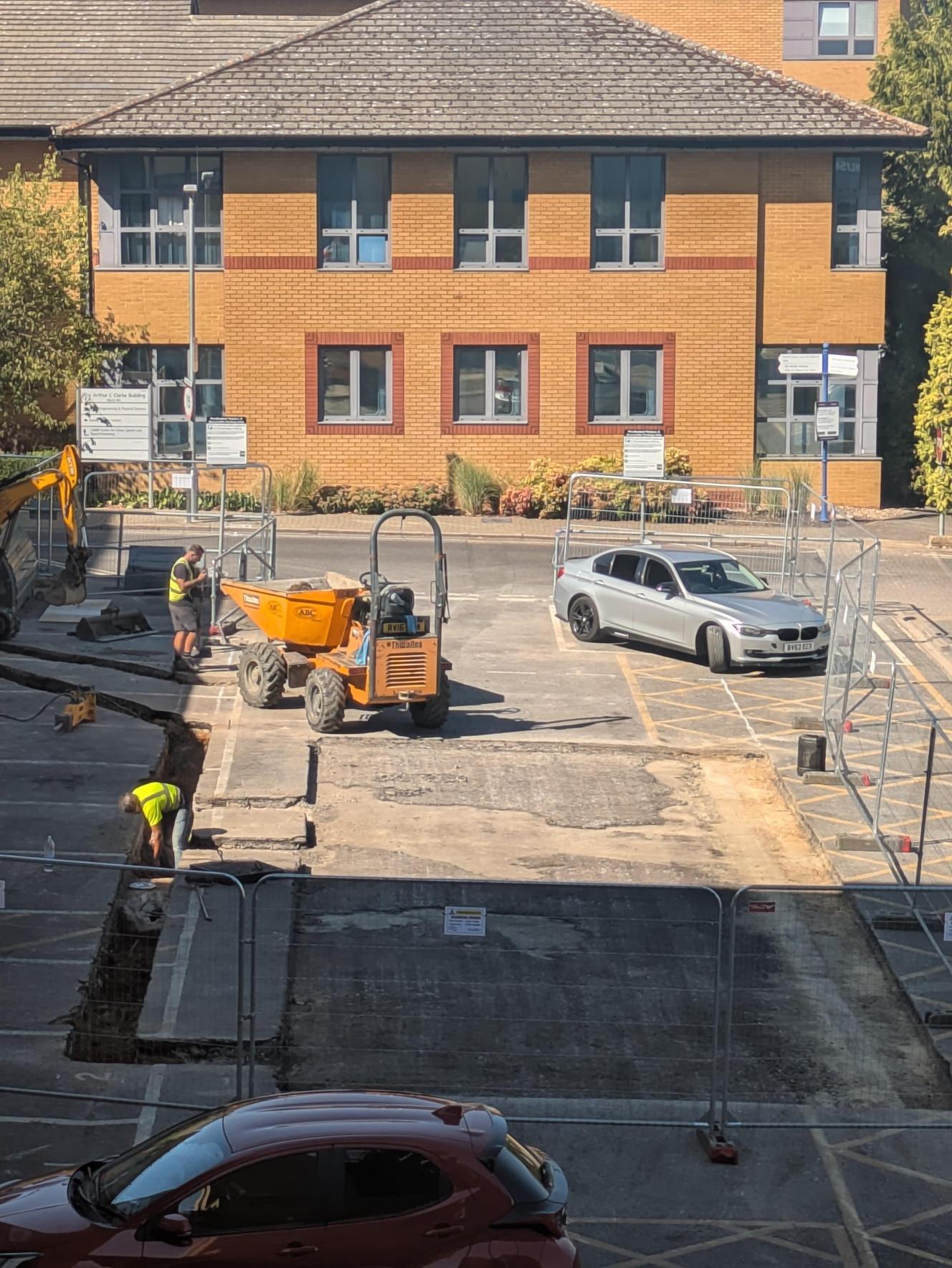
The UK’s pothole problem could one day be tackled from beneath the road surface, using technology that collects heat from roads in summer, stores it underground and releases it again in winter. Researchers at the University of Surrey are now conducting a multi-year field trial to assess whether these “thermo-active” roads can reduce temperature-related pavement damage under UK conditions.
The Thermo-active Roads for Heat Harvesting and Pavement Temperature Regulation project will test whether a ground-source heating and cooling system can regulate road temperatures throughout the year – helping roads better withstand increasingly extreme weather while reducing the carbon footprint of highway maintenance, improving safety and reducing the inconvenience of roadworks.
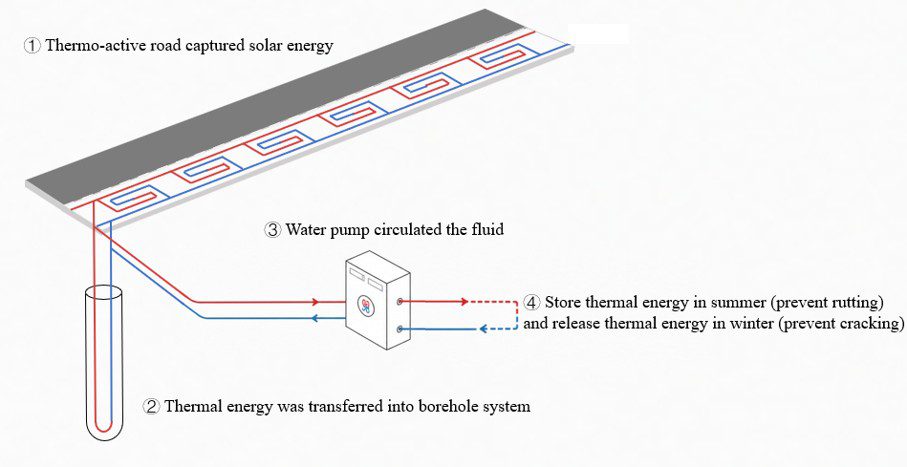
The system works by embedding a network of heat exchange pipes beneath the road surface, running through both the asphalt and the layers below. During summer, water circulating through the pipes absorbs heat from the asphalt and transfers it to a 100-metre-deep borehole, where it is stored underground. In winter, that heat is circulated back through the pipes to warm the road surface, helping to prevent ice from forming and reducing the freeze-thaw cycles that contribute to potholes.
Installation has already begun in the Senate House car park on the University’s Stag Hill campus, with the first phase of the trial underway and the second phase starting in mid-August 2026. Once operational, researchers will monitor the system over a number of years using underground sensors to assess how effectively it regulates road temperatures.
Project lead, Dr Benyi Cao, who is a Senior Lecturer in Geotechnical Engineering at the University of Surrey and Royal Academy of Engineering Research Fellow, said:
“Rather than reacting to potholes after they’ve formed, we’re asking how we can prevent them in the first place. Potholes are more than an inconvenience – they are a safety hazard; they disrupt journeys and are costly to repair. Our project will explore whether geothermal technology can help prevent that damage from happening at scale.”
Unlike many emerging infrastructure technologies, Surrey’s project uses mature, readily available materials, including standard plastic pipework and water circulation pumps, making future deployment both practical and affordable.
Thermo-active and hydronic pavement systems have previously been investigated through modelling and field trials in the UK and overseas. Surrey says the new installation will provide further long-term evidence of how the technology performs under real-world UK conditions.
As well as monitoring the road itself, the team will measure air temperatures above the test section to investigate whether cooler pavements could also reduce surrounding air temperatures during periods of extreme heat.
Dr Nikolas Makasis, Lecturer in Civil Engineering at the University of Surrey and project co-investigator, said:
“This trial will give us real-world evidence of how geothermal road systems perform outside the laboratory. If the results are promising, road authorities will have the evidence they need to deploy this technology to create longer-lasting roads, reduce maintenance costs and make transport infrastructure more resilient to a changing climate.”
The project is funded through Dr Benyi Cao’s Royal Academy of Engineering Research Fellowship, with additional support from Surrey County Council’s Lane Rental Scheme.