



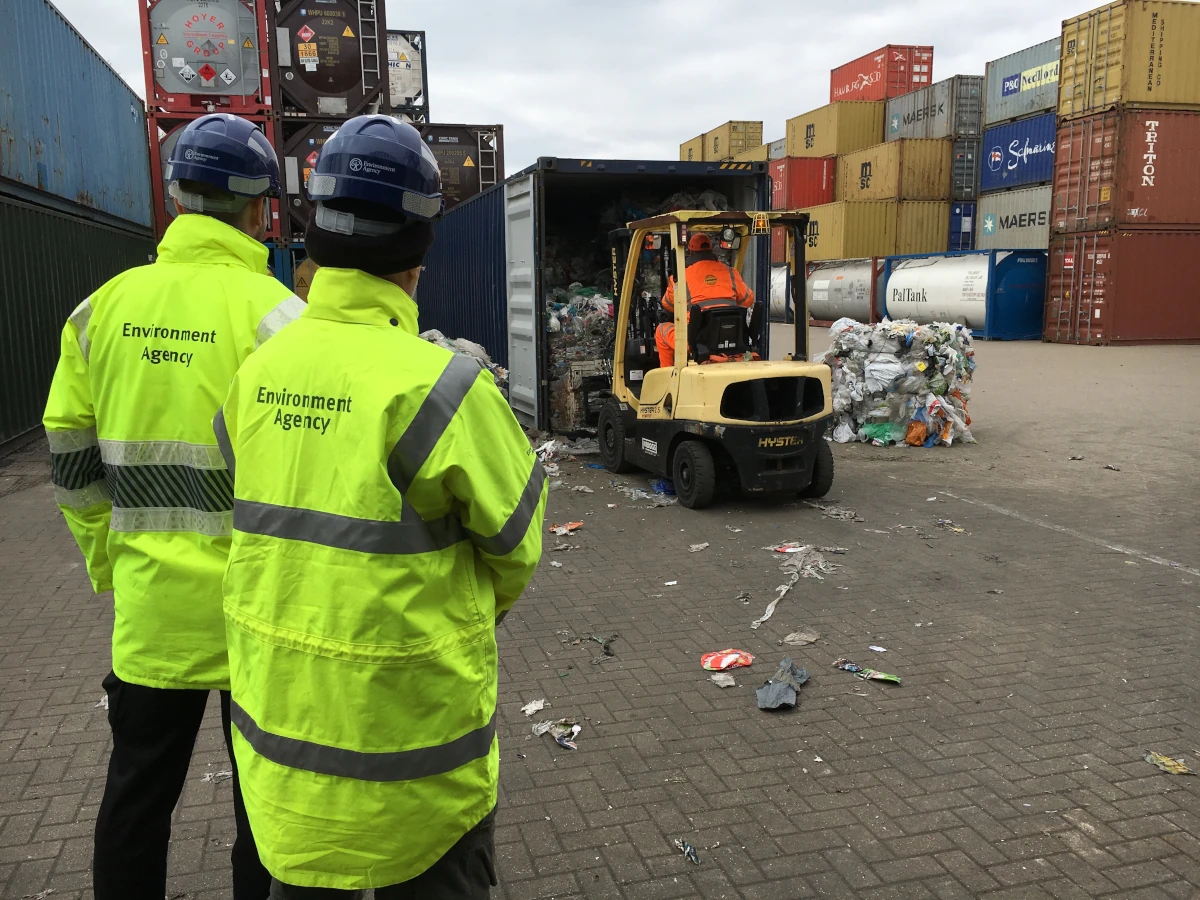
The Environment Agency is increasing its use of AI and machine learning to identify waste-sector compliance risks and target regulatory activity towards operators and sites considered most likely to cause environmental harm.
In this way, the regulator plans to strengthen compliance analytics, detect waste-related risks and optimise assessments, as part of a wider shift towards what EA Chief Regulator Jo Nettleton described as a digitally enabled and risk-driven regulatory system.1
The move would allow inspectors to concentrate resources on poor performers and higher-risk sites, while reducing routine regulatory activity at sites with consistently good compliance records.
In an update published on 24 August, Nettleton said better use of data and digital tools was intended to help regulatory teams identify problems and follow up non-compliance more effectively.2
The development builds on work outlined by the regulator earlier this year to embed AI and machine learning in compliance analytics, moving away from routine, time-based inspections towards a more dynamic approach based on risk.
Applications include automated analysis of waste returns to detect anomalies and possible illegal activity, advanced compliance profiling to help target interventions, optimisation of assessment schedules and the integration of economic information to identify potential environmental risks associated with insolvency.3
The Environment Agency said access to live data and new IT platforms would support machine-learning models for compliance analytics and intelligence, with the aim of improving environmental outcomes while reducing unnecessary regulatory burdens on lower-risk operators.
Tracking non-compliance
AI is only one part of the regulator’s digital overhaul. A new Regulatory Compliance Service (RCS) is already being used for water-quality inspections and is due to be extended to other sectors, including waste.
The system is intended to make it easier for officers to record, track and manage instances of non-compliance and ensure that actions arising from previous inspections are followed up.4
The development has particular relevance to the waste sector, where the EA continues to encounter a relatively small but significant group of persistently poor-performing operators.
Its latest Chief Regulator’s report found that 91% of waste-sector permits were in the two highest compliance bands in 2024. However, 3.6% were in the lowest three performance bands, compared with 1.4% across other sectors regulated under the Environmental Permitting Regulations.
Of 295 permits classed as persistent poor performers in 2024, 150 were in the waste sector. More than 90% of enforcement notices issued by the Environment Agency during the year were also directed at the sector, primarily involving exporter sites, transfer stations and treatment facilities.5
Waste crime presents a further challenge because much illegal activity is deliberately concealed. The Environment Agency’s 2025 National Waste Crime Survey estimated that only 27% of waste crimes were reported to the regulator, increasing the importance of intelligence and data analysis in identifying potentially suspicious activity.6
Digital waste tracking, which begins its first mandatory rollout for waste-receiving sites in October 2026, is expected eventually to provide a centralised record of waste movements from production to disposal. The EA says the system should reduce opportunities for waste to be illegally transported or deposited.7
Inspections under inspection
The move towards more data-led regulation is happening amid increased scrutiny of the agency’s inspection regime.
In May, the Office for Environmental Protection (OEP) published a review of EA inspections in the waste operations and installations sector. While recognising improvements already under way, the watchdog identified weaknesses in areas including inspection planning, identifying the root causes of non-compliance and following up actions.8
Measures introduced or being developed by the EA in response include a revised Site Prioritisation Matrix assigning environmental, social and economic risk scores to permits, strengthened quality assurance for inspection reports and the new Regulatory Compliance Service.9
The potential significance of AI therefore lies not only in automating existing regulatory processes, but in helping determine where inspectors should look in the first place.
The EA has previously said predictive analytics and real-time data could enable it to anticipate problems and direct interventions towards higher-risk operators rather than relying predominantly on scheduled inspection cycles.10
Technology is also being deployed in the field. EA officers have been using optical gas imaging cameras capable of visualising otherwise invisible emissions, including methane. In the Thames area, the technology has been used in investigations into criminal waste dumping to identify fugitive gas and odour emissions.11
The regulator’s increasing reliance on digital intelligence nevertheless remains coupled to conventional inspection and enforcement. In the water sector, more than 10,000 inspections of company assets were completed over the past year, uncovering more than 3,000 permit-condition breaches. At least one issue was identified during 22% of site visits.12
Nettleton said people would remain “at the heart of good regulation” despite the accelerating use of digital technology, data and AI.
The Environment Agency says its longer-term aim is to combine improved data, regulatory expertise and technology to target intervention where it can achieve the greatest environmental benefit.
Notes
[1] Environment Agency, Two Years On: My Reflections as Chief Regulator, 24 August 2026; [2] Ibid; [3] Environment Agency, Chief Regulator’s Report 2024–25, 2025.; [4] Environment Agency, Two Years On: My Reflections as Chief Regulator, op. cit; [5] Environment Agency, Chief Regulator’s Report 2024–25, op. cit; [6] Ibid; [7] Ibid; [8] Office for Environmental Protection, A review of Environment Agency inspections in the waste operations and installations sector in England, May 2026; [9] Ibid; [10] Environment Agency, Chief Regulator’s Report 2024–25, op. cit; [11] Environment Agency, Thirty Years On: How Regulation Has Transformed the Environment – A View from the Chief Regulator, 9 April 2026; [12] Environment Agency and Defra, Inspections target smashed with 10,000 health checks on water network, 30 March 2026.