



Wastewater treatment is acting as a major pathway for microplastics into agricultural soils and potentially the food system, according to a new parliamentary report calling for tighter controls on sewage sludge.
Treatment processes can remove up to 99% of microplastics from wastewater, but much of the material is transferred into sewage sludge rather than destroyed. With between 87% and 94% of the UK’s 3.6 million tonnes of sewage sludge produced annually applied to farmland, the report warns that wastewater treatment can effectively shift microplastic pollution from water to land.1
The UK should introduce advanced filtration at wastewater treatment works and establish limits for microplastics in sewage sludge applied to farmland, according to the report from the All-Party Parliamentary Group (APPG) on Microplastics.
Tackling Microplastic Pollution in the UK, produced following the APPG’s second inquiry into the issue, identifies wastewater and sewage sludge as a significant route by which microplastics are transferred into soils and potentially the food system.
The inquiry received evidence from 36 organisations between November 2025 and March 2026 and was undertaken with the University of Portsmouth’s Global Plastics Policy Centre and the National Federation of Women’s Institutes. The report says the UK currently has no legally defined microplastic reduction targets or regulatory limits covering important pathways including wastewater and soils.2
Wastewater treatment can remove up to 99% of microplastics by number from wastewater, the report says, but much of the material captured is not destroyed. Instead, it is transferred into sewage sludge. It cites Defra findings that more than 99% of microplastics larger than 25µm can be retained in sludge.3
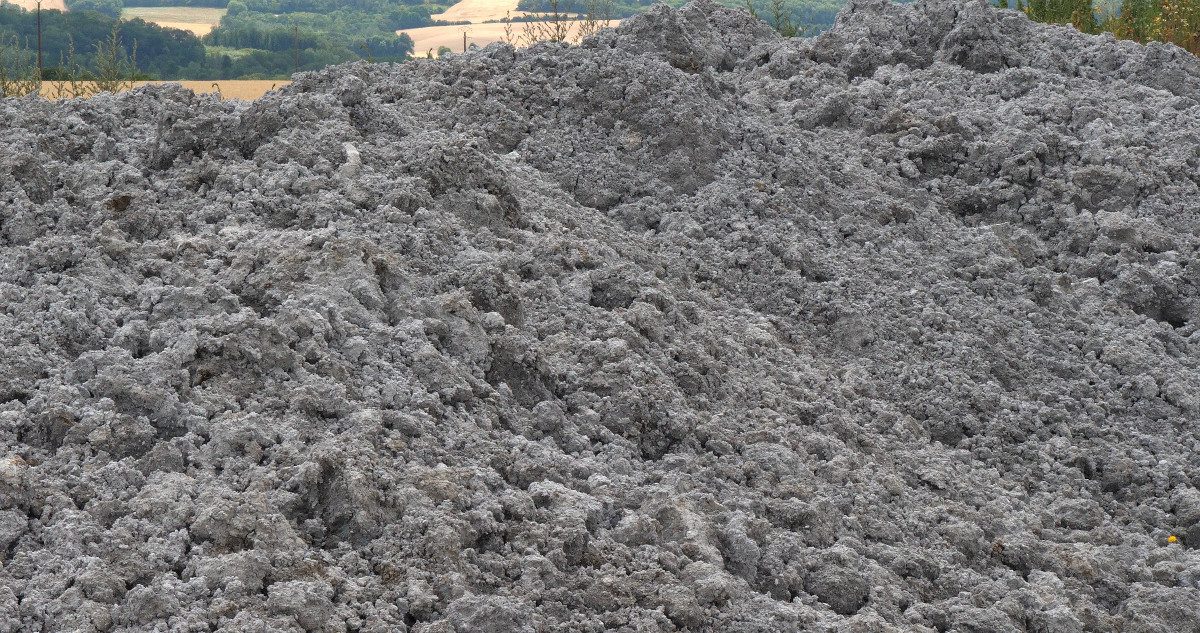
This creates a potential route back into the wider environment because between 87% and 94% of the UK’s approximately 3.6 million tonnes of sewage sludge produced each year is applied to agricultural land as fertiliser.
Microfibres from domestic and industrial laundry are an important contributor: the report says they account for an estimated 89–97% of microplastics found in sludge. Other material enters sewer networks through industrial and domestic discharges, road and agricultural runoff, litter and airborne deposition.4
The result, the APPG argues, is that wastewater infrastructure can function both as a means of capturing microplastic pollution and of redistributing it.
Accumulation in soils
Evidence cited in the report suggests repeated sludge application can lead to substantial accumulation. UK agricultural soils have been identified as among the most microplastic-contaminated in Europe, with an estimated 500–1,000 particles per square metre being applied annually.5
A UK study examining soils receiving sewage sludge over 25 years found microplastic concentrations increased by between 723% and 1,445% after just four years of repeated applications.6
The APPG says the implications extend beyond the presence of plastic particles themselves. Microplastics and associated chemicals can alter soil properties including pH, water-holding capacity, carbon cycling and microbial communities, with potential consequences for nutrient cycling, plant uptake, soil fertility and crop productivity.7
Agricultural soils can receive microplastics from other sources too, including plastic mulch, polytunnels, irrigation equipment, agrochemical coatings, contaminated compost and atmospheric deposition.
The report also stresses that knowledge of the risks remains incomplete. Evidence concerning the harmful effects of microplastics is growing but is “not always fully conclusive”, it says, while arguing that sufficient evidence exists to justify applying the precautionary principle.8
Call for advanced wastewater treatment
Among the report’s five priority areas for action over the next five years is a proposed strengthening of wastewater, sludge and soil protection.
The APPG recommends upgrading wastewater treatment infrastructure with advanced and tertiary filtration capable of capturing smaller microplastic particles from multiple sources, rather than focusing solely on microfibres.
It also proposes bringing sewage sludge treatment, storage and application to land within the Environmental Permitting regime, with associated compliance and monitoring requirements.
Interim precautionary thresholds or risk-based limits should be established for microplastics and plastic-associated chemicals in sludge destined for agricultural use, according to the report, with the limits refined as the evidence base develops.9
A national monitoring framework would meanwhile cover water, sludge, soils and air, supported by harmonised sampling, analytical methods and reporting. The APPG says the absence of agreed standards and regulatory limits currently makes it difficult to establish baselines, assess risks or determine whether interventions are working.
Its recommendations also extend upstream. New washing machines should be required to incorporate microfibre filters, while extended producer responsibility could ultimately be applied to micropollutants so that producers contribute towards the costs of advanced wastewater treatment.10
The report’s wastewater recommendations are intended to avoid solving one pollution problem by creating another. It says policy should ensure that microplastics removed from wastewater are not simply “shifted from water to land or food systems”.11
More broadly, the APPG is calling for a UK Microplastics Strategy or Bill containing time-bound reduction targets, alongside regulation targeting major sources including packaging, tyres, textiles, paints, agricultural products and plastic pellets.
It says the current lack of a coordinated policy framework risks allowing microplastic contamination to accumulate while making eventual intervention more difficult and expensive.12
Notes
[1] APPG on Microplastics (2026), Tackling Microplastic Pollution in the UK: Evidence and priority actions for the next five years (2026–2031), Executive Summary.
[2] Ibid., Introduction; Appendix 1, “Methods”; section 5, “Current UK policy responses to microplastics”.
[3] Ibid., section 3.6, “Wastewater, sewage sludge, and biosolids system”.
[4] Ibid.
[5] Ibid., section 4.2, “Food system impacts”.
[6] Ibid.; citing Ramage, S.J.F.F. et al. (2025), “Microplastics in agricultural soils following sewage sludge applications: Evidence from a 25-year study”, Chemosphere, 376, 144277.
[7] APPG on Microplastics (2026), op. cit., section 4.6, “Soil health impacts”.
[8] Ibid., section 4, “What are the impacts of microplastics?”.
[9] Ibid., section 6, “Targeted policy actions for microplastics”.
[10] Ibid., Appendix 4, “Sector Approaches – Textiles” and “Wastewater”.
[11] Ibid., Appendix 4, “Sector Approaches – Wastewater”.
[12] Ibid., section 6, Priority Action 1, “Establish a clear UK policy framework with targets”.