



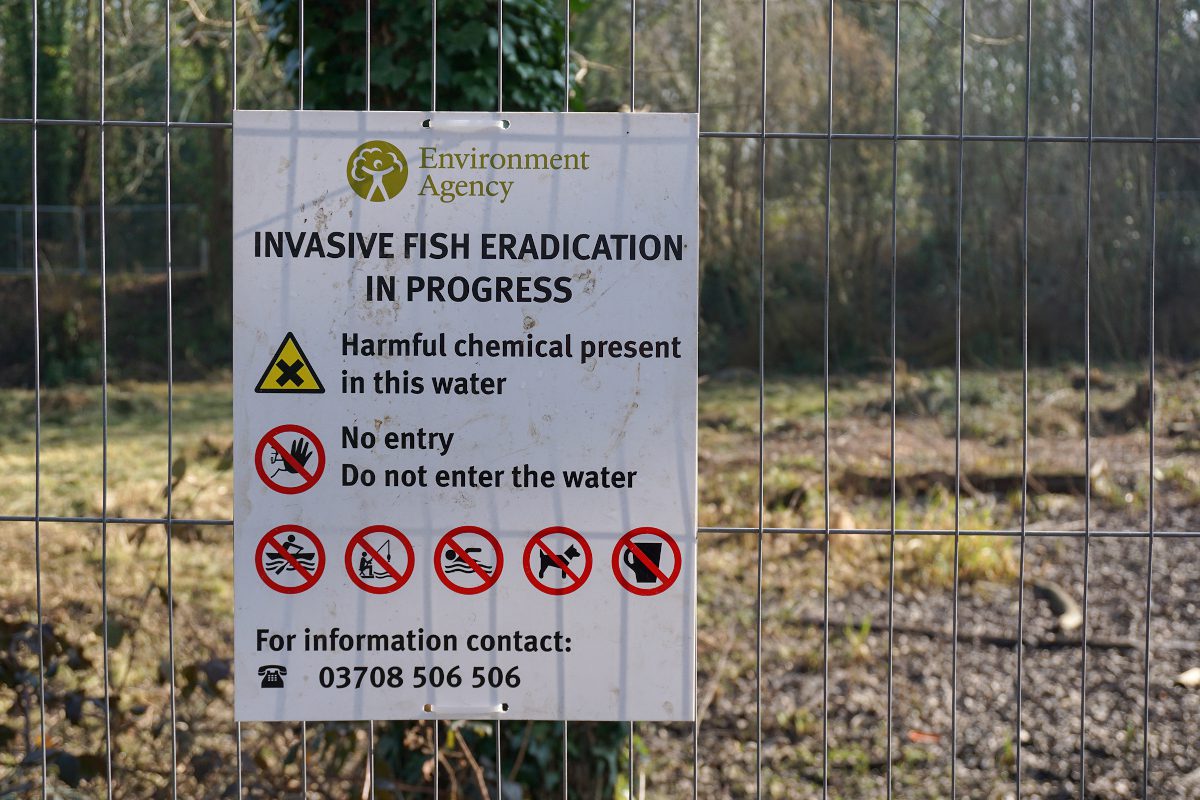
The Conservatives are set to propose the abolition of the Environment Agency and Natural England, alongside the scrapping of environmental rules covering new homes and packaging, as part of what the party is billing as its most ambitious deregulation drive in a generation.
The proposals are due to be set out by shadow chancellor Andrew Griffith at the Conservative Party conference in Birmingham on 5 October, as the party seeks to place economic growth and lower regulatory costs at the centre of its policy programme.1
Under the plans, the Environment Agency and Natural England would cease to exist as separate arm’s-length bodies, with their functions brought into the Department for Environment, Food and Rural Affairs (Defra).
The Environment Agency is currently responsible for a wide range of environmental regulation in England, including environmental permitting, waste regulation, water quality and flood and coastal risk management.2
Shadow environment secretary Victoria Atkins said bringing the functions of the two organisations into Defra would deliver “common sense for our countryside and the cost” at a time of “rocketing food prices, record numbers of farms closing and nature in decline”.3
The measures form part of what Griffith is expected to describe as “the most ambitious deregulation project in a generation”, with the Conservatives arguing that regulatory costs are holding back housing, infrastructure development and economic growth.
Net zero rules targeted
The party also intends to scrap the Future Homes Standard and associated housebuilding requirements due to come into force next year. These would require new homes to incorporate low-carbon heating and significantly improved energy performance.
The Conservatives say the wider package of housing measures could reduce the price of a new-build home by as much as £50,000. Party researchers have cited analysis undertaken for Birmingham City Council in 2023 suggesting that improved energy efficiency, heat pumps and extensive solar PV could add £30,789 to the construction cost of a detached house. The same analysis, however, estimated that the measures could reduce annual household energy bills by £2,715, implying a payback period of around 11 years.4
Section 106 agreements and the Community Infrastructure Levy, which enable local authorities to secure infrastructure and other contributions from developers, would also be replaced by a single levy.
The proposals sit within a wider Conservative retreat from the UK’s existing net zero policy framework. Party leader Kemi Badenoch has previously pledged that a future Conservative government would repeal the Climate Change Act, arguing that the existing approach imposes excessive costs while failing to provide an effective global response to climate change.
“We will get rid of the Climate Change Act and replace it with a proper strategy that actually works,” Badenoch told the party’s 2025 conference, describing herself as “a Net Zero sceptic” rather than a climate change sceptic.5
Packaging EPR in the firing line
Also seemingly prominent on the regulatory bonfire is extended producer responsibility for packaging (pEPR), a “polluter pays” charge on packaging producers.
The party estimates that removing the scheme could lift a £1.5 billion burden from businesses.
Packaging EPR shifts the costs associated with managing household packaging waste from taxpayers and local authorities towards producers. From 2026/27, fees are being modulated according to recyclability, with less recyclable packaging attracting higher charges in an effort to encourage producers to move towards more readily recyclable materials.6
The Conservative proposals therefore potentially represent a significant reversal of the collection and packaging reforms that have been under development for several years.
The party is also backing construction of a third runway at Heathrow and intends to withdraw the UK from the Aarhus Convention, the international agreement providing rights relating to access to environmental information, public participation in environmental decision-making and access to environmental justice.
Griffith has argued that the convention allows a small number of campaigners to delay major infrastructure projects, saying the Conservatives would “legislate to sweep away the blockers to getting the infrastructure our country needs built”.7
Conservation charity responds
The proposals have prompted a strongly worded response from The Wildlife Trusts.
Craig Bennett OBE, chief executive of the organisation, accused the Conservatives of adopting a “divisive, scapegoating tactic” by portraying environmental protection as an obstacle to development.
“Today’s announcements would do nothing to encourage growth or deliver development,” he said. “Instead, they will expose the UK’s economy to dangerous weather, the UK’s food supplies to biodiversity collapse and UK homes to flooding and extreme heat.”
He added: “In an age when climate change and nature loss are a growing security threat, abolishing environmental regulators and safety standards amounts to gross negligence from any party that aspires to Government.”
Bennett argued that public opinion did not support a choice between economic development and environmental protection, pointing to recent polling commissioned by The Wildlife Trusts, National Trust, RSPB, Woodland Trust and WWF and undertaken by More in Common.
Based on a survey of 2,006 adults in Great Britain and focus groups in three English constituencies, the Strong Roots study found widespread concern about the decline of nature and little public appetite for presenting environmental protection and development as opposing objectives.8
Among its findings, the research concluded that Conservative voters were divided over net zero but “united in their care for nature”, and suggested that perceptions of weakness on nature protection could carry an electoral cost.
Separate material published by The Wildlife Trusts alongside the polling found that respondents believed, on average, that 61% of Britain’s land should be protected for nature. The organisation has also published an evidence review drawing on more than 200 academic studies, arguing that nature restoration can contribute to public health, food security, climate resilience and economic prosperity.9
The Conservative proposals are expected to form part of a future election manifesto, rather than representing changes that can presently be implemented by the opposition party.
Notes
[1] ITV News, “Tories to share plans for tax cuts and major deregulation in conference speech”, 5 October 2026.
[2] Environment Agency, GOV.UK, “Environment Agency”, organisational information and responsibilities.
[3] The Guardian, “Tories to pledge to scrap Environment Agency and Natural England”, 4 October 2026.
[4] The Independent/PA, “Tories to unveil economic policies after Badenoch pledges ‘radical measures’”, 5 October 2026.
[5] Conservative Party, “Kemi Badenoch Announces Our Plan to Abolish Stamp Duty”, conference speech, 2025.
[6] UK Parliament, written answer on Extended Producer Responsibility, 1 June 2026.
[7] Andrew Griffith, “A Conservative government will get Britain growing again”, 5 October 2026.
[8] More in Common, Strong Roots, September 2026.
[9] The Wildlife Trusts, “Polling finds public ambition for nature is double that of Government”, 25 September 2026.