


Construction of a 620-metre subsea tunnel designed to return fish to the Bristol Channel has been completed at Hinkley Point C, marking a milestone in the development of environmental protection systems for the new nuclear power station in Somerset.1
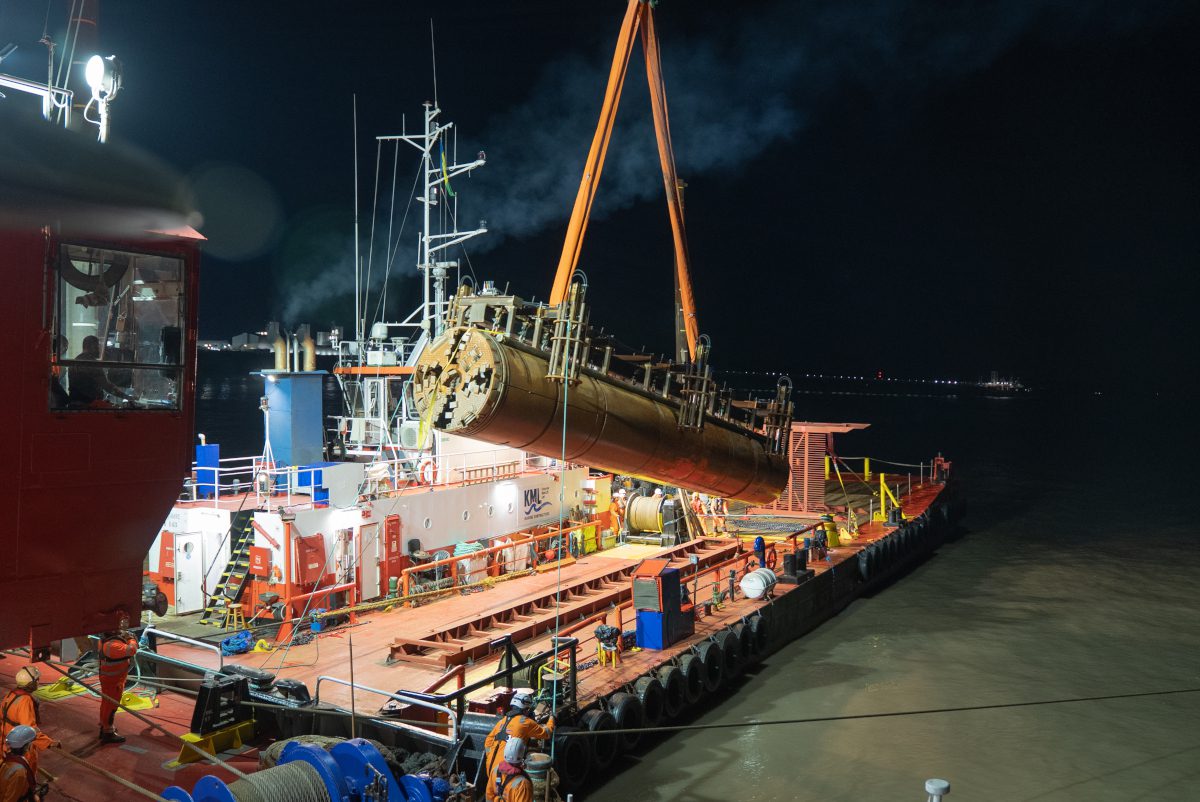
EDF announced on 1 October that a tunnel boring machine, named “Sarah Guppy”,2 had broken through the seabed five months after beginning excavation from a land-based launch shaft. The machine was subsequently recovered using a floating crane and will be cleaned and prepared for reuse elsewhere.
The tunnel forms part of a fish return system intended to reduce the impact of seawater abstraction for the power station’s cooling operations. Fish entering the cooling water system will be intercepted by rotating drum screens and directed into the return system, which will transport them back to the sea.
The project was delivered by KierBAM, a joint venture working for EDF Nuclear New Build. According to the contractor, the excavation involved installing 207 precast concrete rings to form the tunnel lining, together with 67 offshore precast blocks. Approximately 5,800 tonnes of excavated material was treated and disposed of.
The works required specialised arrangements for the machine’s offshore breakthrough and recovery, with 3D modelling and bespoke lifting solutions employed to manage challenging tidal conditions and the constrained marine working environment.3
Three layers of fish protection
The return tunnel is one of three measures designed to limit the effects of the power station’s cooling water intakes on marine life.
Four low-velocity intake heads have been designed to reduce the speed at which seawater enters the system, allowing fish to swim away from the openings. The intakes are also positioned parallel to the estuary’s tidal flow to help minimise the risk of fish being drawn into them.
A second measure is an acoustic fish deterrent, designed to discourage fish from approaching the intake structures. EDF says the three measures together represent an investment of more than £700 million.
The acoustic system has been the subject of research involving Swansea University and Devon-based Fishtek Marine. Trials conducted in 2025 involved tagging salmon and twaite shad and monitoring their movements using underwater receivers. EDF reports that, when the deterrent was operating, only one tagged twaite shad approached within 30 metres of the intake heads, compared with 14 when it was switched off.
The company says the results demonstrate the potential effectiveness of the technology, although the performance of the complete fish protection system under operational conditions remains to be established.4
The scale of the marine engineering works is considerable. The power station’s cooling infrastructure includes two seawater intake tunnels, each approximately 3.4 kilometres long, and a 1.8-kilometre outfall tunnel. Completion of the fish return tunnel brings the total length of marine tunnels excavated for Hinkley Point C to more than eight kilometres.5
Environmental scrutiny
Fish protection at Hinkley Point C has also been the subject of regulatory debate. EDF previously sought to remove the requirement for an acoustic deterrent, citing safety concerns associated with maintaining underwater sound projectors in the Bristol Channel’s powerful tidal currents.
In 2025, however, the company announced that it was investigating a more compact acoustic technology that could be maintained without divers. The group also paused proposals for approximately 900 acres of saltmarsh habitat, which had been considered as compensation for the absence of the original deterrent.
In a June 2026 update, the Devon and Severn Inshore Fisheries and Conservation Authority noted encouraging results from trials involving shad, but said it had not seen results for the lower-frequency deterrent. The authority also highlighted the need for an adaptive monitoring and management plan to ensure the system continues to perform as expected.6
Notes
[1] EDF, “Hinkley Point C finishes tunnelling fish return system”, 1 October 2026.
[2] Sarah Guppy (1770–1852) was a Bristol-born inventor and engineer, known for her work on bridge construction and other mechanical innovations. In 1811, she patented a method of constructing bridge foundations and suspension bridges. The tunnel boring machine was named in her honour by local schoolchildren.
[3] BAM UK, “KierBAM completes 620m tunnel beneath the seabed at Hinkley Point C”, 6 October 2026.
[4] EDF, “Fish protection measures at Hinkley Point C”, accessed 12 October 2026.
[5] World Nuclear News, “Hinkley Point C completes 620-metre tunnel for fish”, 1 October 2026.
[6] Devon and Severn Inshore Fisheries and Conservation Authority, “Update on Hinkley Point C” (PDF), Authority Meeting, June 2026.