



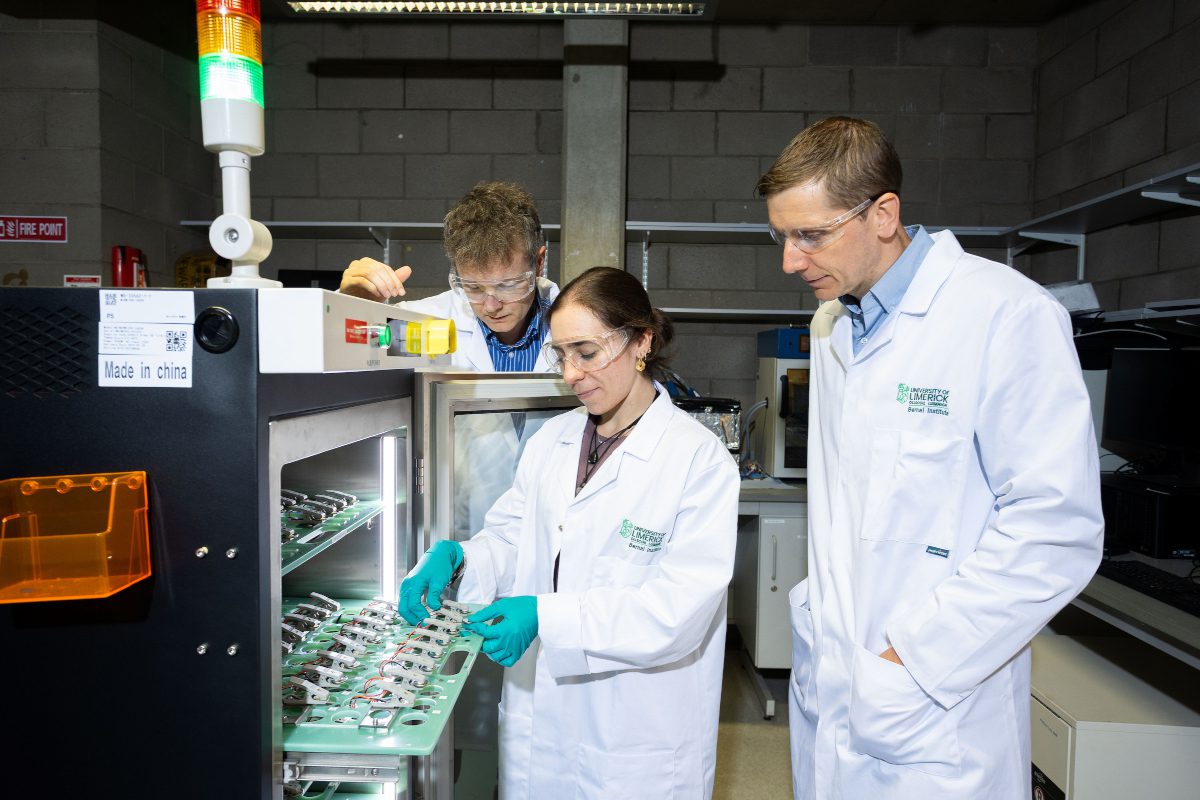
A byproduct of the pulp and paper industry could provide a more sustainable material for sodium-ion batteries, following research at the University of Limerick that has demonstrated a water-based process for producing carbon nanofibres from lignosulfonate.
Published in the journal Advanced Materials, the study investigates how the nanostructure of lignosulfonate-derived carbon can be engineered to improve its ability to store sodium ions.
Sodium-ion batteries have emerged as a potential alternative to lithium-ion technology, partly because sodium is abundant and widely available.
Working with colleagues at the University of Valencia, the researchers developed a water-based process that avoids the organic solvents traditionally used in producing some carbon nanofibre materials. According to the team, the process also eliminates the need for synthetic binders and additives.
Professor Maurice N Collins, who led the study and is Professor of Materials Science at UL, said: “This research shows how an underused byproduct from the forestry and paper industries can be converted into a valuable battery material using a simple water-based process.
“A key breakthrough from the research was the discovery that the performance of the material can be tailored by controlling its structure at the nanoscale. By carefully engineering the nanostructure of the carbon material, we were able to improve how efficiently sodium ions are stored and released during charging and discharging.”
First author on the paper, Judith Miralda-Jalle, a PhD researcher at UL, said: “This study was not only about creating a new battery material, but also about understanding the science behind it. By investigating how the chemistry and structure of the carbon changed during processing, we gained insights that can help guide the design of more efficient and sustainable materials for future batteries.”
The team produced the material by combining lignosulfonate with other naturally derived ingredients to create ultra-fine fibres. These were then converted into advanced carbon structures designed specifically for energy storage applications.
Beyond its potential use in batteries, the research could create a valuable new application for lignosulfonate, which is currently an underutilised industrial byproduct.
Associate Professor Tadhg Kennedy, co-director of the AMPEiRE Battery Research Centre at University of Limerick and co-author of the work added: “What is particularly exciting about this research is that sustainability is built into every stage of the material’s development. We start with an abundant industrial byproduct, process it using water rather than organic solvents, and engineer its internal structure to improve sodium storage. This shows that high-performance battery materials can be designed with both electrochemical performance and environmental responsibility in mind.”
Professor Collins offered a summmary: “The work demonstrates how renewable resources can be transformed into high value materials while supporting the development of a more circular and sustainable economy, and the enormous potential of sustainable materials to support the next generation of energy storage technologies.”