


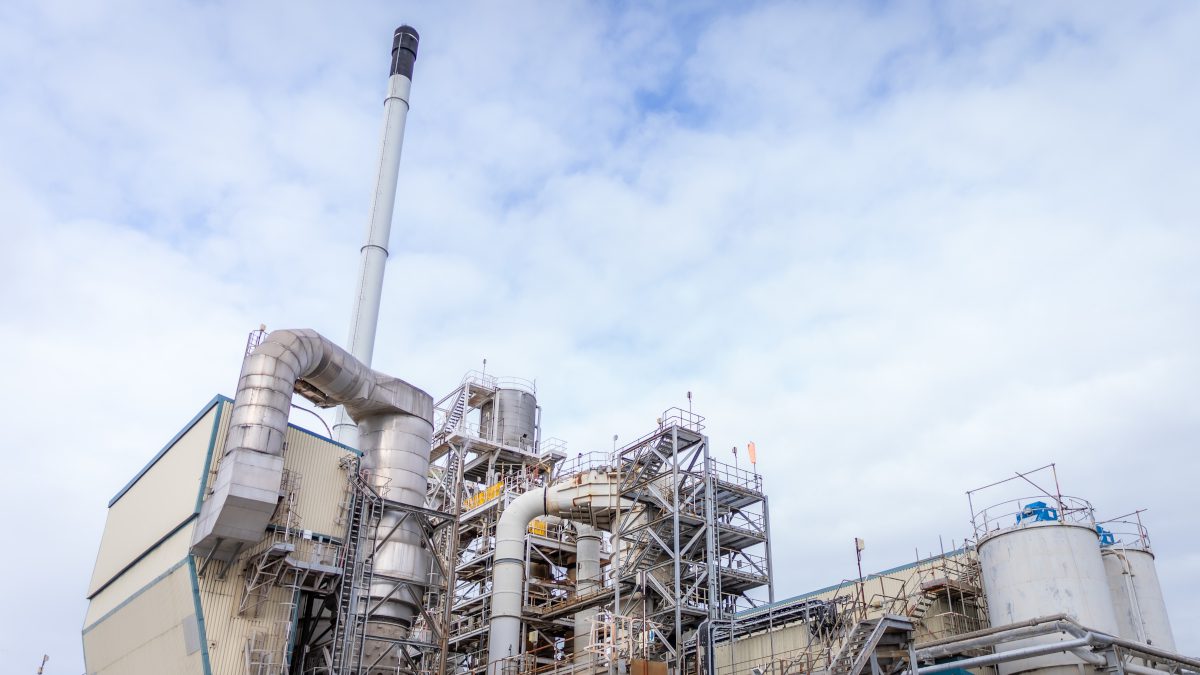
Environmental services group Veolia has secured a contract to supply carbon dioxide purification and dehydration equipment for the UK’s first full-scale carbon capture installation at an energy-from-waste facility.
The company will design and supply two modular units for Encyclis’ Protos facility near Ellesmere Port, Cheshire, under a contract awarded by engineering, procurement and construction contractor Kanadevia Inova.
The equipment will prepare captured CO₂ for transport through the HyNet North West pipeline network and permanent geological storage in depleted gas reservoirs beneath Liverpool Bay.
Scheduled to become operational in mid-2029, the carbon capture installation is designed to capture approximately 370,000 tonnes of CO₂ annually. The adjoining energy-from-waste facility will process up to 500,000 tonnes of non-recyclable waste each year, generating up to 49.9 MW of electricity.
Meeting pipeline specifications
While carbon capture focuses on separating CO₂ from industrial exhaust gases, further treatment is generally necessary before the captured gas can be transported and stored.
Impurities and moisture can create problems for pipeline integrity, equipment operation and storage infrastructure, making purification and dehydration important stages in the carbon capture process.
Veolia says its units have been specifically designed to fit within the constrained space available at Protos, using a compact, modular configuration. The equipment will ensure that the captured CO₂ meets the purity requirements of the transport and storage network.
The contract marks Veolia’s entry into the full-scale carbon capture market, building on its involvement in carbon capture projects elsewhere in Europe and the US.
The Protos carbon capture project forms part of HyNet North West, one of the UK’s principal industrial decarbonisation clusters. The network is intended to connect industrial CO₂ emitters with shared transport and permanent geological storage infrastructure.
Capturing emissions from energy-from-waste facilities presents a particular opportunity because their exhaust gases contain CO₂ originating from both fossil-based materials and biogenic waste. Permanently storing the biogenic component can provide carbon removals, while capturing fossil-derived CO₂ can reduce emissions that would otherwise enter the atmosphere.
The Protos installation is among the first projects intended to demonstrate carbon capture at commercial scale in the UK’s energy-from-waste sector, potentially providing lessons for wider deployment at facilities facing similar technical and spatial constraints.