



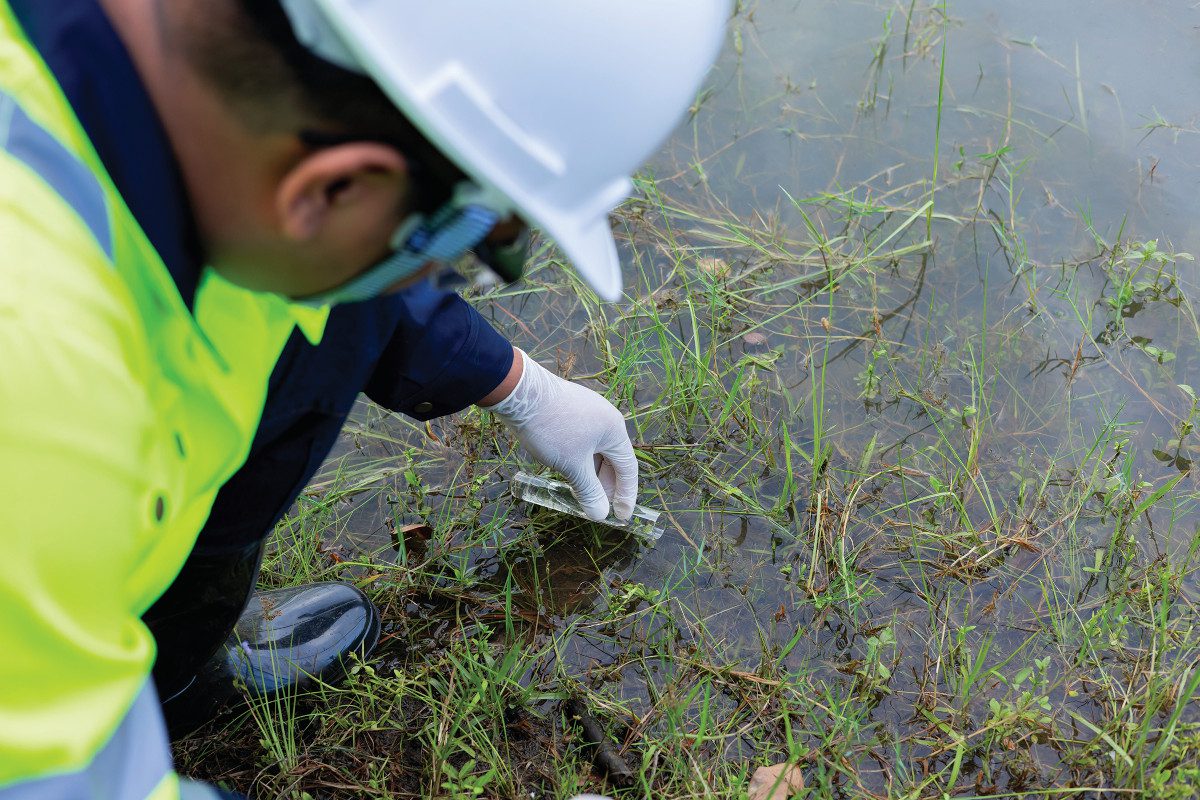
New indicators covering ecosystem extent, condition, extinction risk and species populations could help businesses establish whether their environmental interventions are delivering measurable improvements.
An international initiative has launched a new framework for measuring changes in the state of nature, aiming to bring greater consistency to the way businesses and financial institutions assess biodiversity impacts, risks and restoration outcomes.
The State of Nature Indicators and Metrics framework, announced by the Nature Positive Initiative on 13 October, is the result of a two-year collaboration involving more than 500 experts and practitioners from business, finance, science, government and civil society.
Its development involved reviewing more than 600 existing biodiversity metrics and indices, with the aim of establishing a common set of measurements that can be applied across different industries, ecosystems and geographical locations.
The initiative addresses a longstanding difficulty in environmental assessment: while organisations increasingly report on their efforts to protect or restore nature, the diversity of measurement approaches can make it difficult to establish whether these activities are producing measurable improvements in biodiversity.
The framework seeks to distinguish between the actions organisations undertake and the resulting changes in the natural environment. Planting trees, restoring wetlands or reducing pollution, for example, may demonstrate environmental commitments, but measuring the condition of ecosystems and species populations is necessary to assess their outcomes.
Four core indicators
The framework centres on four indicators: ecosystem extent, ecosystem condition, species extinction risk and species populations.
Ecosystem extent measures whether habitats are expanding or contracting, while ecosystem condition assesses changes in their ecological quality. The remaining indicators address the importance of particular areas to species extinction risk and the status of species populations.
Together, they are intended to provide a consistent basis for understanding changes in nature across terrestrial, freshwater and marine environments.
The framework includes associated metrics and measurement guidance for application at individual sites and across wider landscapes or seascapes.
For a business sourcing agricultural raw materials, for example, this could involve examining whether natural habitats within a supplying region are being lost or restored, whether their ecological condition is improving, and how species populations are changing.
Such information could support decisions about land management, sourcing, investment and environmental restoration, while providing a more consistent basis for corporate reporting.
Tested across 23 countries
The indicators were piloted by 29 companies across six sectors, covering more than 50 sites in 23 countries. Additional feasibility assessments examined their application in freshwater and marine environments.
The framework has also been incorporated into guidance from the Taskforce on Nature-related Financial Disclosures (TNFD) and the Science Based Targets Network (SBTN), while the Global Reporting Initiative (GRI) is working towards integration.
This alignment could make it easier for businesses to use consistent biodiversity measurements across different reporting and target-setting systems, rather than collecting separate sets of data for each.
Marco Lambertini, convener of the Nature Positive Initiative, said the indicators address a critical gap in efforts to assess nature recovery.
“Yet until now there has been no clear consensus on how to measure whether efforts are leading to nature’s recovery,” he said, describing the framework as a means for businesses and financial institutions to assess their impacts, dependencies and risks.
Challenges remain
Establishing common indicators does not eliminate the practical difficulties of measuring biodiversity. Data availability, monitoring costs and the complexity of ecological systems can all affect assessments, particularly where organisations operate across multiple habitats or geographical regions.
Changes in ecosystem condition or species populations may also reflect factors beyond an individual organisation’s control, complicating efforts to attribute improvements to particular interventions.
The Nature Positive Initiative acknowledges the need for further work on data accessibility, measurement tools and methodologies. Its accompanying guidance and technical report identify areas for additional research, while encouraging the development of automated measurement systems.
The framework is intended to complement, rather than replace, existing measures of environmental pressures and management responses.
Its launch comes ahead of the UN biodiversity conference COP17, scheduled for 19–30 October in Yerevan, Armenia, where governments will review progress towards international commitments to halt and reverse biodiversity loss by 2030.
The initiative hopes that greater consistency in measuring environmental outcomes will help businesses move beyond reporting their activities towards demonstrating whether those activities are contributing to nature’s recovery.
Notes
[1] Nature Positive Initiative — framework and guidance; announcement, 13 October 2026.