



Scientists have identified a previously overlooked atmospheric process that could significantly increase cloud formation over the world’s coldest oceans, offering a potential explanation for longstanding discrepancies in climate models.
The findings, from an international team led by the University of Helsinki and based on experiments at CERN’s CLOUD facility, suggest that methanesulfonic acid (MSA) – a compound formed when marine plankton emissions are oxidised in the atmosphere – plays a much larger role in generating cloud-forming particles than previously recognised.
Marine plankton release dimethylsulfide (DMS) during photosynthesis, producing the familiar smell of the sea. As DMS reacts in the atmosphere it forms acidic vapours, including MSA. While scientists have long suspected that plankton influence cloud formation, the new study indicates that this pathway has been underestimated in climate models.
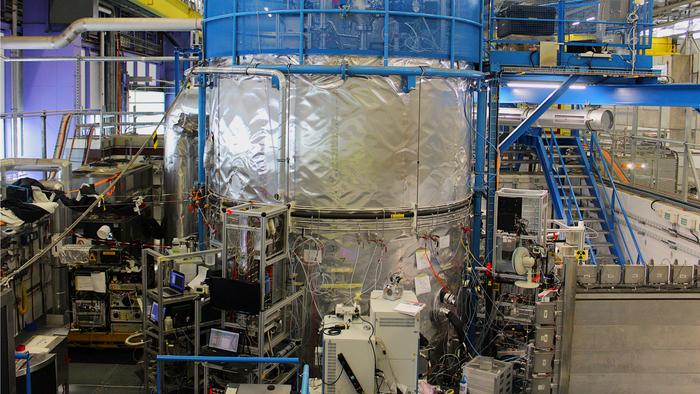
Using the CERN CLOUD chamber, the researchers recreated the ultra-clean, low-temperature conditions typical of remote marine environments, with temperatures ranging from +9°C to −52°C. This enabled them to observe how microscopic aerosol particles – the seeds around which cloud droplets form – develop under realistic atmospheric conditions.
The experiments showed that when temperatures fell below −10°C and even trace amounts of ammonia were present, MSA was as effective as sulfuric acid, traditionally regarded as the principal driver of atmospheric aerosol formation, in creating new particles.
The two compounds also acted together, forming mixed molecular clusters that accelerated particle growth and improved the survival of newly formed nanoparticles until they became large enough to seed clouds.
“Because MSA and sulfuric acid generally occur at similar concentrations over cold ocean regions, clouds may form there up to ten times faster than previously thought”, said one of the study’s lead authors, Dr Jiali Shen.
According to the researchers, this mechanism helps explain why observations over the Southern Ocean and the cold upper marine atmosphere have consistently revealed more aerosol particles than existing climate models.
Global simulations incorporating the newly identified process produced substantially higher concentrations of cloud condensation nuclei over the pristine waters surrounding the Arctic and Antarctic – regions where current models underestimate such particles by more than half, introducing a warm bias into climate projections.
“As emissions of sulfur dioxide from fossil fuels continue to decline, the natural, biological sources of cloud seeds from marine plankton may be more effective in the climate system. Capturing these processes is essential if we are to reliably predict future climate”, said corresponding authors Dr Xu-Cheng He and Professor Katrianne Lehtipalo.