


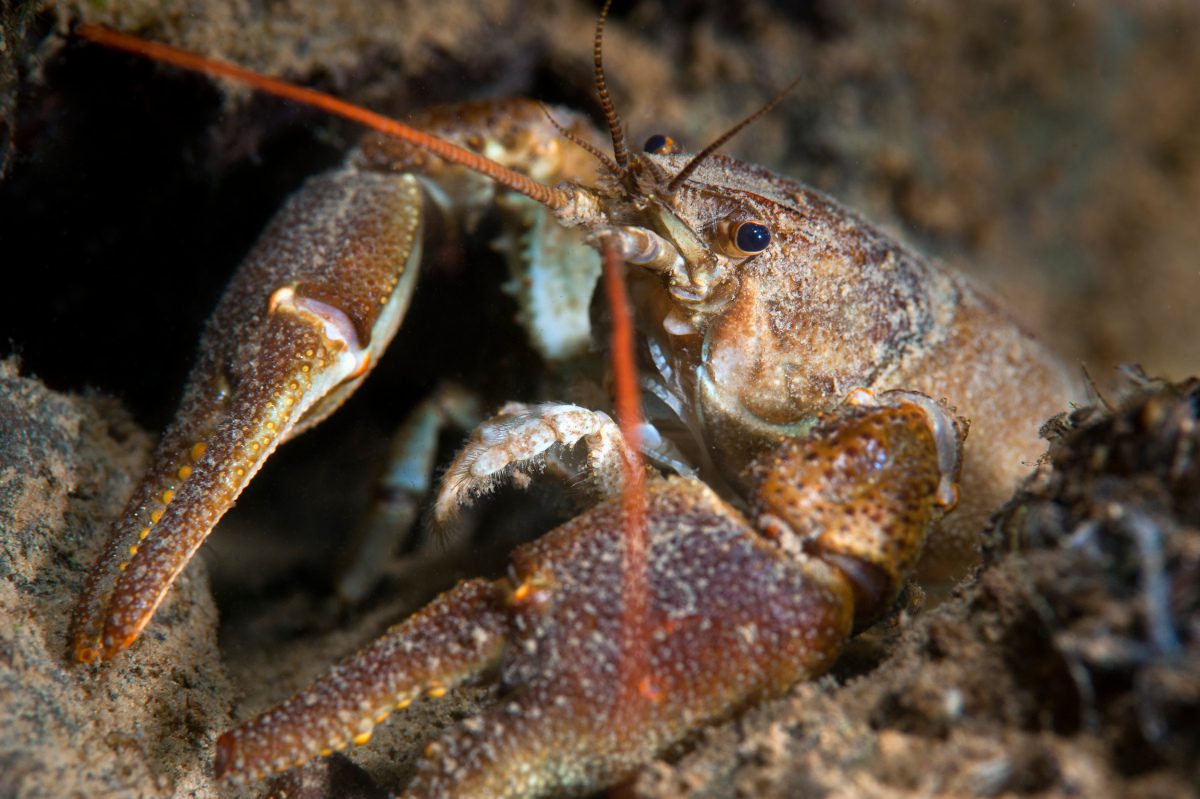
A major new programme to restore and protect England’s rare, white-clawed crayfish is now underway, says conservation charity The Wildlife Trusts, which is leading the initiative, bringing together conservation organisations, researchers and environmental agencies in the largest coordinated recovery effort ever undertaken for the species. (Words: The Wildlife Trusts).
The programme will unite around 40 partner organisations from across England to reverse the dramatic loss of the UK’s only native freshwater crayfish. Having declined by a staggering 70-80% in recent decades, this national effort will be a lifeline for the globally endangered species.
Threatened by habitat degradation, pollution, and the expansion of invasive non-native crayfish which carry and spread the crayfish plague, white-clawed crayfish are key river ecosystem engineers, recycling dead matter and improving water quality. As our largest native aquatic invertebrate they are also an important food source for other native species like otters, herons, eels and even fish like brown trout and salmon.
While dedicated conservation work has helped safeguard important populations in some areas, a coordinated national response to the plight of the species is needed to recover their population at scale. Supported by funding from Natural England’s Species Recovery Programme, and matched by substantial contributions from project partners, this initiative will scale up nature recovery efforts for the benefit of white-clawed crayfish and river systems alike.
Over the next three years, partners will monitor surviving populations, assess catchment-scale threats and opportunities, and prioritise conservation action where it can have the greatest impact. This includes the breeding, rearing and release of juveniles, using a new mapping tool to identify safe havens where white-clawed crayfish can be protected from invasive species and disease.
While this work will support the restoration of populations across the species’ historic range, the project will also invest in cutting-edge scientific research, including studies into crayfish genetics, disease resistance, pathogens and cryogenic biobanking (the freezing of genetic material to provide a backstop in the event of a population crash). This work will help strengthen the long-term health and resilience of populations and provide an important evidence base for future conservation efforts.
Stan Smith, head of nature and species recovery at The Wildlife Trusts, says:
“This programme represents a significant milestone for white-clawed crayfish conservation. For the first time, we have the opportunity to coordinate action at a truly national scale, bringing together the expertise of conservationists, scientists and practitioners from across England. Through a combination of targeted nature recovery efforts, breeding and reintroduction programmes, and innovative research, we can give this iconic native species a lifeline; together we’re creating the best possible chance for white-clawed crayfish to thrive in healthy English waterways once more.”
As work now begins across England, the programme hopes to establish the long-term foundations needed not only to prevent further decline, but to return white-clawed crayfish to more of the rivers and streams where they once thrived.
Beyond the direct benefits for white-clawed crayfish, the programme will also contribute to wider nature recovery goals by supporting healthier river ecosystems and delivering against national biodiversity ambitions, including Local Nature Recovery Strategies, the Government’s Environmental Improvement Plan and the White-clawed Crayfish Species Recovery Action Plan.