


Sponsored content: This article contains sponsored content.
In industrial safety, environmental monitoring and incident response, the challenge is rarely limited to detecting that something is present in the air. The more important question is what is present, how much of it there is, and what should happen next. When decisions affect worker safety, production continuity or environmental compliance, uncertainty can quickly become expensive.
For simple detection of a known gas, a detector may be enough. But many real-world situations are less predictable. A leak investigation, odour complaint, confined space assessment or process disturbance may involve several compounds at once. In these cases, teams need more than a yes-or-no alarm history. They need measurement data that helps them understand what is happening and decide what to do next.
Fourier Transform Infrared (FTIR) technology changes the value of gas measurement by moving the discussion from detection towards understanding. Instead of measuring one target compound at a time, FTIR analysis can measure several gases simultaneously from the same sample. It creates a broader view of gas composition and provides concentration data that can be used immediately in the field and later in reporting, investigation and compliance documentation. This broader context is especially valuable when the gases present are uncertain or changing over time.
Turning field data into better decisions
The benefit is not only technical. Better data supports better judgement. If an industrial hygiene team can identify which compounds are present and how concentrations change over time, protective measures can be targeted more accurately. If a response team can document gas composition during an incident, follow-up actions can be based on evidence. If an environmental monitoring team can compare measurement data over time, it can build a clearer understanding of trends, sources and potential risks.
This matters because the hidden costs of poor information are often larger than the purchase price of an instrument. Unnecessary shutdowns, delayed leak response, repeated measurements, incomplete incident records and uncertainty in compliance discussions all consume time and resources. In many situations, the most valuable gas monitoring solution is the one that reduces uncertainty and helps people decide what to do next.
For organisations managing safety, environmental responsibility and operational continuity, portable FTIR analysis offers a practical way to connect measurement with action. It brings laboratory-level analytical thinking closer to the point of need. In demanding field conditions, that ability to interpret gas data on site can support faster response, stronger documentation and more confident decision-making. The same data can also support later reporting, incident review and long-term improvement.
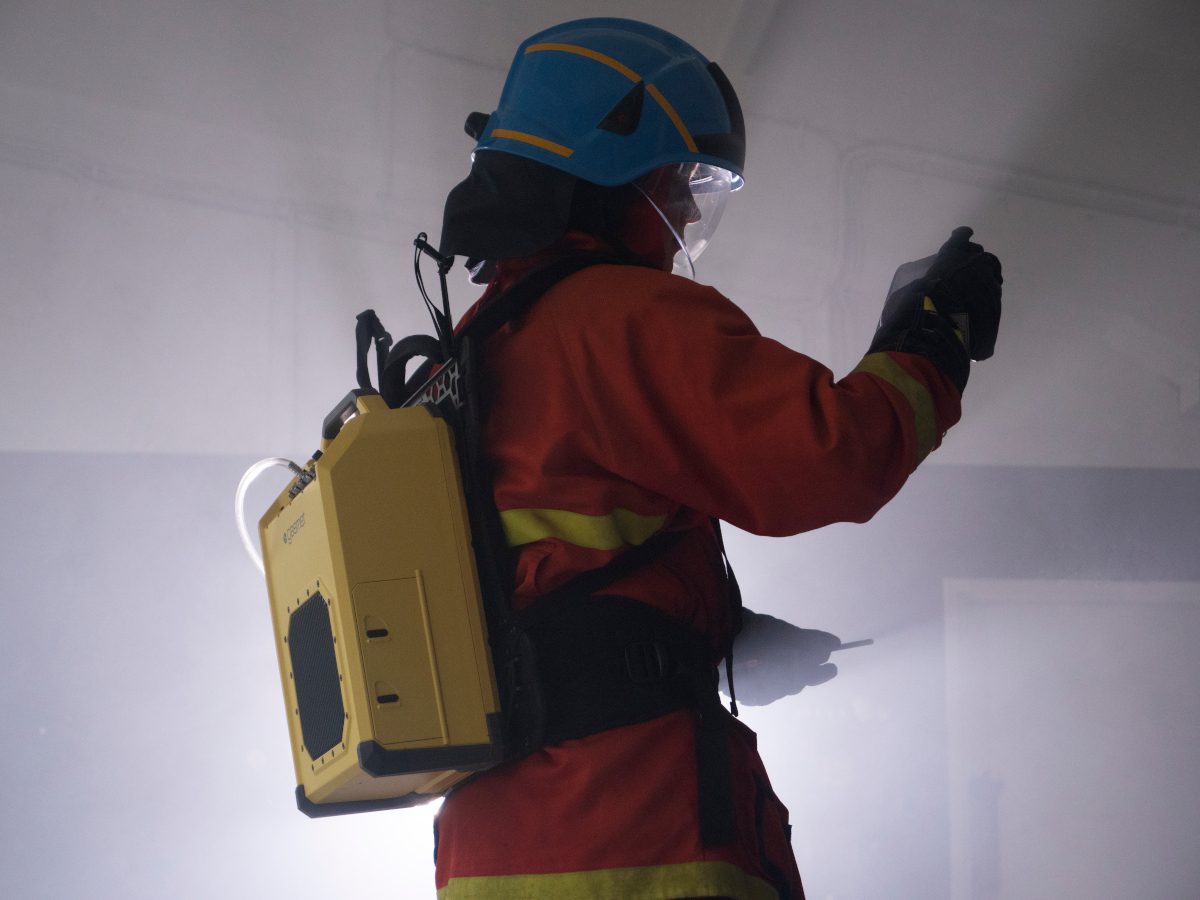
Gasmet’s GT5000 Terra shows how advanced gas analysis can move into the field without losing analytical depth. Designed for portable FTIR-based multi-gas analysis in demanding field environments, it gives teams access to high-quality measurement data at the point of need. Used together with Calcmet software on a tablet interface, the system helps users move from observation to interpretation and from uncertainty to informed action.
In gas monitoring, knowing that something is there is only the beginning. Understanding what is in the air, and what that information means in practice, is where the real value of measurement begins. For more information visit gasmet.com.