


Home Search
sensor - search results
If you're not happy with the results, please do another search

Sponsored Content: “Laser-focused on net zero”
Mark Naples, General Manager at Umicore Coating Services writes: Laser absorption spectroscopy is a powerful tool for detecting trace gases and has been widely used in the monitoring of atmospheric greenhouse gases, pollution, and respiration processes, including human breath analysis. The detection is based on the absorption of light when it propagates through a medium.
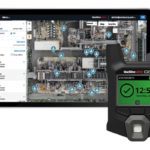
Connected detector
A new single-gas detection wearable from Blackline Safety is said to offer fast incident response time and a more efficient way to manage safety and compliance.
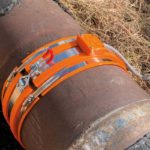
Detecting leaks before they occur
A group in the US claims to have made an important advance with the transducers that use ultrasonic guided-wave technology to detect anomalies in pipes, helping users prevent leaks before they start.

Government funding for innovations that “could revolutionise British rail travel”
Over £5 million has been provided to help launch innovative ideas that could transform rail travel and help decarbonize the rail network.
The “First of...
Sponsored Content: zero carbon farms use sensing technology to optimise growing conditions underground
Zero Carbon Farms run a microgreens salad and herb growing operation in the most unusual of places, in former WWII air raid shelters in central London.

How digital technologies contribute to universal drinking water
Digital water technologies have an important role in ensuring universal access to safe drinking water by 2030, that is according to a new report...

Energy saving innovations dominate Scottish Environment Business Awards
There were 12 winners at the annual “VIBES - Scottish Environment Business Awards” in Glasgow on Tuesday 1 November, recognising innovations including a system...

Plugging into electricity’s energy challenge
How is technology helping to address the challenges faced by power grids? Tom Christensen writes
Despite popular belief, electrification does not always lead to a...

Comment: Dreaming the possible – data and the future of water
Experts in digital transformation set out how they believe advancements in data are playing a vital role in revolutionising the water industry.
As...

Water challenge presents opportunity for cross-sector innovators
Innovators from multiple sectors including energy, manufacturing, transport and food and beverage, could have the opportunity to share their condition monitoring solutions with every...

Utility pilots “transformative” AI approach in wastewater treatment
Anglian Water says transformation of its treatment and recycling processes is being made possible by trials of AI-driven software developed by Norwegian technology company...
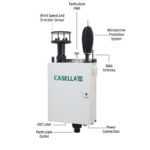
Sponsored Content: Guardian2: The solution for multi-agent site monitoring
Casella continues to demonstrate its commitment to helping its customers reduce environmental risks from large construction projects with the Guardian2. The system allows the simultaneous monitoring and reporting of noise, dust, volatile organic compounds (VOCs) and vibration as well as wind speed and direction for an all-encompassing assessment of emitted levels. The Guardian2 unit can be ordered with any combination of the mentioned sensors.

Sponsored Content: MCERTS ensures best available technology for monitoring
ABB’s AWT420 Transmitter as well as the 100GP and 500 Pro pH sensors now join the WaterMaster Electromagnetic flowmeter and AST430 TSS sensor with MCERTS accreditation.

A DNA “receipt book”?
Genetic techniques like CRISPR are being used to engineer cells to behave like living biosensors, capable of providing an unprecedented window into the behaviour of cells and, as such, to help with keeping track of changes in environments such as ponds and wastewater facilities.
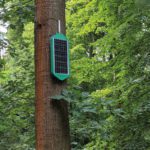
Funding for early detection
Berlin-based start-up Dryad has secured e10.5 million in new funding to help commercialise its solar-powered sensor network for early detection of wildfires.
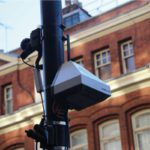
Budget-friendly package for local authorities
With local councils in England being encouraged to apply for a share of a £7 million grant scheme with a brief to 'reduce the impact of air pollution on public health', the big question still remains: how can local authorities mitigate air pollution without carrying out hyperlocal monitoring to understand where the problem areas are and identify the pollution sources?
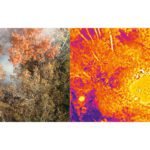
Getting warmer
As climate change leads to larger and more frequent wildfires, researchers at the US Department of Energy's Oak Ridge National Laboratory are using sensors, drones and machine learning to both prevent fires and minimise the damage they cause to the electrical grid. Engineers are honing technology to remotely sense electrical arcing and faulty equipment as well as the direction of spreading fires.
Pollution primer: AQE returns to Telford
AQE returns to the Telford International Centre on 12 and 13 October. Visitors are promised the customary comprehensive package of training and development presentations on the latest methods and monitoring technologies relevant to the measurement of air quality and emissions to air.

Active commuting is best?
New research seems to find that people who commute by car can be subject to higher levels of harmful pollutants than those who walk or cycle to work.

Sensing evolution
Last month we looked at global sensors leader Alphasense and their work within the Gas Safety sector. This month we take a closer look at the steps they are taking to support the global drive to improve air quality.