




Not-so-bright new dawn? Observers respond to the Government’s Growth Plan 2022
Quite apart from its seemingly frosty reception with global investors, the government’s Growth Plan 2022 policy statement also elicited bafflement from environmental commentators, many...

SEPA figures show recovering recycling rate in Scotland
Statistics published on 27 September by the Scottish Environment Protection Agency (SEPA) reveal some of the impact of COVID-19 polcies on recycling. The figures...

Analysis warns coal could be needed to keep the lights on this winter
In its Winter Market Outlook study for 2022/23, LCP Energy Analytics has warned that the UK could experience 10 hours of insufficient electricity supply...

Cleaner water linked with smaller cockles that die younger
Better water quality in Wales’ most famous cockle area is linked with smaller cockles that have a higher mortality rate, a new survey of...

Swiss firm unveils shoe made using carbon emissions
Seemingly a leap forward in sportswear firm On’s efforts to move away from petroleum-based resources, a new shoe range – marketed as Cloudprime™ -...

Grimy windows could be harbouring toxic pollutants
Dirty windows can harbour potentially harmful pollutants under protective films of fatty acids from cooking emissions – and these can hang around over long...

Super sewer progress
Recent aerial photography shows some of the changes being made to the banks of the Thames during the construction of London’s 25-km super-sewer, Tideway. Now said to be three-quarters complete – and on-schedule to finish in 2025 – the 2.5m-diameter tunnel will provide an extra 1.6 million m3 of storage in London’s sewers.
IMechE recommends rethink of UK waste policy
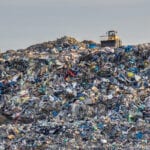
A radical rethink of recycling and waste policy is required to put the UK on a more sustainable path, according to a new report...

Maxed out on disaster yet? Group warns of volcanic risk
Well you'll be discouraged to learn that the world is “woefully unprepared” for a massive volcanic eruption and the likely repercussions for global supply chains, climate and food. That's according to experts from the University of Cambridge's Centre for the Study of Existential Risk (CSER).

Report clarifies urban air pollution patterns worldwide
Late August saw the release of “Air Quality and Health In Cities”, the latest edition of The State of Global Air report, produced annually by the US Health Effects Institute. It attempts a snapshot of air pollution exposure in over 7000 cities worldwide, and its impact on health. Standout findings this year include a clearer picture of PM2.5 and NO2 pollution, with fine particles seeming to be an affliction of the world's poorer regions especially, while NO2 is a problem for city dwellers everywhere.

£4m innovation contest
Ofwat, the economic regulator of water services in England and Wales, has announced a new "open access" competition for innovators, in an aparent widening of the scope of its existing £200 million Innovation Fund, and a bid to encourage more diverse ideas to transform the water sector.

Black bag blues: Does Scotland have enough incineration capacity?
Ongoing uncertainty about Scotland's ability to deal with its own residual waste - once a ban on landfilling biodegradeable material takes effect on 1 January 2026 - has prompted soul-searching north of the border, and an extensive contemplation of the appropriate role that incineration should play in the waste hierarchy. Envirotec reports.

Defra’s Storm Overflows Discharge Reduction Plan falls short, says conservation group
"We are appalled to see that Defra’s Storm Overflows Discharge Reduction Plan has not taken into account the thousands of responses to the draft...

New government must act decisively to grip the energy crisis, says CBI
69% of firms expect their energy costs to increase in the next three months, with almost a third anticipating rises of more than...

Rainwater is no longer drinkable thanks to PFAS, say researchers
A perspective article by researchers from Stockholm University and ETH Zurich, published in August in Environmental Science & Technology, suggests that environmental contamination by...

England housing strategy could consume over 100% of the nation’s carbon budget
The UK government’s business as usual housing strategy could consume all of England’s cumulative carbon budget consistent with 1.5°C of heating by 2050, unless...

Sulphur shortage: Study highlights “potential resource crisis” as the world decarbonises
A projected shortage of sulphuric acid, a crucial chemical in our modern industrial society, could stifle green technology advancement and threaten global food security,...
Next UK prime minister must ban microplastics, says drainage group
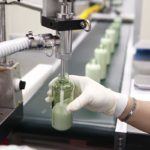
The UK’s next prime minister should ban manufacturers from intentionally adding microplastics to consumer or professional use products, according to a new environmental campaign...

All-time record level recorded for fire likelihood index
A combination of record temperatures and dry weather in the UK this summer are causing "exceptionally high" levels of danger from extreme wildfires, according...

Kwasi Kwarteng says biomass wood imports are “not sustainable”
Cooling towers at Drax, North Yorkshire (image credit: Shutterstock.com / Phil Silverman).
Business Secretary Kwasi Kwarteng told a private meeting of MPs this week that...